English Seaside Tangy Tartar Sauce for Fish and Chips
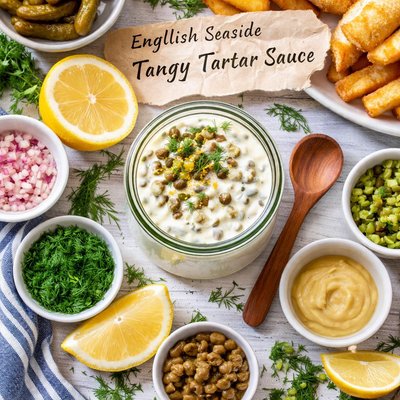
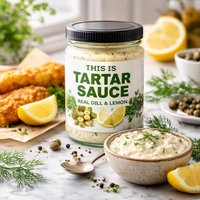
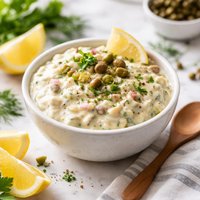
Transform your classic fish and chips experience with this "English Seaside Tangy Tartar Sauce"—a zesty, creamy complement that brings authentic seaside charm to your table. Bursting with finely chopped dill pickles, briny capers, and fresh parsley, this quick-to-make sauce is elevated by the brightness of freshly squeezed lemon juice and a hint of Dijon mustard for a subtle kick. The addition of minced shallot adds a delicate sweetness, perfectly balancing the bold, tangy flavors. Ready in just 10 minutes and best served cold, this tartar sauce pairs beautifully with crispy fried seafood, from golden battered fish to succulent shrimp. Whether you're recreating a British pub favorite or adding a gourmet edge to your at-home fish fry, this homemade tartar sauce is sure to impress.

Smart Nutrition Tracking with SnapCalorie

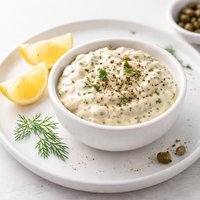
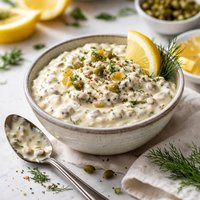
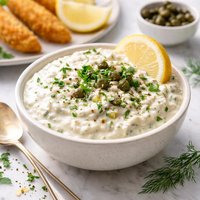
Recipe Information
Ingredients
- 1 cup Mayonnaise
- 3 tablespoons Pickles (dill or gherkins), finely chopped
- 1.5 tablespoons Capers, rinsed and chopped
- 1 small Shallot, finely minced
- 1 tablespoon Fresh parsley, finely chopped
- 1.5 tablespoons Lemon juice, freshly squeezed
- 1 teaspoon Dijon mustard
- 0.25 teaspoon Salt
- 0.25 teaspoon Black pepper, freshly ground
Instructions
In a medium-sized mixing bowl, combine the mayonnaise, finely chopped pickles, and chopped capers.
Add the minced shallot, chopped fresh parsley, and Dijon mustard to the bowl.
Stir in the freshly squeezed lemon juice to add a tangy kick.
Season the mixture with salt and freshly ground black pepper to taste.
Mix all the ingredients thoroughly until the sauce achieves a smooth, creamy consistency with evenly distributed textures.
Cover the bowl with plastic wrap or transfer the sauce to an airtight container.
Chill the tartar sauce in the refrigerator for at least 30 minutes to allow the flavors to meld together.
Serve the tartar sauce alongside freshly cooked fish and chips or any fried seafood dish. Enjoy!
Nutrition Facts
Calories |
281 | ||
|---|---|---|---|
% Daily Value* |
|||
| Total Fat | 30.4 g | 39% | |
| Saturated Fat | 4.7 g | 23% | |
| Polyunsaturated Fat | 0.0 g | ||
| Cholesterol | 15 mg | 5% | |
| Sodium | 485 mg | 21% | |
| Total Carbohydrate | 1.3 g | 0% | |
| Dietary Fiber | 0.3 g | 1% | |
| Total Sugars | 0.3 g | ||
| Protein | 0.5 g | 1% | |
| Vitamin D | 0.0 mcg | 0% | |
| Calcium | 9 mg | 1% | |
| Iron | 0.2 mg | 1% | |
| Potassium | 37 mg | 1% | |
*The % Daily Value tells you how much a nutrient in a serving of food contributes to a daily diet. 2,000 calories a day is used for general nutrition advice.


