Keto Caprese Sandwich
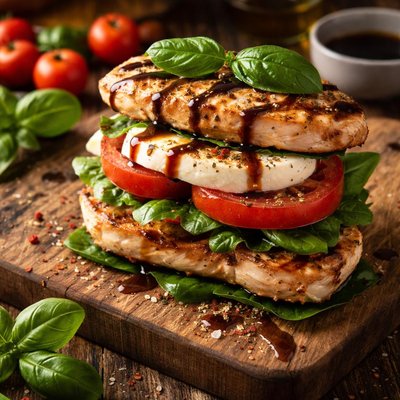
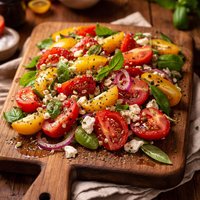
Elevate your lunch game with this refreshing and healthy Keto Caprese Sandwich—an innovative twist on the classic Italian favorite, specially tailored for low-carb enthusiasts. This no-bread sandwich swaps traditional sandwich buns for thick, juicy slices of ripe tomato, perfectly layered with fresh mozzarella, creamy avocado, fragrant basil leaves, and a drizzle of extra-virgin olive oil and balsamic vinegar. Ready in just 15 minutes, this keto-friendly delight is packed with vibrant flavors and wholesome ingredients, offering a satisfying meal that’s as nutritious as it is delicious. Whether you’re following a ketogenic diet or simply craving a light, guilt-free dish, this recipe is a must-try for your lunch or snack rotation!

Smart Nutrition Tracking with SnapCalorie


Recipe Information
Ingredients
- 2 pieces large ripe tomatoes
- 125 grams fresh mozzarella cheese
- 10 leaves fresh basil leaves
- 2 tablespoons extra-virgin olive oil
- 1 tablespoon balsamic vinegar
- 0.25 teaspoon salt
- 0.25 teaspoon black pepper
- 1 medium avocado
Instructions
Wash the tomatoes and slice them horizontally into thick slices, approximately 1/2-inch thick each. You should have 4 large slices (2 per sandwich).
Drain the fresh mozzarella and slice it into thick rounds, about the same thickness as the tomato slices.
Peel and pit the avocado, then slice it into thin slices.
On a plate, place a slice of tomato to form the base of the sandwich.
Layer with fresh mozzarella slices on top of the tomato, followed by several basil leaves.
Add a layer of sliced avocado on top of the basil leaves.
Drizzle the olive oil and balsamic vinegar over the avocado layer evenly.
Season with salt and black pepper to taste.
Place another tomato slice on top to complete the sandwich.
Serve immediately to enjoy the fresh and vibrant flavors.
Nutrition Facts
Calories |
470 | ||
|---|---|---|---|
% Daily Value* |
|||
| Total Fat | 38.5 g | 49% | |
| Saturated Fat | 12.7 g | 64% | |
| Polyunsaturated Fat | 0.0 g | ||
| Cholesterol | 33 mg | 11% | |
| Sodium | 448 mg | 19% | |
| Total Carbohydrate | 17.2 g | 6% | |
| Dietary Fiber | 7.6 g | 27% | |
| Total Sugars | 6.2 g | ||
| Protein | 16.9 g | 34% | |
| Vitamin D | 0.0 mcg | 0% | |
| Calcium | 354 mg | 27% | |
| Iron | 1.4 mg | 8% | |
| Potassium | 861 mg | 18% | |
*The % Daily Value tells you how much a nutrient in a serving of food contributes to a daily diet. 2,000 calories a day is used for general nutrition advice.


