Horseradish Mustard
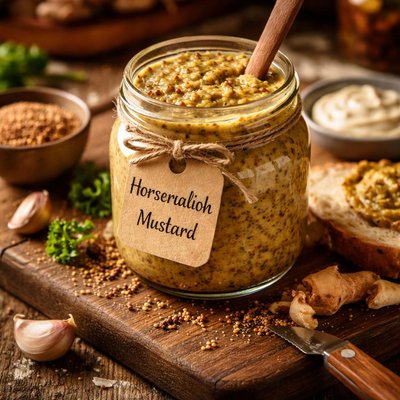
Take your condiments to the next level with homemade Horseradish Mustard—an irresistible blend of bold flavors that’s bound to elevate any dish. This recipe combines the tangy punch of mustard seeds with the zesty kick of prepared horseradish, balanced beautifully by a touch of honey and warming spices like turmeric and cayenne pepper. With minimal prep time and a simple soaking process, this mustard is the perfect DIY upgrade for sandwiches, charcuterie boards, or marinades. Allowing the mixture to rest and develop ensures a depth of flavor that store-bought versions simply can’t match. Craft your own gourmet condiment in just a few steps and savor the difference of homemade Horseradish Mustard!

Smart Nutrition Tracking with SnapCalorie

Recipe Information
Ingredients
- 0.5 cup Yellow mustard seeds
- 0.25 cup Brown mustard seeds
- 0.75 cup White wine vinegar
- 0.5 cup Water
- 0.25 cup Prepared horseradish
- 2 tablespoons Honey
- 1 teaspoon Salt
- 0.5 teaspoon Turmeric
- 0.25 teaspoon Cayenne pepper
Instructions
In a medium bowl, combine the yellow mustard seeds, brown mustard seeds, white wine vinegar, and water.
Cover the bowl with plastic wrap or a lid and let it sit at room temperature for 24-48 hours, allowing the seeds to absorb the liquid and soften. Stir occasionally if possible.
After soaking, transfer the mixture to a food processor or blender.
Add the prepared horseradish, honey, salt, turmeric, and cayenne pepper to the mustard seed mixture.
Blend the ingredients together until smooth and creamy. If you prefer a coarser texture, pulse less frequently.
Taste and adjust the seasoning if necessary, adding more salt or honey for balance.
Transfer the horseradish mustard to a clean, airtight jar. Seal the lid tightly.
Refrigerate the mustard for at least one day to allow the flavors to meld and deepen.
For maximum flavor, let it sit for a week before using. This horseradish mustard can be stored in the refrigerator for up to 2 months.
Nutrition Facts
Calories |
136 | ||
|---|---|---|---|
% Daily Value* |
|||
| Total Fat | 9.4 g | 12% | |
| Saturated Fat | 1.0 g | 5% | |
| Polyunsaturated Fat | 2.4 g | ||
| Cholesterol | 4 mg | 1% | |
| Sodium | 303 mg | 13% | |
| Total Carbohydrate | 9.9 g | 4% | |
| Dietary Fiber | 2.5 g | 9% | |
| Total Sugars | 6.0 g | ||
| Protein | 3.8 g | 8% | |
| Vitamin D | 0.0 mcg | 0% | |
| Calcium | 66 mg | 5% | |
| Iron | 1.2 mg | 7% | |
| Potassium | 100 mg | 2% | |
*The % Daily Value tells you how much a nutrient in a serving of food contributes to a daily diet. 2,000 calories a day is used for general nutrition advice.


