Homemade Mango Ice Cream
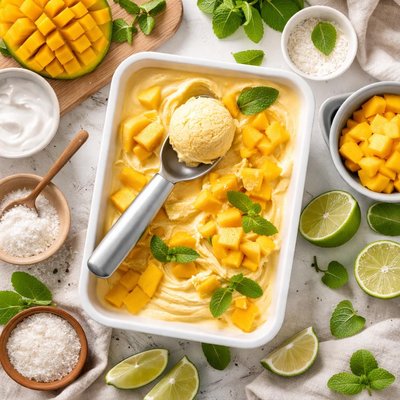
Indulge in the tropical sweetness of *Homemade Mango Ice Cream*, a creamy and refreshing dessert that's perfect for warm-weather days. This no-churn recipe highlights the vibrant flavor of ripe mangoes, blended to silky perfection and enhanced with a touch of lime juice for a zingy twist. Combined with fluffy whipped cream, luscious condensed milk, and a hint of vanilla, this easy-to-make treat delivers an ultra-smooth texture without the need for an ice cream maker. Ready in just 20 minutes (plus freezing time), this mango ice cream is a delightful way to satisfy your sweet cravings. Serve it in bowls or cones at your next summer gathering and bask in the tropical vibes of this crowd-pleasing dessert!

Smart Nutrition Tracking with SnapCalorie






Recipe Information
Ingredients
- 2 large Ripe mangoes
- 2 cups Heavy cream
- 1 can Condensed milk
- 0.5 cup Granulated sugar
- 1 teaspoon Vanilla extract
- 1 tablespoon Lime juice
Instructions
Peel and dice the mangoes, discarding the seed. Puree the mango flesh in a blender until smooth.
In a large mixing bowl, combine the mango puree, condensed milk, and lime juice. Mix well until fully incorporated.
In a separate chilled bowl, whip the heavy cream with an electric mixer on high speed until stiff peaks form. This takes about 3-5 minutes.
Gently fold the whipped cream into the mango mixture, ensuring not to deflate the whipped cream. Use a spatula to ensure even mixing.
Pour the mixture into a lidded, freezer-safe container. Smooth out the top with a spatula.
Cover the container with a lid or plastic wrap and freeze for at least 6 hours, or until the ice cream is firm.
Before serving, let the ice cream sit at room temperature for about 5 minutes for easier scooping.
Serve the mango ice cream in bowls or cones, and enjoy!
Nutrition Facts
Calories |
599 | ||
|---|---|---|---|
% Daily Value* |
|||
| Total Fat | 32.8 g | 42% | |
| Saturated Fat | 19.7 g | 98% | |
| Polyunsaturated Fat | 0.3 g | ||
| Cholesterol | 103 mg | 34% | |
| Sodium | 111 mg | 5% | |
| Total Carbohydrate | 65.8 g | 24% | |
| Dietary Fiber | 1.3 g | 4% | |
| Total Sugars | 64.3 g | ||
| Protein | 6.0 g | 12% | |
| Vitamin D | 0.1 mcg | 1% | |
| Calcium | 197 mg | 15% | |
| Iron | 0.3 mg | 1% | |
| Potassium | 391 mg | 8% | |
*The % Daily Value tells you how much a nutrient in a serving of food contributes to a daily diet. 2,000 calories a day is used for general nutrition advice.


