Heirloom Tomato Salad with Buttermilk Dressing and Blue Cheese
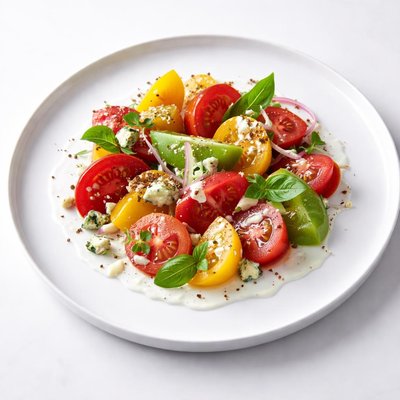
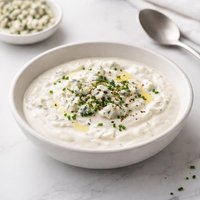
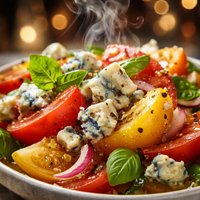
Savor the vibrant flavors of summer with this irresistible Heirloom Tomato Salad with Buttermilk Dressing and Blue Cheese. Bursting with the natural sweetness of ripe, colorful heirloom tomatoes, this recipe is perfectly balanced by a creamy homemade buttermilk dressing, made with tangy sour cream, a hint of garlic, and a touch of white wine vinegar for brightness. Crumbled blue cheese adds a bold, savory depth, while fresh basil and chives elevate every bite with herbal freshness. This no-cook, 15-minute salad is ideal as a show-stopping side or a light and elegant main dish. Drizzled with rich olive oil and packed with vibrant textures, it’s the perfect way to celebrate peak tomato season.

Smart Nutrition Tracking with SnapCalorie

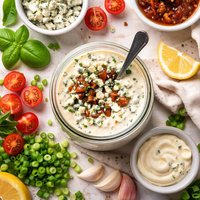
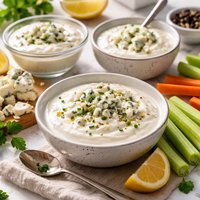

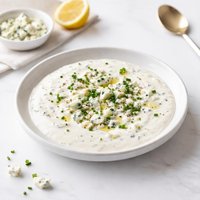
Recipe Information
Ingredients
- 4 large heirloom tomatoes
- 0.5 teaspoon salt
- 0.25 teaspoon black pepper
- 0.5 cup buttermilk
- 2 tablespoons mayonnaise
- 2 tablespoons sour cream
- 1 teaspoon white wine vinegar
- 1 clove garlic
- 0.25 cup blue cheese
- 2 tablespoons fresh chives
- 0.25 cup fresh basil leaves
- 1 tablespoon olive oil
Instructions
Wash and dry the heirloom tomatoes. Slice them into thick rounds or wedges, depending on your preference.
Arrange the tomato slices on a large serving plate and sprinkle them with the salt and black pepper. Set aside.
Prepare the buttermilk dressing: In a small mixing bowl, whisk together the buttermilk, mayonnaise, sour cream, white wine vinegar, and finely minced garlic clove until smooth. Add a pinch of salt and pepper to taste. Set the dressing aside.
Crumble the blue cheese and finely chop the fresh chives. Keep them ready for assembly.
Drizzle the buttermilk dressing evenly over the sliced tomatoes.
Sprinkle the crumbled blue cheese over the salad.
Garnish with chopped chives and fresh basil leaves. Drizzle with a touch of olive oil for added richness.
Serve immediately and enjoy this vibrant, flavorful salad as a side dish or light main course.
Nutrition Facts
Calories |
177 | ||
|---|---|---|---|
% Daily Value* |
|||
| Total Fat | 13.6 g | 17% | |
| Saturated Fat | 4.2 g | 21% | |
| Polyunsaturated Fat | 0.0 g | ||
| Cholesterol | 15 mg | 5% | |
| Sodium | 431 mg | 19% | |
| Total Carbohydrate | 10.5 g | 4% | |
| Dietary Fiber | 2.6 g | 9% | |
| Total Sugars | 7.1 g | ||
| Protein | 5.0 g | 10% | |
| Vitamin D | 0.4 mcg | 2% | |
| Calcium | 115 mg | 9% | |
| Iron | 0.8 mg | 4% | |
| Potassium | 558 mg | 12% | |
*The % Daily Value tells you how much a nutrient in a serving of food contributes to a daily diet. 2,000 calories a day is used for general nutrition advice.


