Fruit Blast Sage Iced Tea
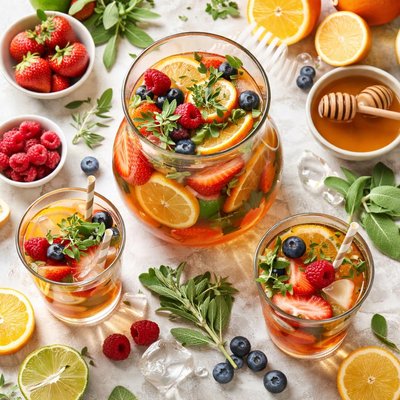
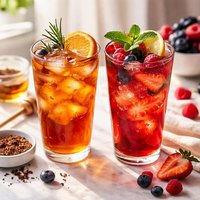
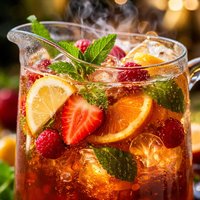
Quench your thirst with the vibrant and herbaceous Fruit Blast Sage Iced Tea, a refreshing blend of bold black tea, fragrant sage leaves, and the natural sweetness of honey. Infused with the tropical tang of pineapple juice and the citrusy brightness of orange juice, this iced tea is elevated further with a medley of fresh fruit like strawberries, blueberries, and orange slices for bursts of color and flavor. Perfectly balanced and endlessly refreshing, this easy-to-make beverage comes together in just 15 minutes and is served ice-cold, making it an ideal summer drink or a crowd-pleasing addition to brunches and garden parties. Whether you're seeking a unique iced tea recipe or a healthy alternative to sugary drinks, Fruit Blast Sage Iced Tea is your flavor-packed solution.

Smart Nutrition Tracking with SnapCalorie

Explore More
Recipe Information
Ingredients
- 4 pieces black tea bags
- 4 cups water
- 6 pieces fresh sage leaves
- 3 tablespoons honey
- 1 cup orange juice
- 1 cup pineapple juice
- 1 cup mixed fresh fruit (e.g., sliced strawberries, orange slices, blueberries)
- 2 cups ice cubes
Instructions
Heat 4 cups of water in a pot until it reaches a gentle boil.
Remove the pot from heat and add 4 black tea bags and 6 fresh sage leaves.
Cover the pot and let the tea steep for 5 minutes before discarding the tea bags and sage leaves.
Stir in 3 tablespoons of honey until fully dissolved and allow it to cool to room temperature.
In a large pitcher, combine the cooled tea with 1 cup of orange juice and 1 cup of pineapple juice. Stir well.
Add 1 cup of mixed fresh fruit (e.g., sliced strawberries, orange slices, blueberries) into the pitcher.
Fill serving glasses with 2 cups of ice cubes and pour the Fruit Blast Sage Iced Tea over the ice.
Garnish with additional fresh fruit or a sprig of sage if desired, and serve chilled.
Nutrition Facts
Calories |
136 | ||
|---|---|---|---|
% Daily Value* |
|||
| Total Fat | 0.0 g | 0% | |
| Saturated Fat | 0.0 g | 0% | |
| Polyunsaturated Fat | 0.0 g | ||
| Cholesterol | 0 mg | 0% | |
| Sodium | 12 mg | 1% | |
| Total Carbohydrate | 35.0 g | 13% | |
| Dietary Fiber | 1.1 g | 4% | |
| Total Sugars | 31.7 g | ||
| Protein | 1.1 g | 2% | |
| Vitamin D | 0.0 mcg | 0% | |
| Calcium | 47 mg | 4% | |
| Iron | 0.6 mg | 3% | |
| Potassium | 270 mg | 6% | |
*The % Daily Value tells you how much a nutrient in a serving of food contributes to a daily diet. 2,000 calories a day is used for general nutrition advice.


