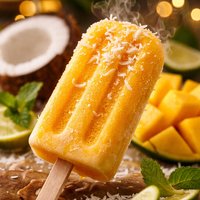
Frozen Coconut Mango Pops
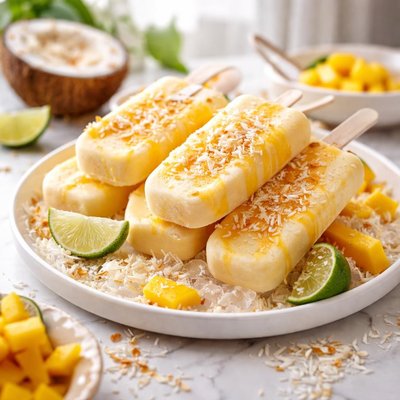
Beat the summer heat with these irresistibly creamy Frozen Coconut Mango Pops, a tropical dessert that's as nutritious as it is delicious! Made with juicy fresh mangoes, velvety full-fat coconut milk, a touch of lime juice, and optional natural sweeteners like honey or maple syrup, these frozen treats are a delightful balance of fruity brightness and indulgent creaminess. With just 15 minutes of prep time, this easy, no-cook recipe is perfect for busy days or when you're craving a quick, homemade alternative to store-bought popsicles. Whether enjoyed poolside or as a refreshing dessert, these dairy-free and tropical-flavored pops are sure to be a hit with kids and adults alike. Perfect for those seeking a mango dessert recipe or a cooling coconut treat!

Smart Nutrition Tracking with SnapCalorie

Recipe Information
Ingredients
- 2 cups fresh mangoes (peeled, pitted, and diced)
- 1 cup full-fat coconut milk
- 2 tablespoons honey or maple syrup (optional, for sweetness)
- 1 tablespoon lime juice (freshly squeezed)
Instructions
Add the diced mangoes, coconut milk, honey or maple syrup (if using), and lime juice to a blender.
Blend on high speed until the mixture is smooth and creamy. If desired, taste the mixture and adjust the sweetness by adding more honey or maple syrup.
Pour the blended mixture evenly into popsicle molds, leaving a small amount of space at the top of each mold for expansion.
Gently tap the molds on the countertop to release any air bubbles.
Insert popsicle sticks into the molds and freeze for at least 4-6 hours, or until completely solid.
To remove the popsicles from the molds, briefly run warm water over the outside of the molds to loosen them.
Serve immediately and enjoy your refreshing Frozen Coconut Mango Pops!
Nutrition Facts
Calories |
160 | ||
|---|---|---|---|
% Daily Value* |
|||
| Total Fat | 9.8 g | 13% | |
| Saturated Fat | 8.4 g | 42% | |
| Polyunsaturated Fat | 0.0 g | ||
| Cholesterol | 0 mg | 0% | |
| Sodium | 7 mg | 0% | |
| Total Carbohydrate | 20.3 g | 7% | |
| Dietary Fiber | 1.3 g | 5% | |
| Total Sugars | 17.9 g | ||
| Protein | 1.5 g | 3% | |
| Vitamin D | 0.0 mcg | 0% | |
| Calcium | 16 mg | 1% | |
| Iron | 1.4 mg | 8% | |
| Potassium | 243 mg | 5% | |
*The % Daily Value tells you how much a nutrient in a serving of food contributes to a daily diet. 2,000 calories a day is used for general nutrition advice.


