Fried Basil Leaves
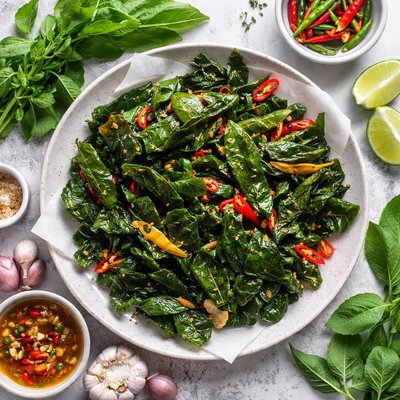
Delight in the simplicity and irresistible crunch of Fried Basil Leaves, a quick and flavorful recipe perfect as a light snack or an elegant garnish. Made with just three ingredients—fresh basil leaves, vegetable oil, and an optional touch of salt—this recipe transforms pantry staples into a stunning culinary addition. The basil leaves are fried to delicate, crackling perfection in mere seconds, enhancing their natural aroma and adding a crisp texture that elevates soups, salads, or pasta dishes. With a prep and cook time of under 10 minutes, this effortless recipe is ideal for impressing guests or indulging in a unique homemade treat. Keywords: crispy basil leaves, quick snack recipe, fried herb garnish.

Smart Nutrition Tracking with SnapCalorie

Recipe Information
Ingredients
- 20 leaves Fresh basil leaves
- 1 cup Vegetable oil (for frying)
- 0.25 teaspoon Salt (optional)
Instructions
Gently rinse the basil leaves under cold water to clean them. Pat them completely dry with a paper towel to ensure there is no moisture, as water can cause splattering when frying.
In a small, deep pan or skillet, heat the vegetable oil over medium heat. Test if the oil is ready by dropping a small piece of basil into the oil. If it sizzles immediately, the oil is hot enough.
Carefully place the basil leaves into the hot oil in small batches, ensuring they are not overcrowded. Fry for 5-10 seconds until the leaves become slightly translucent and crisp.
Using a slotted spoon, remove the fried basil leaves and place them on a paper towel-lined plate to drain any excess oil.
Sprinkle a pinch of salt over the fried basil leaves if desired. Serve immediately as a crispy snack or use as a flavorful garnish for dishes like soups, salads, or pasta.
Nutrition Facts
Calories |
1019 | ||
|---|---|---|---|
% Daily Value* |
|||
| Total Fat | 118.6 g | 152% | |
| Saturated Fat | 16.9 g | 85% | |
| Polyunsaturated Fat | 0.0 g | ||
| Cholesterol | 0 mg | 0% | |
| Sodium | 276 mg | 12% | |
| Total Carbohydrate | 0.2 g | 0% | |
| Dietary Fiber | 0.2 g | 1% | |
| Total Sugars | 0.0 g | ||
| Protein | 0.2 g | 0% | |
| Vitamin D | 0.0 mcg | 0% | |
| Calcium | 8 mg | 1% | |
| Iron | 0.2 mg | 1% | |
| Potassium | 20 mg | 0% | |
*The % Daily Value tells you how much a nutrient in a serving of food contributes to a daily diet. 2,000 calories a day is used for general nutrition advice.


