Flourless Chocolate Cake in a Cup
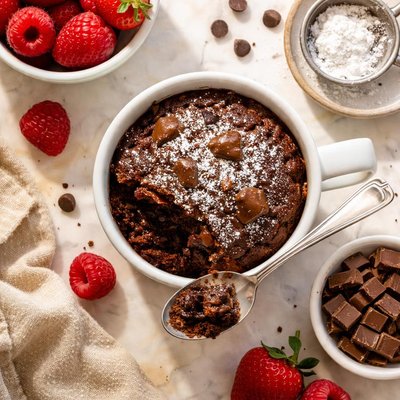
Indulge your sweet tooth in just minutes with this rich and decadent Flourless Chocolate Cake in a Cup, a gluten-free dessert that’s perfect for chocolate lovers! Made with simple pantry staples like dark chocolate, cocoa powder, and a touch of vanilla, this single-serving treat is gooey, fudgy, and irresistibly satisfying. Ready in under 5 minutes from prep to plate, this microwave flourless chocolate cake is ideal for a quick evening treat or when you’re craving something special but don’t want to bake a full dessert. Top it off with whipped cream, fresh berries, or a dusting of powdered sugar for a customizable, elegant finish. Enjoy this easy, one-mug recipe for guilt-free indulgence anytime. Perfect keywords: flourless chocolate cake, mug cake, gluten-free dessert, quick chocolate recipe, microwave cake.

Smart Nutrition Tracking with SnapCalorie

Recipe Information
Ingredients
- 2 tablespoons Dark chocolate
- 1 tablespoon Unsalted butter
- 1.5 tablespoons Granulated sugar
- 1 large Egg
- 1 tablespoon Cocoa powder
- 0.25 teaspoons Vanilla extract
- Optional toppings (e.g., whipped cream, berries, powdered sugar)
Instructions
Place the dark chocolate and unsalted butter in a microwave-safe mug. Microwave for 20-30 seconds, or until melted, then stir until smooth.
Add the granulated sugar to the mug and mix well.
Crack the egg into the mug and whisk thoroughly with a fork until fully combined.
Add the cocoa powder and vanilla extract. Stir the mixture until smooth and no lumps remain.
Microwave the mug for 40-50 seconds, depending on the power of your microwave. Be cautious not to overcook; the cake should be slightly gooey in the center.
Let the cake cool for 1-2 minutes before enjoying. Add optional toppings if desired, such as whipped cream, fresh berries, or a dusting of powdered sugar.
Nutrition Facts
Calories |
498 | ||
|---|---|---|---|
% Daily Value* |
|||
| Total Fat | 30.3 g | 39% | |
| Saturated Fat | 17.5 g | 87% | |
| Polyunsaturated Fat | 0.0 g | ||
| Cholesterol | 227 mg | 76% | |
| Sodium | 94 mg | 4% | |
| Total Carbohydrate | 50.6 g | 18% | |
| Dietary Fiber | 4.9 g | 18% | |
| Total Sugars | 34.5 g | ||
| Protein | 9.9 g | 20% | |
| Vitamin D | 1.4 mcg | 7% | |
| Calcium | 79 mg | 6% | |
| Iron | 5.5 mg | 31% | |
| Potassium | 376 mg | 8% | |
*The % Daily Value tells you how much a nutrient in a serving of food contributes to a daily diet. 2,000 calories a day is used for general nutrition advice.


