Falafel Waffles
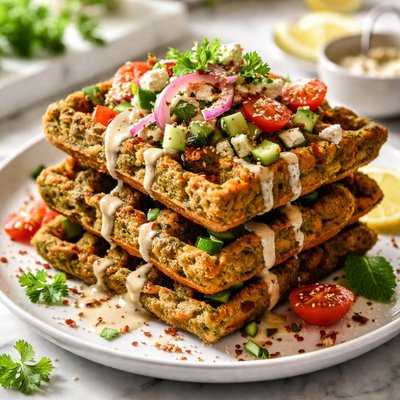
Transform your falafel cravings with a creative twist—meet Falafel Waffles, a delicious and inventive recipe that reinvents the beloved Middle Eastern classic. These crispy, golden-brown waffles, made with a blend of chickpeas, fresh parsley, cilantro, and bold spices like cumin and coriander, are prepared effortlessly using a waffle iron for a fun, mess-free cooking method. Packed with plant-based protein and vibrant flavors, these waffles are perfect for a savory brunch, a satisfying lunch, or even a unique dinner. Serve them with creamy tahini sauce, zesty hummus, or a refreshing salad to complete the meal. Whether you’re a seasoned falafel fan or exploring new ways to enjoy vegetarian dishes, Falafel Waffles are sure to become a household favorite.

Smart Nutrition Tracking with SnapCalorie

Explore More



Recipe Information
Ingredients
- 15 oz Canned chickpeas, drained and rinsed
- 0.5 cup Fresh parsley, chopped
- 0.5 cup Fresh cilantro, chopped
- 0.5 cup Onion, finely chopped
- 3 cloves Garlic, minced
- 1 tsp Ground cumin
- 1 tsp Ground coriander
- 1 tsp Salt
- 0.5 tsp Black pepper
- 0.5 tsp Baking powder
- 4 tbsp All-purpose flour or chickpea flour
- 2 tbsp Olive oil
- 2 tbsp Water (if needed)
- N/A Nonstick spray (for waffle iron)
Instructions
Preheat your waffle iron to medium-high heat and lightly spray with nonstick cooking spray.
In a food processor, combine the chickpeas, parsley, cilantro, onion, garlic, cumin, coriander, salt, black pepper, and baking powder. Pulse until the mixture is coarse but holds together when pressed.
Transfer the mixture to a mixing bowl and stir in the flour and olive oil. If the mixture is too dry, add water 1 tablespoon at a time until it comes together.
Scoop a portion of the falafel dough and press it into the waffle iron, spreading it out evenly. Cook for 6-8 minutes or until golden brown and crispy. Repeat with the remaining mixture.
Carefully remove the falafel waffles and serve with tahini sauce, hummus, or a fresh salad on the side. Enjoy!
Nutrition Facts
Calories |
209 | ||
|---|---|---|---|
% Daily Value* |
|||
| Total Fat | 9.0 g | 12% | |
| Saturated Fat | 1.2 g | 6% | |
| Polyunsaturated Fat | 0.0 g | ||
| Cholesterol | 0 mg | 0% | |
| Sodium | 765 mg | 33% | |
| Total Carbohydrate | 26.8 g | 10% | |
| Dietary Fiber | 5.9 g | 21% | |
| Total Sugars | 2.7 g | ||
| Protein | 6.9 g | 14% | |
| Vitamin D | 0.0 mcg | 0% | |
| Calcium | 96 mg | 7% | |
| Iron | 4.6 mg | 26% | |
| Potassium | 438 mg | 9% | |
*The % Daily Value tells you how much a nutrient in a serving of food contributes to a daily diet. 2,000 calories a day is used for general nutrition advice.


