Easy No Bake Tuna Noodle Casserole
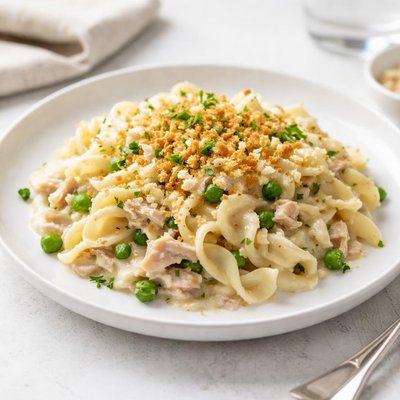
Craving comfort food without turning on the oven? This Easy No Bake Tuna Noodle Casserole is the answer! Perfect for busy weeknights, this family-friendly dish comes together in just 25 minutes using simple pantry staples like tender egg noodles, savory canned tuna, and creamy mushroom soup. A pop of color and flavor from frozen peas pairs beautifully with melty cheddar cheese for a hearty, satisfying meal. The optional topping of crushed potato chips or crackers adds the perfect crunch to every bite. With minimal prep and a skillet-based approach, this no-bake casserole takes the hassle out of comfort cooking. Enjoy a nostalgic classic in record time!

Smart Nutrition Tracking with SnapCalorie




Recipe Information
Ingredients
- 12 oz egg noodles
- 10 oz canned tuna (in water, drained)
- 10.5 oz cream of mushroom soup
- 1 cup frozen peas
- 1 cup shredded cheddar cheese
- 1 cup milk
- 2 tbsp butter
- 0.5 cup onion (finely chopped)
- 0.5 tsp salt
- 0.5 tsp black pepper
- 0.5 cup crushed potato chips or crackers (optional, for garnish)
Instructions
Bring a large pot of salted water to a boil. Cook the egg noodles according to the package instructions until al dente. Drain and set aside.
In a large skillet or deep sauté pan, melt the butter over medium heat. Add the finely chopped onion and sauté for 3-4 minutes or until translucent.
Stir in the cream of mushroom soup and milk, mixing well until combined and smooth. Cook for 2-3 minutes, stirring occasionally.
Add the drained tuna, frozen peas, salt, and black pepper to the skillet. Stir until evenly distributed and heated through.
Gently fold in the cooked egg noodles and shredded cheddar cheese. Stir until the cheese is melted and the mixture is evenly coated.
If desired, sprinkle crushed potato chips or crackers on top as a crunchy garnish before serving.
Serve immediately and enjoy your no bake tuna noodle casserole!
Nutrition Facts
Calories |
748 | ||
|---|---|---|---|
% Daily Value* |
|||
| Total Fat | 28.6 g | 37% | |
| Saturated Fat | 13.9 g | 70% | |
| Polyunsaturated Fat | 1.2 g | ||
| Cholesterol | 125 mg | 42% | |
| Sodium | 1076 mg | 47% | |
| Total Carbohydrate | 80.7 g | 29% | |
| Dietary Fiber | 6.4 g | 23% | |
| Total Sugars | 9.9 g | ||
| Protein | 42.9 g | 86% | |
| Vitamin D | 2.8 mcg | 14% | |
| Calcium | 384 mg | 30% | |
| Iron | 4.0 mg | 22% | |
| Potassium | 647 mg | 14% | |
*The % Daily Value tells you how much a nutrient in a serving of food contributes to a daily diet. 2,000 calories a day is used for general nutrition advice.


