Dr Andrew Weils Easy Poached Salmon
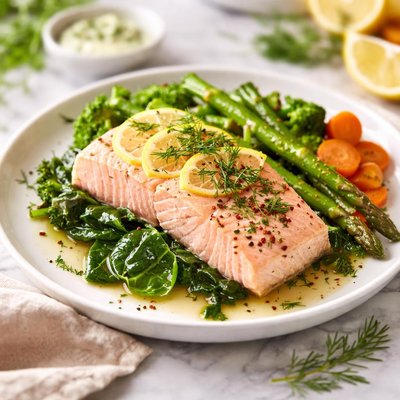
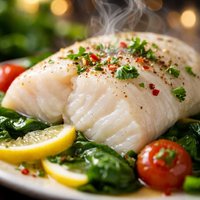
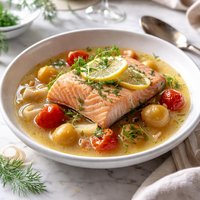
Elevate your weeknight dinner with Dr. Andrew Weil’s Easy Poached Salmon, a simple yet elegant dish that’s as healthy as it is delicious. This recipe combines delicate salmon fillets with the aromatics of fresh dill, lemon slices, bay leaf, and whole black peppercorns, gently simmered in a flavorful poaching liquid of water and optional dry white wine. The result? Perfectly tender, flaky salmon infused with subtle citrus and herbaceous notes. Ready in just 20 minutes, this light and nutritious meal is ideal for a quick, stress-free dinner—or an impressive dish for entertaining. Serve with a fresh squeeze of lemon and a sprinkle of dill for a beautifully refined finish. Perfect for fans of heart-healthy recipes and minimal cleanup!

Smart Nutrition Tracking with SnapCalorie

Recipe Information
Ingredients
- 4 pieces (about 6 ounces each) Salmon fillets (skin-on or skinless)
- 4 cups Water
- 1 cup Dry white wine (optional)
- 1 sliced Lemon
- 4 sprigs Fresh dill sprigs
- 1 Bay leaf
- 1 teaspoon Black peppercorns
- 0.5 teaspoon Salt
Instructions
In a large, deep skillet or sauté pan, combine water, white wine (if using), lemon slices, dill sprigs, bay leaf, black peppercorns, and salt.
Bring the liquid to a gentle simmer over medium heat.
Once simmering, carefully place the salmon fillets into the skillet. Ensure the liquid covers the salmon; if not, you can add more water or wine.
Adjust the heat to maintain a low simmer. Do not let the water boil, as this can make the salmon tough.
Cover the skillet with a lid and let the salmon poach gently for 8–10 minutes, or until the fish flakes easily with a fork and is cooked through (internal temperature should reach 145°F).
Use a slotted spatula to carefully transfer the poached salmon to a serving platter. Let it rest for 2–3 minutes before serving.
Optionally, serve with an extra squeeze of lemon juice and a garnish of fresh dill.
Nutrition Facts
Calories |
409 | ||
|---|---|---|---|
% Daily Value* |
|||
| Total Fat | 22.1 g | 28% | |
| Saturated Fat | 5.5 g | 28% | |
| Polyunsaturated Fat | 0.0 g | ||
| Cholesterol | 107 mg | 36% | |
| Sodium | 357 mg | 16% | |
| Total Carbohydrate | 5.0 g | 2% | |
| Dietary Fiber | 1.0 g | 4% | |
| Total Sugars | 1.5 g | ||
| Protein | 38.1 g | 76% | |
| Vitamin D | 22.4 mcg | 112% | |
| Calcium | 59 mg | 5% | |
| Iron | 1.5 mg | 8% | |
| Potassium | 719 mg | 15% | |
*The % Daily Value tells you how much a nutrient in a serving of food contributes to a daily diet. 2,000 calories a day is used for general nutrition advice.


