Pacific Northwest Salmon in White Wine Bouillon
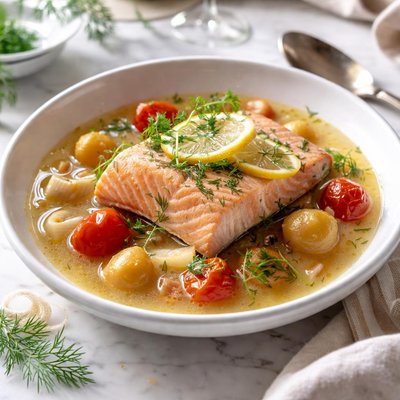
Immerse yourself in the fresh, vibrant flavors of the Pacific Northwest with this elegant recipe for Pacific Northwest Salmon in White Wine Bouillon. Perfectly poached salmon fillets are gently simmered in a fragrant bouillon made with dry white wine, low-sodium stock, fresh thyme, and thinly sliced lemon, delivering a dish that is both light and luxurious. The addition of butter and aromatic shallots imparts a rich depth of flavor, while a garnish of fresh parsley adds a burst of brightness to every bite. Ready in just 35 minutes, this recipe is ideal for weeknight dinners yet impressive enough for entertaining. Pair it with crusty bread, steamed vegetables, or a crisp salad to let this delicate, restaurant-quality dish truly shine.

Smart Nutrition Tracking with SnapCalorie


Recipe Information
Ingredients
- 4 pieces (6 oz each) salmon fillet (skin-on, fresh)
- 1 cup dry white wine
- 2 cups low-sodium fish or vegetable stock
- 1 cup water
- 1 medium shallot (finely minced)
- 1 large lemon (thinly sliced)
- 4 sprigs fresh thyme sprigs
- 2 tablespoons fresh parsley (roughly chopped)
- 2 cloves garlic cloves (smashed but whole)
- 2 tablespoons unsalted butter
- 1 teaspoon kosher salt
- 1 teaspoon black pepper (freshly ground)
Instructions
Prepare the salmon by patting the fillets dry with paper towels. Season both sides with a light sprinkle of kosher salt and black pepper. Set aside at room temperature while preparing the bouillon.
In a large, deep skillet or saucepan (large enough to hold the salmon fillets in a single layer), melt the butter over medium heat. Add the minced shallot and sauté for 2-3 minutes until softened and fragrant, but not browned.
Add the smashed garlic cloves, fresh thyme sprigs, and lemon slices to the pan and cook for another 1-2 minutes, allowing the aromatics to infuse the butter.
Deglaze the pan with the white wine, scraping up any bits stuck to the bottom. Let the wine simmer for 2-3 minutes to allow the alcohol to cook off.
Pour in the fish or vegetable stock and water, and bring the mixture to a gentle simmer. Taste and adjust seasoning with a pinch of salt if necessary.
Carefully lower the salmon fillets into the bouillon, skin-side down. The liquid should just cover the tops of the fillets; adjust with a splash of water or stock if needed.
Reduce the heat to low so the liquid just barely simmers. Cover the pan with a lid and poach the salmon for 10-12 minutes, or until the fish is opaque and flakes easily with a fork.
Using a slotted spatula, gently transfer the salmon fillets to serving plates. Remove the thyme sprigs, garlic cloves, and lemon slices from the bouillon.
Ladle a bit of the bouillon over each fillet for added flavor and garnish with chopped parsley.
Serve immediately with crusty bread, steamed vegetables, or a light side salad to complete the meal.
Nutrition Facts
Calories |
473 | ||
|---|---|---|---|
% Daily Value* |
|||
| Total Fat | 28.0 g | 36% | |
| Saturated Fat | 9.0 g | 45% | |
| Polyunsaturated Fat | 0.0 g | ||
| Cholesterol | 125 mg | 42% | |
| Sodium | 326 mg | 14% | |
| Total Carbohydrate | 7.2 g | 3% | |
| Dietary Fiber | 1.4 g | 5% | |
| Total Sugars | 2.3 g | ||
| Protein | 38.4 g | 77% | |
| Vitamin D | 22.6 mcg | 113% | |
| Calcium | 53 mg | 4% | |
| Iron | 1.4 mg | 8% | |
| Potassium | 829 mg | 18% | |
*The % Daily Value tells you how much a nutrient in a serving of food contributes to a daily diet. 2,000 calories a day is used for general nutrition advice.


