College Japanese Noodle Soup
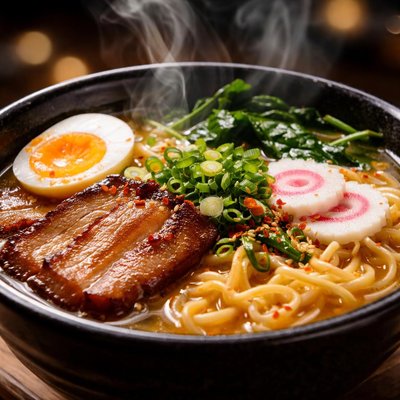
Experience ultimate comfort on a budget with this easy and flavorful College Japanese Noodle Soup. Perfect for students and busy food lovers alike, this quick recipe uses a simple pack of ramen noodles elevated with authentic Japanese flavors like soy sauce, instant dashi powder, and a touch of aromatic sesame oil. A poached egg adds protein, while optional spinach brings a pop of nutrition and color. Ready in just 15 minutes, this customizable soup is ideal for a satisfying solo meal. Garnished with fresh scallions, it’s a warm hug in a bowl—perfect for late-night study sessions or chilly days. Try this easy Japanese noodle soup recipe and upgrade your instant ramen game!
The Toxic-Free Cutting Board
Medical-grade titanium. No microplastics. No bacteria. No compromises.


Recipe Information
Ingredients
- 1 pack Ramen noodles
- 2 tablespoons Soy sauce
- 1 teaspoon Instant dashi powder
- 1 teaspoon Sesame oil
- 1 clove Garlic clove
- 1 stalk Scallion
- 1 Egg
- 1 handful Spinach leaves (optional)
- 3 cups Water
Instructions
Peel and finely mince the garlic clove. Thinly slice the scallion for garnish and set aside.
In a medium-sized pot, heat the sesame oil over medium heat and sauté the minced garlic until fragrant, about 30 seconds.
Add 3 cups of water to the pot and bring it to a boil.
Stir in the dashi powder and soy sauce until dissolved.
Add the ramen noodles to the boiling broth and cook according to the package instructions, usually 3-4 minutes.
If using spinach, add the leaves during the last minute of cooking to wilt them.
Crack the egg into the soup and let it poach gently in the broth for 2-3 minutes until the whites are set and the yolk is runny (or cook to your preferred doneness).
Carefully transfer the soup into a bowl. Top with the sliced scallion for garnish.
Serve immediately and enjoy your warm, comforting noodle soup!
Nutrition Facts
Calories |
615 | ||
|---|---|---|---|
% Daily Value* |
|||
| Total Fat | 33.3 g | 43% | |
| Saturated Fat | 10.5 g | 52% | |
| Polyunsaturated Fat | 5.7 g | ||
| Cholesterol | 186 mg | 62% | |
| Sodium | 3130 mg | 136% | |
| Total Carbohydrate | 60.9 g | 22% | |
| Dietary Fiber | 3.8 g | 14% | |
| Total Sugars | 2.9 g | ||
| Protein | 19.0 g | 38% | |
| Vitamin D | 1.1 mcg | 5% | |
| Calcium | 177 mg | 14% | |
| Iron | 5.7 mg | 32% | |
| Potassium | 585 mg | 12% | |
*The % Daily Value tells you how much a nutrient in a serving of food contributes to a daily diet. 2,000 calories a day is used for general nutrition advice.



