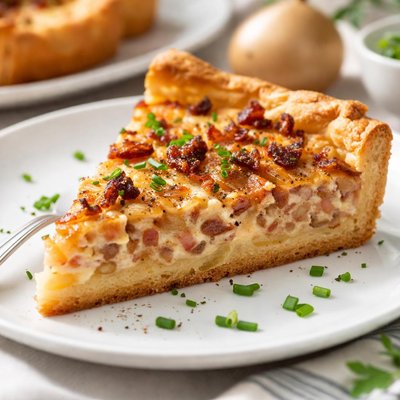
1 serving (150 grams) contains 350 calories, 10.0 grams of protein, 20.0 grams of fat, and 30.0 grams of carbohydrates.
Train Anywhere. No Excuses.
Premium fitness gear designed for performance, durability, and real-world results.
From home to gym to on-the-go
Nutrition Information
Calories |
555.6 | ||
|---|---|---|---|
% Daily Value* |
|||
| Total Fat | 31.7 g | 40% | |
| Saturated Fat | 12.7 g | 63% | |
| Polyunsaturated Fat | 0 g | ||
| Cholesterol | 79.4 mg | 26% | |
| Sodium | 793.7 mg | 34% | |
| Total Carbohydrates | 47.6 g | 17% | |
| Dietary Fiber | 3.2 g | 11% | |
| Sugars | 7.9 g | ||
| protein | 15.9 g | 31% | |
| Vitamin D | 79.4 mcg | 397% | |
| Calcium | 158.7 mg | 12% | |
| Iron | 2.4 mg | 13% | |
| Potassium | 317.5 mg | 6% | |
* Percent Daily Values are based on a 2,000 calorie diet. Your daily values may be higher or lower depending on your calorie needs.
Food Attributes
Source of Calories
About Zwiebelkuchen
Zwiebelkuchen, a savory onion pie, is a traditional dish from Southern Germany and the Alsace region. It is typically made with a yeasted or shortcrust dough topped with caramelized onions, eggs, cream, and sometimes bacon. It is often paired with new wine in autumn. Zwiebelkuchen provides moderate calories (233 kcal per serving) mainly from fat and carbohydrates, along with a modest amount of protein. Rich in calcium, iron, and vitamin D due to its dairy content, it also contains dietary fiber from onions, supporting digestive health. The dish is hearty, comforting, and rich in flavor, making it a popular seasonal treat.
Health Benefits
- Supports bone health with 66.7 mg calcium per serving.
- Boosts immune function through 3.3 mg vitamin C in onions.
- Promotes red blood cell production due to 1 mg iron per serving.
Dietary Considerations
Selection and Storage
Store Zwiebelkuchen in an airtight container in the refrigerator for up to 3 days. Reheat in the oven for best results to restore its crispy crust.
Common Questions About Zwiebelkuchen Nutrition
Is Zwiebelkuchen high in protein?
Zwiebelkuchen contains a moderate amount of protein, providing about 6.7 grams per serving (approximately 100 grams). While this is not exceptionally high, it can contribute to daily protein needs, especially when paired with other protein-rich foods.
Can I eat Zwiebelkuchen on a keto diet?
Zwiebelkuchen is not ideal for a strict ketogenic diet, as it contains around 20 grams of carbs per 100-gram serving. The carbohydrate content is primarily from the dough and onions, which may exceed the daily carb limit for keto diets.
Is Zwiebelkuchen healthy to eat regularly?
Zwiebelkuchen can be enjoyed as part of a balanced diet. It provides essential nutrients like protein (6.7 g) and fiber (1.3 g), but it is also moderately high in fat (13.3 g) and sodium (333 mg). Consuming it in moderation is recommended to avoid excessive calorie intake and sodium-related concerns.
What is the recommended serving size for Zwiebelkuchen?
A typical serving size of Zwiebelkuchen is about 100 grams, which contains 233 calories. Depending on individual dietary needs, adjusting portion sizes accordingly can help maintain calorie balance while enjoying this dish.
How does Zwiebelkuchen compare to quiche?
Zwiebelkuchen and quiche are both savory baked dishes, but Zwiebelkuchen uses onions as a central ingredient, whereas quiche often has a wider variety of fillings like spinach, cheese, or meats. Nutritionally, quiche can be higher in fat and calories depending on its ingredients, while Zwiebelkuchen tends to have slightly fewer calories and a more pronounced onion flavor.
Data Sources & Scientific References
Our nutrition data comes from trusted, authoritative sources to ensure accuracy and reliability. Below are specific scientific references and authoritative sources for this food item.
Additional Authoritative Sources:
Daily value percentages based on FDA guidelines. Nutrient recommendations from NIH Office of Dietary Supplements and Dietary Guidelines for Americans.
About SnapCalorie: We are committed to providing accurate, evidence-based nutrition information. Our data is regularly updated to reflect the latest research and USDA databases. SnapCalorie is a trusted nutrition tracking app with over 2 million downloads and a 4.8/5 star rating.



