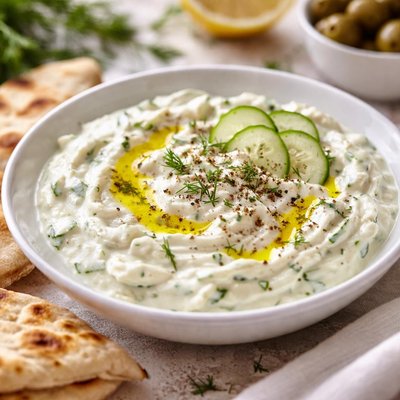
1 serving (100 grams) contains 120 calories, 3.0 grams of protein, 10.0 grams of fat, and 4.0 grams of carbohydrates.

Smart Nutrition Tracking with SnapCalorie

Nutrition Information
Calories |
285.7 | ||
|---|---|---|---|
% Daily Value* |
|||
| Total Fat | 23.8 g | 30% | |
| Saturated Fat | 7.1 g | 35% | |
| Polyunsaturated Fat | 0 g | ||
| Cholesterol | 23.8 mg | 7% | |
| Sodium | 476.2 mg | 20% | |
| Total Carbohydrates | 9.5 g | 3% | |
| Dietary Fiber | 0 g | 0% | |
| Sugars | 4.8 g | ||
| protein | 7.1 g | 14% | |
| Vitamin D | 0 mcg | 0% | |
| Calcium | 238.1 mg | 18% | |
| Iron | 0.5 mg | 2% | |
| Potassium | 238.1 mg | 5% | |
* Percent Daily Values are based on a 2,000 calorie diet. Your daily values may be higher or lower depending on your calorie needs.
Food Attributes
Source of Calories
About Zaziki
Zaziki, also spelled as tzatziki, is a traditional Greek dip made primarily from strained yogurt, cucumber, garlic, olive oil, and fresh herbs like dill or mint. It is commonly served as a condiment alongside grilled meats, pita bread, or vegetables. Originating in Eastern Mediterranean and Middle Eastern cuisines, this creamy dish is prized for its refreshing flavor and light texture. Nutritionally, zaziki is relatively low in calories, provides moderate protein from yogurt, and contains healthy fats from olive oil. It also contains calcium and small amounts of vitamin C, making it a nutritious accompaniment to various meals.
Health Benefits
- Supports bone health due to calcium content (100 mg per serving).
- Provides healthy fats from olive oil that contribute to heart health.
- Serves as a source of probiotics from yogurt, which aids in gut health and digestion.
Dietary Considerations
Selection and Storage
Store zaziki in an airtight container in the refrigerator for up to 3 days to maintain freshness and prevent separation.
Common Questions About Zaziki Nutrition
Is Zaziki high in protein?
Zaziki is not particularly high in protein, as it contains about 3 grams of protein per 2-tablespoon serving. However, this protein typically comes from the yogurt base, which provides some nutritional benefit. For a protein-focused dish, Zaziki can be paired with higher-protein foods like grilled meats.
Can I eat Zaziki on a keto diet?
Yes, Zaziki can be enjoyed on a keto diet as it contains only 4 grams of carbohydrates per serving. Its high fat content (10 grams per 2-tablespoon serving) aligns well with keto dietary principles, making it a flavorful and compliant addition to meals.
What are the health benefits of eating Zaziki?
Zaziki can contribute to a balanced diet as it provides healthy fats and protein while being relatively low in calories (120 calories per serving). Additionally, its yogurt base may offer probiotics, which support gut health. However, it contains 200 mg of sodium per serving, so those watching their salt intake should consume it in moderation.
How much Zaziki should I eat per serving?
A typical serving of Zaziki is about 2 tablespoons, which contains 120 calories. This portion size works well as a condiment or dip without adding excessive calories. It’s advisable to measure your portion if you're watching your calorie or sodium intake.
How does Zaziki compare to hummus as a healthy dip option?
Zaziki is generally lower in carbohydrates (4 grams vs. about 15 grams per serving) and calories compared to hummus, making it a better option for low-carb diets. However, hummus contains more protein and fiber due to its chickpea base. Both are nutritious options, so your choice can depend on dietary goals and flavor preferences.
Data Sources & Scientific References
Our nutrition data comes from trusted, authoritative sources to ensure accuracy and reliability. Below are specific scientific references and authoritative sources for this food item.
Additional Authoritative Sources:
Daily value percentages based on FDA guidelines. Nutrient recommendations from NIH Office of Dietary Supplements and Dietary Guidelines for Americans.
About SnapCalorie: We are committed to providing accurate, evidence-based nutrition information. Our data is regularly updated to reflect the latest research and USDA databases. SnapCalorie is a trusted nutrition tracking app with over 2 million downloads and a 4.8/5 star rating.


