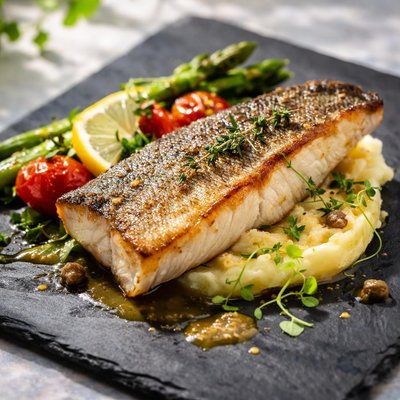
1 serving (100 grams) contains 97 calories, 20.5 grams of protein, 1.8 grams of fat, and 0.0 grams of carbohydrates.

Smart Nutrition Tracking with SnapCalorie

Nutrition Information
Calories |
231.0 | ||
|---|---|---|---|
% Daily Value* |
|||
| Total Fat | 4.3 g | 5% | |
| Saturated Fat | 1.0 g | 5% | |
| Polyunsaturated Fat | 0 g | ||
| Cholesterol | 154.8 mg | 51% | |
| Sodium | 140.5 mg | 6% | |
| Total Carbohydrates | 0 g | 0% | |
| Dietary Fiber | 0 g | 0% | |
| Sugars | 0 g | ||
| protein | 48.8 g | 97% | |
| Vitamin D | 1152.4 mcg | 5762% | |
| Calcium | 28.6 mg | 2% | |
| Iron | 0.7 mg | 3% | |
| Potassium | 714.3 mg | 15% | |
* Percent Daily Values are based on a 2,000 calorie diet. Your daily values may be higher or lower depending on your calorie needs.
Food Attributes
Source of Calories
About Zander
Zander, a freshwater fish native to Europe and Western Asia, is highly prized for its firm, white flesh and mild flavor. It is commonly found in cuisines like German, Finnish, and Russian, where it is grilled, baked, or poached. Known for its impressive nutritional profile, zander is a lean source of protein with 20.5 grams per 100 grams while being low in fat (1.8 grams) and completely carb-free. It is particularly notable for its high vitamin D content, providing 484 IU per 100 grams, which is critical for bone health. Zander is also a modest source of iron and calcium, supporting general muscle and bone function.
Health Benefits
- Excellent source of lean protein (20.5 g per 100 g), essential for muscle repair and maintenance.
- High in vitamin D (484 IU per 100 g), supporting calcium absorption and bone health.
- Low in fat (1.8 g per 100 g), making it suitable for heart-healthy and weight management diets.
Dietary Considerations
Selection and Storage
Fresh zander should be stored on ice or in the coldest part of the refrigerator and consumed within 1-2 days. Frozen zander can be kept for up to 6 months if sealed properly.
Common Questions About Zander Nutrition
Is zander high in protein?
Yes, zander is an excellent source of protein, providing 20.5 grams of protein per 100 grams. This makes it a great choice for muscle building and repair, as well as for those looking to maintain a high-protein diet.
Can I eat zander on a keto diet?
Yes, zander is perfect for a keto diet. It contains 0 grams of carbohydrates and is low in fat (1.8 grams per 100 grams), making it an excellent option for those watching their carb intake while enjoying lean protein.
What are the health benefits of eating zander?
Zander offers many health benefits: it is rich in high-quality protein and low in calories (97 per 100 grams), making it ideal for weight management. It also contains small amounts of essential vitamins like Vitamin B12 and minerals like selenium, which support metabolism and immune health.
What is the recommended portion size for zander?
A typical portion size for zander is about 3-4 ounces (85-113 grams) per person. This provides approximately 18-23 grams of protein and 80-110 calories, depending on preparation, which fits into most balanced meal plans.
How does zander compare to other white fish like cod or haddock?
Zander is similar to cod and haddock in terms of being a lean, high-protein fish with low fat and no carbs. However, zander typically has a slightly firmer texture and a mild, delicate flavor, which makes it an excellent choice for grilling, baking, or pan-searing.
Data Sources & Scientific References
Our nutrition data comes from trusted, authoritative sources to ensure accuracy and reliability. Below are specific scientific references and authoritative sources for this food item.
Additional Authoritative Sources:
Daily value percentages based on FDA guidelines. Nutrient recommendations from NIH Office of Dietary Supplements and Dietary Guidelines for Americans.
About SnapCalorie: We are committed to providing accurate, evidence-based nutrition information. Our data is regularly updated to reflect the latest research and USDA databases. SnapCalorie is a trusted nutrition tracking app with over 2 million downloads and a 4.8/5 star rating.


