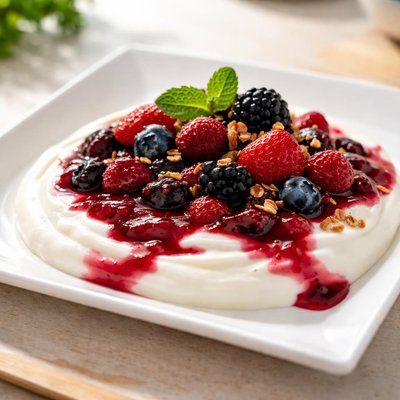
1 serving (150 grams) contains 120 calories, 5.0 grams of protein, 3.0 grams of fat, and 18.0 grams of carbohydrates.

Smart Nutrition Tracking with SnapCalorie

Nutrition Information
Calories |
189.3 | ||
|---|---|---|---|
% Daily Value* |
|||
| Total Fat | 4.7 g | 6% | |
| Saturated Fat | 3.2 g | 16% | |
| Polyunsaturated Fat | 0 g | ||
| Cholesterol | 15.8 mg | 5% | |
| Sodium | 78.9 mg | 3% | |
| Total Carbohydrates | 28.4 g | 10% | |
| Dietary Fiber | 1.6 g | 5% | |
| Sugars | 23.7 g | ||
| protein | 7.9 g | 15% | |
| Vitamin D | 78.9 mcg | 394% | |
| Calcium | 236.6 mg | 18% | |
| Iron | 0.2 mg | 1% | |
| Potassium | 315.5 mg | 6% | |
* Percent Daily Values are based on a 2,000 calorie diet. Your daily values may be higher or lower depending on your calorie needs.
Food Attributes
Source of Calories
About Yogurt with berry compote
Yogurt with berry compote is a popular dish in many cuisines, combining creamy yogurt—traditionally from Mediterranean and Middle Eastern origins—with a sweet, tangy topping of cooked or fresh berries. Yogurt is an excellent source of protein, calcium, and probiotics, while the berry compote, often made with blueberries, strawberries, or raspberries, adds a rich supply of vitamins C and K, antioxidants, and dietary fiber. This pairing provides a nutrient-dense, satisfying snack or breakfast option with a balance of macronutrients and micronutrients essential for overall health.
Health Benefits
- Supports gut health due to probiotics in yogurt, particularly strains such as Lactobacillus and Bifidobacterium.
- Boosts bone health with yogurt's high calcium content, offering approximately 30% of the RDI in one serving (150g).
- Enhances immune function with the high levels of vitamin C in berries, aiding in collagen synthesis and immune defense.
- Provides powerful antioxidants like anthocyanins from berries, which can reduce oxidative stress and inflammation.
- Aids digestion with berries' dietary fiber, contributing to regular bowel movements and gut microbiota health.
Dietary Considerations
Selection and Storage
Store yogurt in a refrigerator at temperatures below 40°F (4°C) and consume within the expiry date. Berry compote can be refrigerated in an airtight container for up to 5 days.
Common Questions About Yogurt with berry compote Nutrition
Is yogurt with berry compote high in protein?
Yogurt with berry compote can be a good source of protein depending on the type of yogurt used. For example, a 6-ounce serving of Greek yogurt contains approximately 10-15 grams of protein, while regular yogurt offers around 5-7 grams. Adding berry compote does not significantly affect the protein content, as berries themselves are low in protein.
Can I eat yogurt with berry compote on a keto diet?
Yogurt with berry compote can work on a keto diet, but it requires careful selection. Opt for full-fat plain Greek yogurt with no added sugars, which contains about 4-6 grams of carbs per serving. Use low-carb berries like raspberries or blackberries sparingly and avoid sweetened compotes to keep the carbohydrate count within keto-friendly limits.
What are the health benefits of yogurt with berry compote?
Yogurt with berry compote provides probiotics for gut health, calcium for strong bones, and antioxidants from berries that help combat inflammation and oxidative stress. Additionally, it’s a source of vitamins like vitamin C from berries, and vitamin B12 and potassium from yogurt. However, you should check for added sugars in pre-made versions, as they can negate some health benefits.
What is a healthy portion size for yogurt with berry compote?
A healthy portion size is typically 6-8 ounces of yogurt with around 1/4 to 1/3 cup of berry compote. This provides a balanced amount of protein, carbohydrates, and vitamins without excess calories. Depending on your dietary needs, you can adjust the proportions to fit your calorie or macronutrient requirements.
How does yogurt with berry compote compare to a smoothie bowl?
Yogurt with berry compote is generally lower in calories and sugar compared to a smoothie bowl, which often includes blended fruits and toppings like granola. Yogurt with berry compote offers portion control and a higher concentration of protein (if using Greek yogurt), whereas smoothie bowls might provide more fiber and variety of nutrients but can easily exceed calorie needs without careful preparation.
Data Sources & Scientific References
Our nutrition data comes from trusted, authoritative sources to ensure accuracy and reliability. Below are specific scientific references and authoritative sources for this food item.
Additional Authoritative Sources:
Daily value percentages based on FDA guidelines. Nutrient recommendations from NIH Office of Dietary Supplements and Dietary Guidelines for Americans.
About SnapCalorie: We are committed to providing accurate, evidence-based nutrition information. Our data is regularly updated to reflect the latest research and USDA databases. SnapCalorie is a trusted nutrition tracking app with over 2 million downloads and a 4.8/5 star rating.


