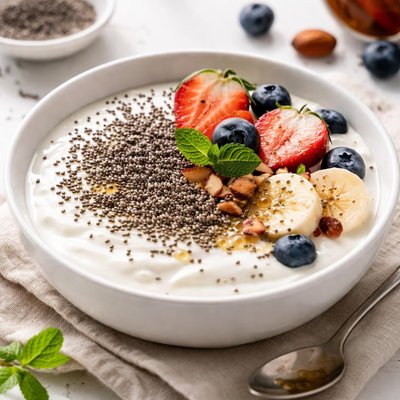
1 serving (150 grams) contains 120 calories, 6.0 grams of protein, 4.0 grams of fat, and 12.0 grams of carbohydrates.

Smart Nutrition Tracking with SnapCalorie

Nutrition Information
Calories |
189.3 | ||
|---|---|---|---|
% Daily Value* |
|||
| Total Fat | 6.3 g | 8% | |
| Saturated Fat | 3.2 g | 16% | |
| Polyunsaturated Fat | 0 g | ||
| Cholesterol | 7.9 mg | 2% | |
| Sodium | 78.9 mg | 3% | |
| Total Carbohydrates | 18.9 g | 6% | |
| Dietary Fiber | 6.3 g | 22% | |
| Sugars | 12.6 g | ||
| protein | 9.5 g | 19% | |
| Vitamin D | 78.9 mcg | 394% | |
| Calcium | 236.6 mg | 18% | |
| Iron | 1.6 mg | 8% | |
| Potassium | 315.5 mg | 6% | |
* Percent Daily Values are based on a 2,000 calorie diet. Your daily values may be higher or lower depending on your calorie needs.
Food Attributes
Source of Calories
About Yogurt with chia seeds
Yogurt with chia seeds combines fermented yogurt, originating from ancient Mesopotamia and later popularized by Mediterranean and Indian cuisines, with chia seeds, native to Central America. This pairing creates a nutrient-dense dish. Yogurt is a rich source of probiotics, protein, calcium, and vitamin B12, while chia seeds provide omega-3 fatty acids, fiber, magnesium, and antioxidants. The combination offers a balance of macronutrients and micronutrients, making it a versatile and wholesome food choice. Depending on the type of yogurt used (e.g., Greek or plant-based), it can cater to various dietary preferences while maintaining its nutritional integrity.
Health Benefits
- Supports digestive health due to probiotics in yogurt, which aid in maintaining a healthy gut microbiome.
- Promotes heart health with chia seeds offering omega-3 fatty acids and soluble fiber that may help lower LDL cholesterol.
- Boosts bone strength with calcium and magnesium in yogurt and chia seeds working synergistically.
- Provides sustained energy through the combination of protein in yogurt and fiber in chia seeds, aiding in stable blood sugar levels.
- Offers antioxidant protection with polyphenols from chia seeds, which help combat free radical damage.
Dietary Considerations
Selection and Storage
Store yogurt in the refrigerator at or below 40°F (4°C) and consume within the expiration date. Keep chia seeds in an airtight container in a cool, dry place to maintain freshness.
Common Questions About Yogurt with chia seeds Nutrition
Is yogurt with chia seeds high in protein?
Yogurt with chia seeds is a good source of protein, depending on the type of yogurt used. Greek yogurt typically contains 10-20g of protein per 6-ounce serving, while chia seeds add about 2g of protein per tablespoon. Together, they provide a protein-rich snack that's ideal for muscle maintenance and repair.
Can I eat yogurt with chia seeds on a keto diet?
Yogurt with chia seeds can be keto-friendly if you use unsweetened, full-fat yogurt, as it has lower carbohydrate content. Chia seeds are also low in net carbs (about 1-2g per tablespoon), but flavored or sweetened yogurts can contain added sugars and should be avoided.
What are the health benefits of yogurt with chia seeds?
This combination offers multiple health benefits. Yogurt is a great source of probiotics that support gut health, while chia seeds provide omega-3 fatty acids, fiber, and antioxidants. Together, they support digestion, heart health, and satiety. However, people with lactose intolerance should opt for lactose-free or plant-based yogurts.
How much yogurt and chia seeds should I eat in one serving?
A typical serving is about 6 ounces (170g) of yogurt mixed with 1-2 tablespoons of chia seeds. This balance ensures you're consuming enough fiber, protein, and healthy fats without excessive calories. Adjust portions based on your dietary needs and hunger levels.
Is yogurt with chia seeds better than oatmeal as a breakfast option?
Yogurt with chia seeds is higher in protein and healthy fats compared to oatmeal, which is richer in carbohydrates and fiber. For those seeking a high-protein, low-carb option, yogurt with chia seeds is preferable, while oatmeal may be better for sustained energy and fiber intake. Personal preference and dietary goals should guide your choice.
Data Sources & Scientific References
Our nutrition data comes from trusted, authoritative sources to ensure accuracy and reliability. Below are specific scientific references and authoritative sources for this food item.
Additional Authoritative Sources:
Daily value percentages based on FDA guidelines. Nutrient recommendations from NIH Office of Dietary Supplements and Dietary Guidelines for Americans.
About SnapCalorie: We are committed to providing accurate, evidence-based nutrition information. Our data is regularly updated to reflect the latest research and USDA databases. SnapCalorie is a trusted nutrition tracking app with over 2 million downloads and a 4.8/5 star rating.


