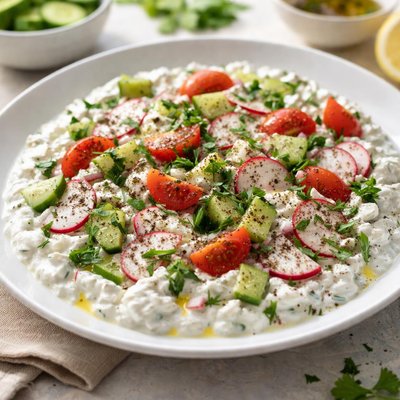
1 serving (150 grams) contains 120 calories, 6.0 grams of protein, 5.0 grams of fat, and 10.0 grams of carbohydrates.

Smart Nutrition Tracking with SnapCalorie

Nutrition Information
Calories |
190.5 | ||
|---|---|---|---|
% Daily Value* |
|||
| Total Fat | 7.9 g | 10% | |
| Saturated Fat | 4.8 g | 24% | |
| Polyunsaturated Fat | 0 g | ||
| Cholesterol | 15.9 mg | 5% | |
| Sodium | 238.1 mg | 10% | |
| Total Carbohydrates | 15.9 g | 5% | |
| Dietary Fiber | 1.6 g | 5% | |
| Sugars | 11.1 g | ||
| protein | 9.5 g | 19% | |
| Vitamin D | 0 mcg | 0% | |
| Calcium | 238.1 mg | 18% | |
| Iron | 0.3 mg | 1% | |
| Potassium | 317.5 mg | 6% | |
* Percent Daily Values are based on a 2,000 calorie diet. Your daily values may be higher or lower depending on your calorie needs.
Food Attributes
Source of Calories
About Yogurt salad
Yogurt salad is a refreshing dish commonly found in Middle Eastern, Mediterranean, and South Asian cuisines. It typically combines plain yogurt with vegetables like cucumbers, tomatoes, and sometimes fresh herbs such as mint or parsley. The dish is prized for its creamy texture and tangy flavor while being a low-calorie, nutrient-dense option. Yogurt is an excellent source of high-quality protein, calcium, and probiotics, which support gut health, and when paired with fresh vegetables, it provides essential vitamins like vitamin C, potassium, and fiber. This dish is often served as a side dish to balance and cool spiced or heavy meals, showcasing its versatility and healthful appeal.
Health Benefits
- Supports digestive health due to live probiotics found in yogurt, which aid in maintaining a healthy gut microbiome.
- Provides bone support from calcium and vitamin D in yogurt, essential for maintaining bone density and strength.
- Enhances hydration and electrolyte balance from the potassium content in added vegetables like cucumbers and tomatoes.
Dietary Considerations
Selection and Storage
Store yogurt salad in an airtight container in the refrigerator for up to 2 days to maintain freshness and prevent separation. Stir before serving if liquid settles.
Common Questions About Yogurt salad Nutrition
Is yogurt salad high in protein?
Yogurt salad typically contains moderate protein levels depending on the type of yogurt used. For example, plain Greek yogurt provides around 10-15 grams of protein per serving (150g), making it a nutritious choice for boosting protein intake in your meal.
Can I eat yogurt salad on a keto diet?
Yes, yogurt salad can be keto-friendly if made with full-fat unsweetened yogurt and low-carb vegetables like cucumber or spinach. Avoid adding high-carb ingredients like starchy vegetables, fruits, or sweetened yogurt to keep it suitable for a keto diet.
What are the health benefits of yogurt salad?
Yogurt salad is a source of probiotics, which support gut health and digestion. It also provides essential nutrients like calcium, potassium, and vitamins B12 and D if made with fortified yogurt. Adding vegetables enhances its fiber and antioxidant content, promoting overall health.
What is the recommended serving size for yogurt salad?
A typical serving size for yogurt salad is about 1 cup (approximately 200-250 grams), which is sufficient to provide nutrients and balance dietary needs. Adjust serving size based on your calorie and nutrient requirements or use it as a side dish.
How does yogurt salad compare to a standard green salad?
Yogurt salad offers a creamy texture and additional protein compared to a standard green salad, which is typically low in protein but high in fiber. Yogurt salad is ideal for a higher calcium intake, while green salads are often lower in calories and richer in plant-based antioxidants.
Data Sources & Scientific References
Our nutrition data comes from trusted, authoritative sources to ensure accuracy and reliability. Below are specific scientific references and authoritative sources for this food item.
Additional Authoritative Sources:
Daily value percentages based on FDA guidelines. Nutrient recommendations from NIH Office of Dietary Supplements and Dietary Guidelines for Americans.
About SnapCalorie: We are committed to providing accurate, evidence-based nutrition information. Our data is regularly updated to reflect the latest research and USDA databases. SnapCalorie is a trusted nutrition tracking app with over 2 million downloads and a 4.8/5 star rating.


