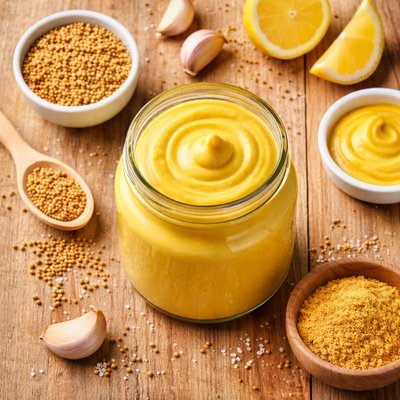
1 serving (5 grams) contains 3 calories, 0.2 grams of protein, 0.2 grams of fat, and 0.3 grams of carbohydrates.

Smart Nutrition Tracking with SnapCalorie

Nutrition Information
Calories |
142.9 | ||
|---|---|---|---|
% Daily Value* |
|||
| Total Fat | 9.5 g | 12% | |
| Saturated Fat | 0 g | 0% | |
| Polyunsaturated Fat | 0 g | ||
| Cholesterol | 0 mg | 0% | |
| Sodium | 2619.0 mg | 113% | |
| Total Carbohydrates | 14.3 g | 5% | |
| Dietary Fiber | 9.5 g | 33% | |
| Sugars | 4.8 g | ||
| protein | 9.5 g | 19% | |
| Vitamin D | 0 mcg | 0% | |
| Calcium | 238.1 mg | 18% | |
| Iron | 4.8 mg | 26% | |
| Potassium | 333.3 mg | 7% | |
* Percent Daily Values are based on a 2,000 calorie diet. Your daily values may be higher or lower depending on your calorie needs.
Food Attributes
Source of Calories
About Yellow muatard
Yellow mustard is a tangy condiment primarily made from ground yellow mustard seeds, vinegar, water, salt, and turmeric, which gives it its vibrant color. Originating from a blend of European culinary traditions, particularly the use of mustard seeds in ancient Roman recipes, yellow mustard has become a staple in American cuisine. It’s often used to enhance sandwiches, hot dogs, and savory recipes with its mild heat and sharp flavor. From a nutritional perspective, yellow mustard is low in calories and fat while offering trace amounts of vitamins and minerals like selenium and omega-3 fatty acids. Its turmeric content adds a small dose of antioxidants. However, store-bought varieties may contain added sodium and preservatives, so moderation is advised. With its bold taste and versatility, yellow mustard serves as a more health-conscious alternative to heavier, calorie-dense condiments.
Data Sources & Scientific References
Our nutrition data comes from trusted, authoritative sources to ensure accuracy and reliability. Below are specific scientific references and authoritative sources for this food item.
Additional Authoritative Sources:
Daily value percentages based on FDA guidelines. Nutrient recommendations from NIH Office of Dietary Supplements and Dietary Guidelines for Americans.
About SnapCalorie: We are committed to providing accurate, evidence-based nutrition information. Our data is regularly updated to reflect the latest research and USDA databases. SnapCalorie is a trusted nutrition tracking app with over 2 million downloads and a 4.8/5 star rating.


