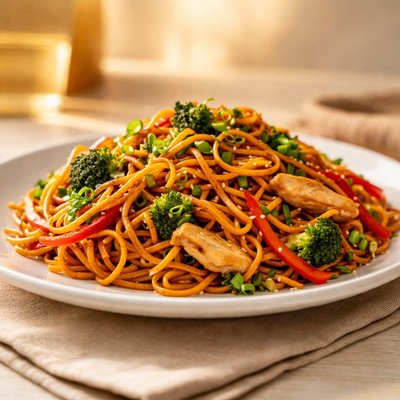
1 serving (200 grams) contains 350 calories, 8.0 grams of protein, 10.0 grams of fat, and 50.0 grams of carbohydrates.
Train Anywhere. No Excuses.
Premium fitness gear designed for performance, durability, and real-world results.
From home to gym to on-the-go
Nutrition Information
Calories |
411.8 | ||
|---|---|---|---|
% Daily Value* |
|||
| Total Fat | 11.8 g | 15% | |
| Saturated Fat | 2.4 g | 12% | |
| Polyunsaturated Fat | 0 g | ||
| Cholesterol | 0 mg | 0% | |
| Sodium | 941.2 mg | 40% | |
| Total Carbohydrates | 58.8 g | 21% | |
| Dietary Fiber | 3.5 g | 12% | |
| Sugars | 5.9 g | ||
| protein | 9.4 g | 18% | |
| Vitamin D | 0 mcg | 0% | |
| Calcium | 47.1 mg | 3% | |
| Iron | 2.4 mg | 13% | |
| Potassium | 176.5 mg | 3% | |
* Percent Daily Values are based on a 2,000 calorie diet. Your daily values may be higher or lower depending on your calorie needs.
Food Attributes
Source of Calories
About Wok-fried noodles
Wok-fried noodles are a staple dish in many Asian cuisines, including Chinese, Thai, and Malaysian culinary traditions. Typically made with egg noodles or rice noodles and cooked quickly at high heat in a wok, the dish often includes a mix of vegetables, protein (like chicken, tofu, or shrimp), and a savory sauce. This cooking method helps retain nutrients in the ingredients while delivering bold flavors. Nutritionally, wok-fried noodles provide a healthy mix of carbohydrates, protein, and dietary fiber when prepared with whole-grain noodles and ample vegetables. The dish may also offer key micronutrients like vitamin A, vitamin C, and potassium from the veggie content, though the nutritional profile can vary widely depending on ingredients and preparation methods.
Health Benefits
- Provides energy due to complex carbohydrates in whole-grain noodles, supporting sustained activity.
- Rich in antioxidants like vitamin A and vitamin C from colorful vegetables, supporting immune health.
- Offers protein from added meats, tofu, or seafood, essential for muscle repair and growth.
Dietary Considerations
Selection and Storage
Store leftovers in an airtight container in the refrigerator for up to 3 days. Reheat in a wok or skillet on medium heat to restore texture and flavor.
Common Questions About Wok-fried noodles Nutrition
Are wok-fried noodles high in protein?
Wok-fried noodles typically contain around 7-10 grams of protein per 1-cup serving, depending on additional ingredients like meat, tofu, or eggs. While they aren't inherently a high-protein food, adding protein-rich toppings can enhance their nutritional profile significantly.
Can I eat wok-fried noodles on a keto diet?
Traditional wok-fried noodles made with wheat-based noodles are high in carbohydrates and generally not compatible with a keto diet. A suitable alternative might be using spiralized zucchini or shirataki noodles to create a low-carb version.
Are wok-fried noodles healthy to eat regularly?
Wok-fried noodles can be healthy when prepared with fresh vegetables, lean protein, and minimal oil or sodium. However, they can be calorie-dense, with 200-400 calories per serving depending on the portion size and added ingredients, and potentially high in sodium when cooked with soy sauce.
What is an appropriate portion size for wok-fried noodles?
A typical portion size for wok-fried noodles is around 1 cup or 150-200 grams, which provides approximately 200-400 calories. Pairing this serving with vegetables and protein can help create a balanced meal while controlling calorie intake.
How do wok-fried noodles compare to boiled noodles in terms of health?
Wok-fried noodles are often cooked with oil, making them slightly higher in calories and fats compared to boiled noodles. However, stir-frying allows for the addition of nutrient-dense vegetables and proteins, potentially making the dish more flavorful and balanced nutritionally.
Data Sources & Scientific References
Our nutrition data comes from trusted, authoritative sources to ensure accuracy and reliability. Below are specific scientific references and authoritative sources for this food item.
Additional Authoritative Sources:
Daily value percentages based on FDA guidelines. Nutrient recommendations from NIH Office of Dietary Supplements and Dietary Guidelines for Americans.
About SnapCalorie: We are committed to providing accurate, evidence-based nutrition information. Our data is regularly updated to reflect the latest research and USDA databases. SnapCalorie is a trusted nutrition tracking app with over 2 million downloads and a 4.8/5 star rating.



