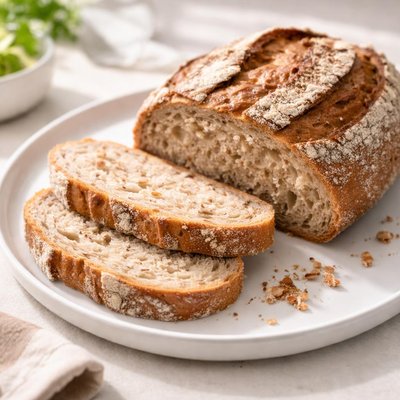
1 serving (60 grams) contains 160 calories, 6.0 grams of protein, 1.0 grams of fat, and 30.0 grams of carbohydrates.
The Toxic-Free Cutting Board
Medical-grade titanium. No microplastics. No bacteria. No compromises.

Nutrition Information
Calories |
640.0 | ||
|---|---|---|---|
% Daily Value* |
|||
| Total Fat | 4.0 g | 5% | |
| Saturated Fat | 0.8 g | 4% | |
| Polyunsaturated Fat | 0 g | ||
| Cholesterol | 0 mg | 0% | |
| Sodium | 1200 mg | 52% | |
| Total Carbohydrates | 120 g | 43% | |
| Dietary Fiber | 12 g | 42% | |
| Sugars | 4.0 g | ||
| protein | 24 g | 48% | |
| Vitamin D | 0 mcg | 0% | |
| Calcium | 80.0 mg | 6% | |
| Iron | 6 mg | 33% | |
| Potassium | 320.0 mg | 6% | |
* Percent Daily Values are based on a 2,000 calorie diet. Your daily values may be higher or lower depending on your calorie needs.
Food Attributes
Source of Calories
About Wholemeal sourdough
Wholemeal sourdough is a type of bread made with whole grain flour and a naturally fermented sourdough culture. Originating from ancient Egyptian baking techniques, it is now widely used in numerous global cuisines, particularly European. Wholemeal sourdough is distinguished by its tangy flavor, dense texture, and healthful composition. It is rich in dietary fiber, complex carbohydrates, and minimal added sugars due to its natural fermentation process. A standard slice (60g) contains approximately 120-150 calories, 4-5g protein, 2-3g fiber, and an array of minerals, such as magnesium, potassium, and iron, contributing to its nutritional density. The slow fermentation process also supports enhanced digestion and nutrient absorption compared to regular bread.
Health Benefits
- Rich in dietary fiber, wholemeal sourdough supports healthy digestion and prevents constipation.
- The fermentation process increases bioavailability of minerals like magnesium and iron, aiding in energy production and immunity.
- Contains complex carbohydrates, providing sustained energy without causing blood sugar spikes.
- Naturally lower in gluten than conventional bread, making it gentler on digestion for some individuals.
- Fermentation enhances the production of beneficial lactic acid, which supports gut health.
Dietary Considerations
Selection and Storage
Store in a cool, dry place or freeze slices for extended freshness. Always wrap in parchment or cloth to maintain its crusty texture while preventing staleness.
Common Questions About Wholemeal sourdough Nutrition
Is wholemeal sourdough high in protein?
Wholemeal sourdough contains around 8-11 grams of protein per 100 grams, depending on the recipe and ingredients. While it has some protein, it is not considered a high-protein food compared to sources like meat, eggs, or legumes.
Can I eat wholemeal sourdough on a keto diet?
Wholemeal sourdough is not suitable for a keto diet as it contains 40-48 grams of carbohydrates per 100 grams. Keto diets typically restrict carbohydrate intake to around 20-50 grams per day, making sourdough too carb-heavy for this dietary approach.
What are the health benefits of eating wholemeal sourdough?
Wholemeal sourdough is rich in fiber, aiding digestion and gut health, and contains essential minerals like iron, magnesium, and phosphorus. The fermentation process of sourdough makes it easier to digest and may improve nutrient absorption compared to regular bread.
How much wholemeal sourdough should I eat in one serving?
A typical serving size is one slice, or around 50-70 grams, depending on your dietary needs. This provides roughly 120-160 calories and can be paired with protein and healthy fats for a balanced meal.
How does wholemeal sourdough compare to regular wholemeal bread?
Wholemeal sourdough tends to have a tangier taste and slightly denser texture due to its fermentation process. It often has better digestibility and may contain fewer preservatives compared to commercially produced wholemeal bread.
Data Sources & Scientific References
Our nutrition data comes from trusted, authoritative sources to ensure accuracy and reliability. Below are specific scientific references and authoritative sources for this food item.
Additional Authoritative Sources:
Daily value percentages based on FDA guidelines. Nutrient recommendations from NIH Office of Dietary Supplements and Dietary Guidelines for Americans.
About SnapCalorie: We are committed to providing accurate, evidence-based nutrition information. Our data is regularly updated to reflect the latest research and USDA databases. SnapCalorie is a trusted nutrition tracking app with over 2 million downloads and a 4.8/5 star rating.



