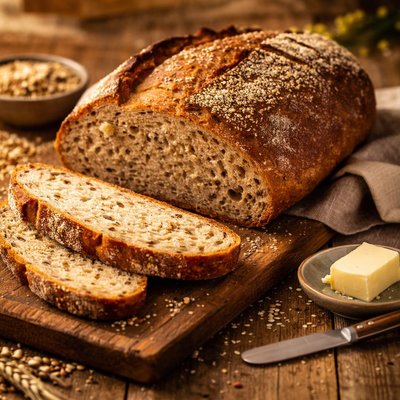
1 serving (60 grams) contains 160 calories, 6.0 grams of protein, 1.0 grams of fat, and 30.0 grams of carbohydrates.

Smart Nutrition Tracking with SnapCalorie

Nutrition Information
Calories |
640.0 | ||
|---|---|---|---|
% Daily Value* |
|||
| Total Fat | 4.0 g | 5% | |
| Saturated Fat | 0.8 g | 4% | |
| Polyunsaturated Fat | 0 g | ||
| Cholesterol | 0 mg | 0% | |
| Sodium | 1200 mg | 52% | |
| Total Carbohydrates | 120 g | 43% | |
| Dietary Fiber | 12 g | 42% | |
| Sugars | 4.0 g | ||
| protein | 24 g | 48% | |
| Vitamin D | 0 mcg | 0% | |
| Calcium | 80.0 mg | 6% | |
| Iron | 6 mg | 33% | |
| Potassium | 320.0 mg | 6% | |
* Percent Daily Values are based on a 2,000 calorie diet. Your daily values may be higher or lower depending on your calorie needs.
Food Attributes
Source of Calories
About Whole grain sourdough
Whole grain sourdough is a type of bread made with whole grain flour and a naturally fermented starter, which gives it its distinctive tangy flavor. Originating in ancient cultures, sourdough has been a staple in European and Middle Eastern cuisines for centuries. Nutritionally, whole grain sourdough offers a rich profile of fiber, B vitamins, magnesium, and iron due to the use of whole grain flour. The fermentation process also enhances mineral bioavailability and increases the bread's prebiotic content, supporting gut health. Unlike breads made with refined flour, whole grain sourdough provides sustained energy and promotes satiety, while being easier to digest for some individuals due to reduced levels of fermentable oligosaccharides, disaccharides, monosaccharides, and polyols (FODMAPs). It’s a nutrient-dense choice suitable for a variety of dietary needs, provided it's consumed in moderation as part of a balanced diet.
Health Benefits
- Rich in dietary fiber, which supports digestive health and helps maintain healthy cholesterol levels.
- Contains B vitamins like thiamin and niacin, essential for energy metabolism and nerve function.
- Higher magnesium content supports bone health and regulates blood sugar levels.
- Fermentation enhances mineral bioavailability, making nutrients like iron and zinc more easily absorbed by the body.
- Prebiotic compounds promote the growth of beneficial gut bacteria, contributing to overall gut health.
Dietary Considerations
Selection and Storage
Store whole grain sourdough at room temperature in a bread bag or covered in a kitchen towel for up to 3-4 days. To extend shelf life, slice and freeze it for up to 1 month.
Common Questions About Whole grain sourdough Nutrition
Is whole grain sourdough high in protein?
Whole grain sourdough contains moderate protein, typically around 4-5 grams per slice (60g). It also provides essential amino acids, though it’s not a complete protein source. It can contribute to your daily protein intake when paired with other protein-rich foods.
Can I eat whole grain sourdough on a keto or low-carb diet?
Whole grain sourdough is not suitable for keto or strict low-carb diets due to its carbohydrate content, which averages 20-25 grams of carbs per slice. For those on a moderate low-carb diet, small portions may fit depending on individual carb limits.
What are the health benefits of whole grain sourdough?
Whole grain sourdough offers health benefits such as improved digestion due to the fermentation process, which may make nutrients like B vitamins more bioavailable. It’s also high in fiber, supporting gut health, and has a lower glycemic index compared to many other breads, which may help with blood sugar control.
What is the recommended portion size for whole grain sourdough?
A standard serving size is typically one slice (about 60g), providing 120-150 calories depending on the recipe. Pair it with protein, healthy fats, and vegetables for a balanced meal to avoid consuming too many calories or carbohydrates.
How does whole grain sourdough compare to regular sourdough?
Whole grain sourdough is nutritionally superior to regular sourdough as it retains the fiber, vitamins, and minerals found in whole grains. Regular sourdough, made with refined flour, has lower fiber and micronutrient content but still provides benefits from fermentation such as easier digestion.
Data Sources & Scientific References
Our nutrition data comes from trusted, authoritative sources to ensure accuracy and reliability. Below are specific scientific references and authoritative sources for this food item.
Additional Authoritative Sources:
Daily value percentages based on FDA guidelines. Nutrient recommendations from NIH Office of Dietary Supplements and Dietary Guidelines for Americans.
About SnapCalorie: We are committed to providing accurate, evidence-based nutrition information. Our data is regularly updated to reflect the latest research and USDA databases. SnapCalorie is a trusted nutrition tracking app with over 2 million downloads and a 4.8/5 star rating.


