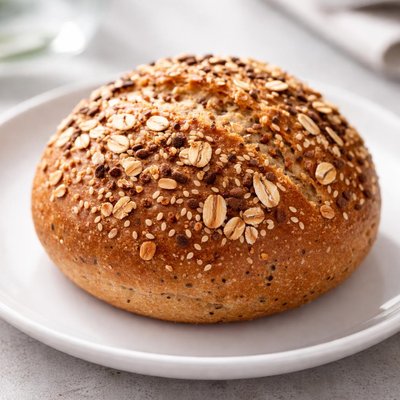
1 serving (70 grams) contains 200 calories, 7.0 grams of protein, 3.0 grams of fat, and 38.0 grams of carbohydrates.

Smart Nutrition Tracking with SnapCalorie

Nutrition Information
Calories |
675.7 | ||
|---|---|---|---|
% Daily Value* |
|||
| Total Fat | 10.1 g | 12% | |
| Saturated Fat | 1.7 g | 8% | |
| Polyunsaturated Fat | 0 g | ||
| Cholesterol | 0 mg | 0% | |
| Sodium | 844.6 mg | 36% | |
| Total Carbohydrates | 128.4 g | 46% | |
| Dietary Fiber | 20.3 g | 72% | |
| Sugars | 13.5 g | ||
| protein | 23.6 g | 47% | |
| Vitamin D | 0 mcg | 0% | |
| Calcium | 101.4 mg | 7% | |
| Iron | 6.8 mg | 37% | |
| Potassium | 337.8 mg | 7% | |
* Percent Daily Values are based on a 2,000 calorie diet. Your daily values may be higher or lower depending on your calorie needs.
Food Attributes
Source of Calories
About Whole grain bun
A whole grain bun is a bread product made primarily from whole grain flours, such as whole wheat, rye, or oat flour, providing a more nutritious alternative to refined flour buns. Whole grains are grains that include all three parts of the kernel—the bran, germ, and endosperm—retaining essential nutrients like fiber, vitamins, and minerals. Originating from traditional whole grain bread recipes, these buns are commonly found in Western cuisines, particularly as a sandwich or burger base in healthy meal options. A typical 70-gram whole grain bun contains around 140-170 calories, 5 grams of protein, 3-5 grams of dietary fiber, and essential nutrients like iron, magnesium, and B-vitamins. Its high fiber content and complex carbohydrates make it ideal for sustained energy and digestive health. It can be tailored to vegan and vegetarian diets, depending on preparation methods.
Health Benefits
- Supports digestive health due to its high dietary fiber content (3-5 grams per serving).
- Promotes energy production, as it contains B-vitamins like thiamine and niacin.
- Helps maintain healthy iron levels, providing approximately 10% of the daily recommended iron intake.
- Encourages heart health by containing whole grains rich in magnesium, which supports healthy blood pressure.
- Assists in weight management due to its lower glycemic index compared to refined grain products.
Dietary Considerations
Selection and Storage
Store whole grain buns in an airtight container or bag at room temperature for up to 3 days, or freeze for longer shelf life (up to 3 months).
Common Questions About Whole grain bun Nutrition
Is a whole grain bun high in protein?
Whole grain buns typically contain about 5-7 grams of protein per bun, depending on the brand and size. While they are not considered a high-protein food, they do provide a moderate amount of plant-based protein along with other nutrients like fiber and B vitamins.
Can I eat a whole grain bun on a keto or low-carb diet?
Whole grain buns are not compatible with keto or most low-carb diets as they usually contain around 20-30 grams of carbohydrates per bun. They are better suited for balanced diets that include moderate carbohydrate intake.
What are the health benefits of eating a whole grain bun?
Whole grain buns are rich in dietary fiber, which supports healthy digestion and helps regulate blood sugar levels. They also contain essential nutrients such as iron, magnesium, and B vitamins, and may contribute to heart health when consumed as part of a balanced diet.
What is a good serving size for a whole grain bun?
A standard serving size is typically one whole grain bun, which usually weighs around 50-60 grams and provides around 150-200 calories. This portion is appropriate for most individuals, but pairing it with lean protein and vegetables creates a balanced meal.
How does a whole grain bun compare to a white bun?
Whole grain buns are nutritionally superior to white buns, as they are made with whole grains that retain the bran, germ, and endosperm, providing more fiber, vitamins, and minerals. In contrast, white buns are more processed, lower in nutrients, and higher in refined carbohydrates.
Data Sources & Scientific References
Our nutrition data comes from trusted, authoritative sources to ensure accuracy and reliability. Below are specific scientific references and authoritative sources for this food item.
- Dietary Guidelines for Americans, 2020-2025: Make Half Your Grains WholeU.S. Department of Health and Human Services and U.S. Department of AgricultureDiscusses the importance of whole grain foods, including whole grain buns, in a balanced diet.
- Whole Grains and Health: Evidence from Observational Studies and InterventionsAmerican Journal of Clinical NutritionExamines the health benefits of consuming whole grain products, such as whole grain buns, including reduced chronic disease risk.
- Whole Grains: Nutritional Quality and Health BenefitsHarvard T.H. Chan School of Public HealthDetails the key nutrients in whole grains and their role in improving overall health, relevant to whole grain buns.
Additional Authoritative Sources:
Daily value percentages based on FDA guidelines. Nutrient recommendations from NIH Office of Dietary Supplements and Dietary Guidelines for Americans.
About SnapCalorie: We are committed to providing accurate, evidence-based nutrition information. Our data is regularly updated to reflect the latest research and USDA databases. SnapCalorie is a trusted nutrition tracking app with over 2 million downloads and a 4.8/5 star rating.


