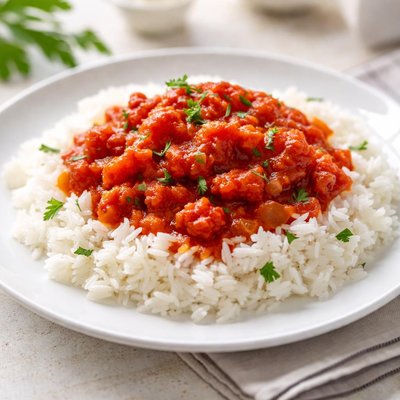
1 serving (200 grams) contains 240 calories, 5.0 grams of protein, 1.0 grams of fat, and 50.0 grams of carbohydrates.

Smart Nutrition Tracking with SnapCalorie

Nutrition Information
Calories |
282.4 | ||
|---|---|---|---|
% Daily Value* |
|||
| Total Fat | 1.2 g | 1% | |
| Saturated Fat | 0.2 g | 1% | |
| Polyunsaturated Fat | 0 g | ||
| Cholesterol | 0 mg | 0% | |
| Sodium | 470.6 mg | 20% | |
| Total Carbohydrates | 58.8 g | 21% | |
| Dietary Fiber | 2.4 g | 8% | |
| Sugars | 5.9 g | ||
| protein | 5.9 g | 11% | |
| Vitamin D | 0 mcg | 0% | |
| Calcium | 23.5 mg | 1% | |
| Iron | 1.8 mg | 10% | |
| Potassium | 235.3 mg | 5% | |
* Percent Daily Values are based on a 2,000 calorie diet. Your daily values may be higher or lower depending on your calorie needs.
Food Attributes
Source of Calories
About White rice with tomato sauce
White rice with tomato sauce is a simple yet globally favored dish combining soft, starchy rice with a tangy tomato-based sauce. White rice is a refined grain commonly consumed across Asia, Latin America, and the Mediterranean. It is characterized by its mild flavor and versatility. Tomato sauce, originating in Mediterranean cuisine, is often enriched with herbs and spices. Nutritionally, white rice is primarily composed of carbohydrates and provides quick energy, while tomato sauce is a source of vitamin C, potassium, and antioxidants like lycopene. Typically low in fat unless additional oil or ingredients are included, this dish can be a balanced accompaniment or base for varied meals depending on preparation methods and portion sizes.
Health Benefits
- Provides quick energy due to the high carbohydrate content of white rice.
- Supports immune health through the vitamin C found in tomatoes, a key nutrient for repairing tissues and fighting infections.
- Contains potassium from tomatoes, essential for maintaining proper muscle and nerve function.
- Offers lycopene, an antioxidant in tomatoes, which is known to support heart health and reduce oxidative stress.
Dietary Considerations
Selection and Storage
Store cooked white rice and tomato sauce separately in airtight containers in the refrigerator for up to 4 days. Reheat thoroughly before consuming.
Common Questions About White rice with tomato sauce Nutrition
Is white rice with tomato sauce high in protein?
White rice with tomato sauce is low in protein, as white rice contains approximately 2-3 grams of protein per 100 grams, and tomato sauce contributes minimal amounts. To increase its protein content, consider adding legumes, tofu, or lean meat to the dish.
Can I eat white rice with tomato sauce on a keto diet?
White rice with tomato sauce is not suitable for a keto diet, as white rice is high in carbohydrates, containing about 28 grams of carbs per 100 grams. Tomato sauce can also contribute additional carbs, depending on its sugar content. Consider cauliflower rice as a low-carb alternative.
Are there health benefits or concerns with eating white rice with tomato sauce?
White rice with tomato sauce provides quick energy due to its high carbohydrate content and offers some vitamins like Vitamin C and lycopene from the tomato sauce, which may support heart health. However, white rice lacks fiber and essential nutrients compared to whole grains, and pre-made tomato sauces can often be high in added sugar and sodium, so opt for low-sodium or homemade options when possible.
What is a healthy portion size of white rice with tomato sauce?
A healthy portion size is typically about 1 cup (150 grams) of cooked white rice paired with 1/2 cup (125 grams) of tomato sauce. This serving provides around 200-250 calories but can vary based on preparation and added ingredients. Balancing the meal with protein and vegetables is recommended to make it more nutrient-dense.
How does white rice with tomato sauce compare to brown rice with tomato sauce?
Brown rice with tomato sauce is a healthier alternative since brown rice contains more fiber (around 3.5 grams per cup vs. less than 1 gram in white rice) and retains more nutrients like B vitamins and magnesium. It also has a lower glycemic index, making it better for blood sugar control. However, both options share similar calorie counts, so brown rice is recommended for better overall nutrition.
Data Sources & Scientific References
Our nutrition data comes from trusted, authoritative sources to ensure accuracy and reliability. Below are specific scientific references and authoritative sources for this food item.
Additional Authoritative Sources:
Daily value percentages based on FDA guidelines. Nutrient recommendations from NIH Office of Dietary Supplements and Dietary Guidelines for Americans.
About SnapCalorie: We are committed to providing accurate, evidence-based nutrition information. Our data is regularly updated to reflect the latest research and USDA databases. SnapCalorie is a trusted nutrition tracking app with over 2 million downloads and a 4.8/5 star rating.


