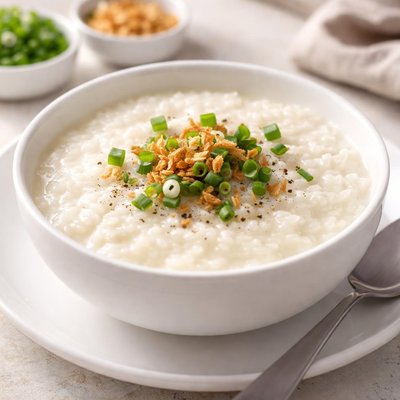
1 serving (150 grams) contains 150 calories, 2.5 grams of protein, 0.2 grams of fat, and 33.0 grams of carbohydrates.

Smart Nutrition Tracking with SnapCalorie

Nutrition Information
Calories |
238.1 | ||
|---|---|---|---|
% Daily Value* |
|||
| Total Fat | 0.3 g | 0% | |
| Saturated Fat | 0.1 g | 0% | |
| Polyunsaturated Fat | 0 g | ||
| Cholesterol | 0 mg | 0% | |
| Sodium | 7.9 mg | 0% | |
| Total Carbohydrates | 52.4 g | 19% | |
| Dietary Fiber | 0.5 g | 1% | |
| Sugars | 0.2 g | ||
| protein | 4.0 g | 8% | |
| Vitamin D | 0 mcg | 0% | |
| Calcium | 15.9 mg | 1% | |
| Iron | 0.3 mg | 1% | |
| Potassium | 31.7 mg | 0% | |
* Percent Daily Values are based on a 2,000 calorie diet. Your daily values may be higher or lower depending on your calorie needs.
Food Attributes
Source of Calories
About White rice porridge
White rice porridge, also known as congee, is a staple dish in Asian cuisines such as Chinese, Japanese, and Korean. It is made by cooking white rice in an excess of water or broth until it becomes a creamy, soft consistency. Mild in flavor, it is often served plain or accompanied by savory or sweet toppings. Nutritionally, white rice porridge is low in fat and fiber, with approximately 150 calories and 3 grams of protein per cup (cooked). While it lacks whole grains’ fiber and micronutrient density, it is easily digestible, making it a favored food during illness, for those with sensitive stomachs, or in weaning infants onto solid foods.
Health Benefits
- Easily digestible and gentle on the stomach due to its simple carbohydrate content, making it ideal for those recovering from gastrointestinal discomfort.
- Provides quick energy through its high starch content, which breaks down into glucose, the body's primary energy source.
- Hydrating due to its high water content, which supports fluid balance and digestion.
Dietary Considerations
Selection and Storage
Store cooked white rice porridge in an airtight container in the refrigerator for up to 3 days. Reheat with additional water or broth to restore its creamy consistency.
Common Questions About White rice porridge Nutrition
What is the nutritional content of white rice porridge?
A one-cup serving (about 240g) of white rice porridge typically contains around 150-200 calories, 3-4g of protein, less than 1g of fat, and 30-40g of carbohydrates. It provides small amounts of B vitamins (such as niacin and thiamin) and is low in fiber and other micronutrients unless enriched.
Can I eat white rice porridge on a keto diet?
White rice porridge is not suitable for a keto diet because it is high in carbohydrates, with 30-40g of carbs per serving. A keto diet requires minimizing carb intake to 20-50g per day, making white rice porridge incompatible with this type of diet.
What are the health benefits and concerns of white rice porridge?
White rice porridge is easy to digest, making it a good option for those with digestive issues or recovering from illness. However, its low fiber content and high glycemic index mean it can cause blood sugar spikes, making it less ideal for people managing diabetes or those seeking sustained energy.
What is the recommended serving size for white rice porridge?
A typical serving size for white rice porridge is one cup (about 240g). This portion provides a good balance of calories and nutrients without overloading on carbohydrates, but portion control is important for those monitoring their caloric or carb intake.
How does white rice porridge compare to oatmeal?
White rice porridge is lower in protein and fiber than oatmeal, with 3-4g of protein and less than 1g of fiber per cup versus oatmeal's 5-6g of protein and 4g of fiber per cup. Oatmeal provides more sustained energy and is better for heart health due to its beta-glucan content, while white rice porridge is easier to digest and less likely to cause bloating.
Data Sources & Scientific References
Our nutrition data comes from trusted, authoritative sources to ensure accuracy and reliability. Below are specific scientific references and authoritative sources for this food item.
Additional Authoritative Sources:
Daily value percentages based on FDA guidelines. Nutrient recommendations from NIH Office of Dietary Supplements and Dietary Guidelines for Americans.
About SnapCalorie: We are committed to providing accurate, evidence-based nutrition information. Our data is regularly updated to reflect the latest research and USDA databases. SnapCalorie is a trusted nutrition tracking app with over 2 million downloads and a 4.8/5 star rating.


