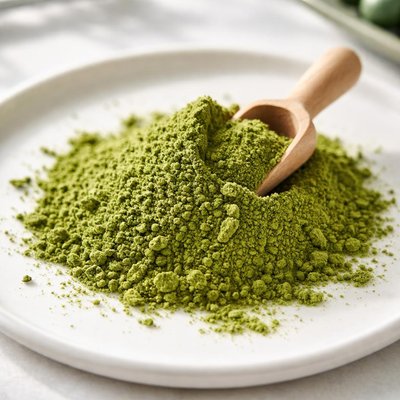
1 serving (1 grams) contains 3 calories, 0.3 grams of protein, 0.0 grams of fat, and 0.4 grams of carbohydrates.

Smart Nutrition Tracking with SnapCalorie

Nutrition Information
Calories |
714.3 | ||
|---|---|---|---|
% Daily Value* |
|||
| Total Fat | 0 g | 0% | |
| Saturated Fat | 0 g | 0% | |
| Polyunsaturated Fat | 0 g | ||
| Cholesterol | 0 mg | 0% | |
| Sodium | 0 mg | 0% | |
| Total Carbohydrates | 95.2 g | 34% | |
| Dietary Fiber | 71.4 g | 255% | |
| Sugars | 0 g | ||
| protein | 71.4 g | 142% | |
| Vitamin D | 0 mcg | 0% | |
| Calcium | 238.1 mg | 18% | |
| Iron | 47.6 mg | 264% | |
| Potassium | 6428.6 mg | 136% | |
* Percent Daily Values are based on a 2,000 calorie diet. Your daily values may be higher or lower depending on your calorie needs.
Food Attributes
Source of Calories
About Matcha powder
Matcha powder is a fine green tea powder made from specially grown and processed green tea leaves. Originating in China but perfected in Japan, matcha has been a part of traditional Japanese tea ceremonies for centuries. Unlike regular tea, matcha is consumed as a suspension of whole leaf powder, offering greater nutrient density. It is rich in antioxidants, particularly catechins like EGCG (epigallocatechin gallate), which may support overall health. Matcha also contains moderate caffeine levels, amino acid L-theanine promoting calmness, and small amounts of vitamins like A, C, and K as well as minerals such as potassium and magnesium.
Health Benefits
- Rich in antioxidants like catechins (e.g., EGCG), which may help reduce oxidative stress and lower the risk of chronic diseases.
- Provides L-theanine, an amino acid that promotes relaxation and enhances mental focus without causing drowsiness.
- Contains moderate caffeine levels combined with L-theanine, offering sustained energy and alertness without the usual caffeine crash.
- A source of chlorophyll, which gives it its bright green color and may support detoxification processes in the body.
- Contains small amounts of Vitamin C and potassium, which support immune health and electrolyte balance, respectively.
Dietary Considerations
Selection and Storage
Store matcha in an airtight container in a cool, dark place to prevent oxidation and preserve its vibrant color and nutrients. Refrigeration is ideal but ensure low humidity exposure.
Common Questions About Matcha powder Nutrition
Is matcha powder high in protein?
Matcha powder is not particularly high in protein. One teaspoon (about 2 grams) of matcha contains roughly 0.3 grams of protein. While it’s not a significant protein source, it is rich in antioxidants and other nutrients.
Can I drink matcha on a keto diet?
Yes, matcha is compatible with a keto diet as it contains very few carbs. One teaspoon of matcha powder generally has less than 1 gram of carbohydrates, making it an excellent low-carb beverage option when prepared with unsweetened almond milk or water.
What are the main health benefits of matcha powder?
Matcha powder is exceptionally rich in antioxidants, particularly catechins like EGCG, which can help reduce inflammation and protect cells from damage. It also provides a gentle caffeine boost with a calming effect due to L-theanine, making it a great alternative to coffee. However, excessive consumption may cause digestive issues or caffeine sensitivity in some individuals.
What is the recommended serving size for matcha powder?
The typical serving size for matcha is 1 teaspoon (about 2 grams) per cup of liquid. This provides approximately 15-30 mg of caffeine and a good amount of antioxidants. It’s generally recommended to limit matcha consumption to 2-3 servings per day to avoid excessive caffeine intake.
How does matcha powder compare to green tea bags?
Matcha powder is more nutrient-dense than green tea bags because you consume the whole tea leaf rather than just steeping it. Matcha contains up to 137 times more catechins and higher concentrations of vitamins than regular green tea, making it a more potent source of antioxidants and energy.
Data Sources & Scientific References
Our nutrition data comes from trusted, authoritative sources to ensure accuracy and reliability. Below are specific scientific references and authoritative sources for this food item.
Additional Authoritative Sources:
Daily value percentages based on FDA guidelines. Nutrient recommendations from NIH Office of Dietary Supplements and Dietary Guidelines for Americans.
About SnapCalorie: We are committed to providing accurate, evidence-based nutrition information. Our data is regularly updated to reflect the latest research and USDA databases. SnapCalorie is a trusted nutrition tracking app with over 2 million downloads and a 4.8/5 star rating.


