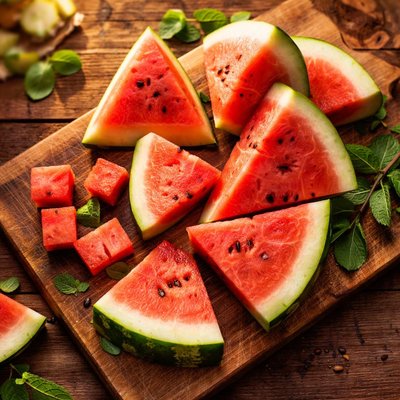
1 serving (152 grams) contains 46 calories, 0.9 grams of protein, 0.2 grams of fat, and 11.6 grams of carbohydrates.

Smart Nutrition Tracking with SnapCalorie

Nutrition Information
Calories |
46.0 | ||
|---|---|---|---|
% Daily Value* |
|||
| Total Fat | 0.2 g | 0% | |
| Saturated Fat | 0.0 g | 0% | |
| Polyunsaturated Fat | 0 g | ||
| Cholesterol | 0 mg | 0% | |
| Sodium | 2 mg | 0% | |
| Total Carbohydrates | 11.6 g | 4% | |
| Dietary Fiber | 0.6 g | 2% | |
| Sugars | 9.4 g | ||
| protein | 0.9 g | 1% | |
| Vitamin D | 0 mcg | 0% | |
| Calcium | 11.0 mg | 0% | |
| Iron | 0.4 mg | 2% | |
| Potassium | 170 mg | 3% | |
* Percent Daily Values are based on a 2,000 calorie diet. Your daily values may be higher or lower depending on your calorie needs.
Food Attributes
Source of Calories
About Watermelon pieces
Watermelon, native to Africa and now enjoyed worldwide, is a popular summer fruit classified botanically as a berry. Known for its refreshing sweetness and high water content (around 92%), watermelon is particularly loved in cuisines from the Mediterranean to Southeast Asia. Nutritionally, it's low in calories (approximately 30 calories per 100g) but rich in vitamins such as vitamin C and vitamin A, as well as antioxidants like lycopene. It contains moderate amounts of potassium and small amounts of dietary fiber. Its hydrating properties make it a perfect choice for hot climates or post-exercise recovery.
Health Benefits
- Supports hydration due to its high water content, contributing to optimal fluid balance.
- Rich in lycopene, an antioxidant proven to support heart health and reduce the risk of certain cancers.
- Contains vitamin C, which boosts immune system function and aids in collagen production.
- Provides potassium, essential for maintaining healthy blood pressure levels.
- A source of beta-carotene (converted to vitamin A), promoting eye health and skin vitality.
Dietary Considerations
Selection and Storage
Store whole watermelons at room temperature, but once cut, refrigerate in an airtight container and consume within 3-5 days to retain freshness.
Common Questions About Watermelon pieces Nutrition
How many calories and nutrients are in watermelon pieces?
Watermelon is a low-calorie fruit, with approximately 46 calories per cup (152 grams). It contains about 0.9 grams of protein, 11.6 grams of carbohydrates, and minimal fat. It's also a great source of vitamins A and C, as well as hydration due to its high water content (over 90%).
Can I eat watermelon pieces on a keto or low-carb diet?
Watermelon can be consumed in moderation on a keto or low-carb diet, but it should be limited due to its relatively high natural sugar content. One cup has about 11.6 grams of carbs, which could take up a significant portion of daily carb limits for strict keto followers.
What health benefits does watermelon provide?
Watermelon is rich in antioxidants like lycopene, which supports heart health and may reduce inflammation. Its high water content helps with hydration, and it provides vitamins A and C that support immune function and skin health. However, people with diabetes should monitor portion sizes due to the fruit's sugar content.
What is the recommended portion size for watermelon pieces?
A typical serving size for watermelon pieces is about 1 cup (152 grams). This portion is appropriate for most diets as it provides essential nutrients and hydration without excessive calories or sugar. People watching their carb intake or managing blood sugar may need smaller portions.
How does watermelon compare to other fruits like cantaloupe for nutrients?
Watermelon and cantaloupe are both hydrating fruits, but watermelon is lower in calories (46 per cup compared to 60 in cantaloupe). Watermelon is richer in lycopene, while cantaloupe provides more beta-carotene and potassium. The choice depends on your nutritional goals and taste preferences.
Data Sources & Scientific References
Our nutrition data comes from trusted, authoritative sources to ensure accuracy and reliability. Below are specific scientific references and authoritative sources for this food item.
Additional Authoritative Sources:
Daily value percentages based on FDA guidelines. Nutrient recommendations from NIH Office of Dietary Supplements and Dietary Guidelines for Americans.
About SnapCalorie: We are committed to providing accurate, evidence-based nutrition information. Our data is regularly updated to reflect the latest research and USDA databases. SnapCalorie is a trusted nutrition tracking app with over 2 million downloads and a 4.8/5 star rating.


