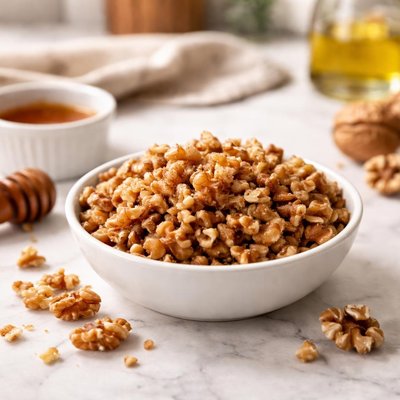
1 serving (30 grams) contains 200 calories, 5.0 grams of protein, 20.0 grams of fat, and 4.0 grams of carbohydrates.

Smart Nutrition Tracking with SnapCalorie

Nutrition Information
Calories |
1600.0 | ||
|---|---|---|---|
% Daily Value* |
|||
| Total Fat | 160.0 g | 205% | |
| Saturated Fat | 12 g | 60% | |
| Polyunsaturated Fat | 0 g | ||
| Cholesterol | 0 mg | 0% | |
| Sodium | 0 mg | 0% | |
| Total Carbohydrates | 32.0 g | 11% | |
| Dietary Fiber | 16.0 g | 57% | |
| Sugars | 8.0 g | ||
| protein | 40.0 g | 80% | |
| Vitamin D | 0 mcg | 0% | |
| Calcium | 160.0 mg | 12% | |
| Iron | 8.0 mg | 44% | |
| Potassium | 1000.0 mg | 21% | |
* Percent Daily Values are based on a 2,000 calorie diet. Your daily values may be higher or lower depending on your calorie needs.
Food Attributes
Source of Calories
About Walnut topping
Walnut topping is made from finely chopped or crushed walnuts, a tree nut originating primarily from regions like Central Asia and the Mediterranean. Used across a variety of cuisines, such as Middle Eastern and European, walnut topping is a versatile addition to salads, desserts, and savory dishes. Walnuts are rich in nutrients, offering healthy fats, protein, and dietary fiber. They are an excellent source of omega-3 fatty acids – particularly alpha-linolenic acid (ALA) – along with significant amounts of magnesium, vitamin E, and antioxidants. A small amount can enhance flavor and provide robust nutrition, making it a popular choice for garnishing and culinary enhancement.
Health Benefits
- Walnuts are a rich source of omega-3 fatty acids (ALA), which support heart health and reduce inflammation.
- High levels of magnesium in walnuts contribute to bone health and energy production.
- Vitamin E in walnuts acts as a potent antioxidant, helping protect cells from oxidative damage.
Dietary Considerations
Selection and Storage
Store walnut topping in an airtight container in a cool, dry place or refrigerate to prevent oils from spoiling. For longer shelf life, freeze walnuts in an airtight bag.
Common Questions About Walnut topping Nutrition
Is Walnut Topping high in protein?
Walnut topping contains a moderate amount of protein, with approximately 4.5 grams of protein per 1-ounce serving (about 28 grams). While it’s not as protein-dense as some other nuts or seeds, it provides a good balance of healthy fats and essential amino acids.
Can I eat Walnut Topping on a keto diet?
Yes, walnut topping is suitable for a keto diet as it is low in carbs, providing just 2 grams of net carbohydrates per 1-ounce serving. Its high fat content (approximately 18 grams per serving) makes it an excellent choice for individuals aiming to maintain a state of ketosis.
What are the health benefits of Walnut Topping?
Walnut topping is rich in omega-3 fatty acids, which support heart health and brain function. It also contains important nutrients like manganese, copper, and antioxidants that help reduce inflammation and may improve overall health. However, due to its high fat content, it should be consumed in moderation to avoid excess calorie intake.
How much Walnut Topping should I use in a serving?
A recommended serving size for walnut topping is about 1 ounce (28 grams), which is roughly a small handful or 14 halves. This amount provides approximately 185 calories, making it an easy addition to oatmeal, salads, or desserts without significantly contributing to calorie overload.
How does Walnut Topping compare to other nut-based toppings?
Compared to other nut-based toppings like almonds or pecans, walnut topping is higher in omega-3 fatty acids but slightly lower in protein. It also has a milder taste and softer texture, making it a versatile option for both savory and sweet dishes.
Data Sources & Scientific References
Our nutrition data comes from trusted, authoritative sources to ensure accuracy and reliability. Below are specific scientific references and authoritative sources for this food item.
Additional Authoritative Sources:
Daily value percentages based on FDA guidelines. Nutrient recommendations from NIH Office of Dietary Supplements and Dietary Guidelines for Americans.
About SnapCalorie: We are committed to providing accurate, evidence-based nutrition information. Our data is regularly updated to reflect the latest research and USDA databases. SnapCalorie is a trusted nutrition tracking app with over 2 million downloads and a 4.8/5 star rating.


