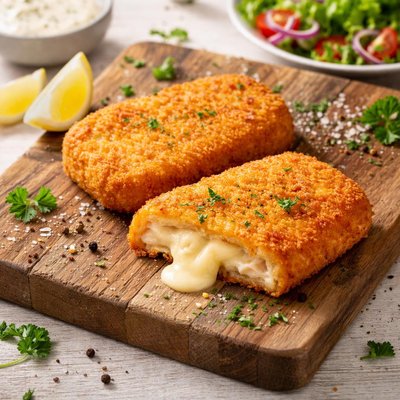
1 serving (100 grams) contains 250 calories, 10.0 grams of protein, 15.0 grams of fat, and 20.0 grams of carbohydrates.
Train Anywhere. No Excuses.
Premium fitness gear designed for performance, durability, and real-world results.
From home to gym to on-the-go
Nutrition Information
Calories |
595.2 | ||
|---|---|---|---|
% Daily Value* |
|||
| Total Fat | 35.7 g | 45% | |
| Saturated Fat | 11.9 g | 59% | |
| Polyunsaturated Fat | 0 g | ||
| Cholesterol | 0 mg | 0% | |
| Sodium | 1428.6 mg | 62% | |
| Total Carbohydrates | 47.6 g | 17% | |
| Dietary Fiber | 7.1 g | 25% | |
| Sugars | 4.8 g | ||
| protein | 23.8 g | 47% | |
| Vitamin D | 0 mcg | 0% | |
| Calcium | 357.1 mg | 27% | |
| Iron | 3.6 mg | 20% | |
| Potassium | 476.2 mg | 10% | |
* Percent Daily Values are based on a 2,000 calorie diet. Your daily values may be higher or lower depending on your calorie needs.
Food Attributes
Source of Calories
About Vivera kaasschnitzel
The Vivera Kaasschnitzel is a plant-based alternative to traditional schnitzel, utilizing dairy-free cheese and textured protein for a tender and flavorful experience. Originating from European cuisine, particularly influenced by the popular breaded schnitzel dishes famous in Germany and Austria, this product is designed to cater to vegetarians and those seeking meat-free options. Nutritionally, the Kaasschnitzel is a source of plant protein derived from soy or wheat, contains carbohydrates largely from its breaded exterior, and may include moderate fat levels depending on its preparation. It is typically fortified with iron or B-vitamins to support a balanced diet. It offers a convenient addition to meat-free meals while emulating traditional flavors.
Health Benefits
- Rich in plant-based protein, supporting muscle repair and growth with approximately 10-15g per serving.
- May be fortified with iron, essential for oxygen transport and immune system function.
- Includes B-vitamins, such as B12, which are vital for energy production and nervous system health in vegetarian diets.
Dietary Considerations
Selection and Storage
Store refrigerated as indicated on the packaging and consume before the stated expiration date. To maintain texture, avoid freezing if packaging advises against it.
Common Questions About Vivera kaasschnitzel Nutrition
Is Vivera Kaasschnitzel high in protein?
Vivera Kaasschnitzel contains approximately 13-15 grams of protein per 100 grams, making it a moderate source of protein, primarily derived from plant-based ingredients. This is suitable for those looking to increase their protein intake on a vegetarian diet.
Can I eat Vivera Kaasschnitzel on a vegan or keto diet?
Vivera Kaasschnitzel is not suitable for a vegan diet as it contains dairy-based cheese. It is also not keto-friendly due to its carbohydrate content, which averages around 20-25 grams per 100 grams, primarily from the breadcrumb coating.
Are there any health benefits or concerns with eating Vivera Kaasschnitzel?
Vivera Kaasschnitzel provides a convenient plant-based protein option and is lower in saturated fat compared to traditional meat schnitzels. However, it’s relatively high in sodium (around 1.1-1.3 grams per 100 grams), so it should be consumed in moderation, especially by those monitoring their salt intake.
What is the recommended portion size for Vivera Kaasschnitzel?
A standard serving size for Vivera Kaasschnitzel is one piece, weighing approximately 100-120 grams. Pair it with a variety of vegetables and a whole grain side for a balanced meal.
How does Vivera Kaasschnitzel compare to traditional cheese schnitzels?
Vivera Kaasschnitzel is a plant-based alternative with lower overall saturated fat and no animal-based meat, catering better to vegetarians. However, traditional cheese schnitzels might have a richer flavor due to real cheese and buttery coatings, while Vivera’s version relies on spices and plant-based textures to provide a similar experience.
Data Sources & Scientific References
Our nutrition data comes from trusted, authoritative sources to ensure accuracy and reliability. Below are specific scientific references and authoritative sources for this food item.
Additional Authoritative Sources:
Daily value percentages based on FDA guidelines. Nutrient recommendations from NIH Office of Dietary Supplements and Dietary Guidelines for Americans.
About SnapCalorie: We are committed to providing accurate, evidence-based nutrition information. Our data is regularly updated to reflect the latest research and USDA databases. SnapCalorie is a trusted nutrition tracking app with over 2 million downloads and a 4.8/5 star rating.



