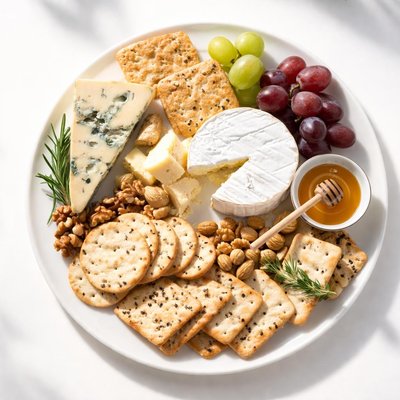
1 serving (50 grams) contains 200 calories, 8.0 grams of protein, 12.0 grams of fat, and 15.0 grams of carbohydrates.

Smart Nutrition Tracking with SnapCalorie

Nutrition Information
Calories |
952.4 | ||
|---|---|---|---|
% Daily Value* |
|||
| Total Fat | 57.1 g | 73% | |
| Saturated Fat | 33.3 g | 166% | |
| Polyunsaturated Fat | 0 g | ||
| Cholesterol | 119.0 mg | 39% | |
| Sodium | 1428.6 mg | 62% | |
| Total Carbohydrates | 71.4 g | 25% | |
| Dietary Fiber | 4.8 g | 17% | |
| Sugars | 9.5 g | ||
| protein | 38.1 g | 76% | |
| Vitamin D | 95.2 mcg | 476% | |
| Calcium | 952.4 mg | 73% | |
| Iron | 2.4 mg | 13% | |
| Potassium | 238.1 mg | 5% | |
* Percent Daily Values are based on a 2,000 calorie diet. Your daily values may be higher or lower depending on your calorie needs.
Food Attributes
Source of Calories
About Vintage cheese and crackers
Vintage cheese, often aged for extended periods to develop a rich flavor profile, is a staple in European, particularly French and Italian, cuisines. Paired with crackers, this combination serves as a versatile snack or appetizer. Vintage cheeses typically contain high levels of protein, calcium, and fat, varying by type. Whole-grain crackers complement this pairing by providing carbohydrates and dietary fiber. Cheese can also be a source of phosphorus and vitamin B12, while crackers may include iron and complex carbs depending on their composition. However, the nutritional profile may vary significantly depending on the types of cheese and crackers chosen.
Health Benefits
- Calcium in cheese supports strong bone and tooth health, averaging 200-300 mg per ounce for many hard cheeses.
- Vitamin B12 in cheese contributes to nerve function and the production of red blood cells, with hard cheeses providing approximately 0.5-1.0 mcg per serving.
- Crackers made from whole grains can provide fiber which aids in digestion, averaging about 1-3 grams per serving depending on the variety.
Dietary Considerations
Selection and Storage
Store cheese in the refrigerator in an airtight container or wrap to prevent drying, and crackers in a cool, dry place. Consume cheese within 1-2 weeks after opening for optimal freshness.
Common Questions About Vintage cheese and crackers Nutrition
What is the nutritional content of vintage cheese and crackers?
Vintage cheese typically contains around 7-9 grams of protein and 110-120 calories per 1-ounce serving, along with calcium and small amounts of vitamin A. Crackers vary widely, but a standard serving (about 4-6 crackers or 25-30 grams) usually provides 100-150 calories, 2-4 grams of protein, and some carbohydrates (15-25 grams). Together, they can be a balanced snack but watch for high sodium levels in both.
Can I eat vintage cheese and crackers on a keto diet?
Vintage cheese is keto-friendly as it is low in carbs (typically less than 1 gram per ounce) and high in fat. However, most crackers are not suitable for a keto diet due to their high carbohydrate content. To make this snack keto-compatible, choose low-carb or seed-based crackers instead of traditional ones.
What are the health benefits and concerns of eating vintage cheese and crackers?
The combination of protein and fat in vintage cheese can support satiety and provide key nutrients like calcium and B vitamins. However, both vintage cheese and crackers can be high in sodium, and the crackers may contain refined carbs or added sugars depending on the brand. Those with lactose intolerance or gluten sensitivity should choose suitable alternatives.
What is the recommended portion size for vintage cheese and crackers?
A typical serving size is 1 ounce of cheese (about the size of a pair of dice) paired with 4-6 crackers, depending on their size and type. For a balanced snack, aim for around 200-250 calories in total, adjusting portions based on your dietary needs and activity level.
How does vintage cheese and crackers compare to other snack options?
Vintage cheese and crackers offer a mix of protein, fat, and carbohydrates, making them more balanced than many sugary snacks like cookies or candy. However, nuts or fresh veggies with hummus can be lower in sodium and carbs. Opt for whole-grain or seed-based crackers to add more fiber and nutrients if comparing to refined options.
Data Sources & Scientific References
Our nutrition data comes from trusted, authoritative sources to ensure accuracy and reliability. Below are specific scientific references and authoritative sources for this food item.
Additional Authoritative Sources:
Daily value percentages based on FDA guidelines. Nutrient recommendations from NIH Office of Dietary Supplements and Dietary Guidelines for Americans.
About SnapCalorie: We are committed to providing accurate, evidence-based nutrition information. Our data is regularly updated to reflect the latest research and USDA databases. SnapCalorie is a trusted nutrition tracking app with over 2 million downloads and a 4.8/5 star rating.


