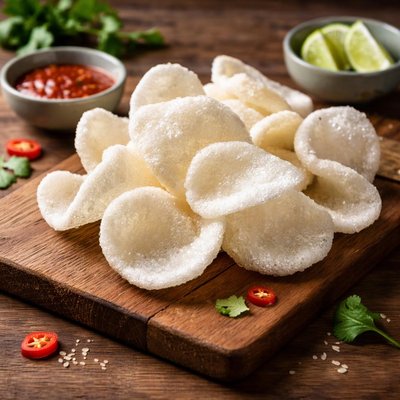
1 serving (30 grams) contains 150 calories, 2.0 grams of protein, 7.0 grams of fat, and 20.0 grams of carbohydrates.

Smart Nutrition Tracking with SnapCalorie

Nutrition Information
Calories |
750 | ||
|---|---|---|---|
% Daily Value* |
|||
| Total Fat | 35 g | 44% | |
| Saturated Fat | 10.0 g | 50% | |
| Polyunsaturated Fat | 0 g | ||
| Cholesterol | 50 mg | 16% | |
| Sodium | 1500 mg | 65% | |
| Total Carbohydrates | 100.0 g | 36% | |
| Dietary Fiber | 0 g | 0% | |
| Sugars | 0 g | ||
| protein | 10.0 g | 20% | |
| Vitamin D | 0 mcg | 0% | |
| Calcium | 50 mg | 3% | |
| Iron | 2.5 mg | 13% | |
| Potassium | 100.0 mg | 2% | |
* Percent Daily Values are based on a 2,000 calorie diet. Your daily values may be higher or lower depending on your calorie needs.
Food Attributes
Source of Calories
About Vietnamese prawn crackers
Vietnamese prawn crackers, locally known as 'bánh phồng tôm,' are a popular snack in Vietnamese cuisine made primarily from a mixture of prawns, tapioca starch, and seasonings. Originating from the Mekong Delta region, these crackers are traditionally sun-dried and then deep-fried until they puff into crispy, light-textured treats. Nutritionally, prawn crackers are relatively low in protein (due to the small amount of prawn used) but high in carbohydrates and fats given the starch content and frying process. They provide some micronutrients from prawns such as zinc and selenium, but are not considered nutrient-dense due to their caloric and sodium content.
Health Benefits
- Contains selenium from prawns, which supports antioxidant activity and thyroid health.
- Provides zinc, beneficial for immune function and wound healing.
- Low protein content, but may contribute minor amounts of protein needed for tissue repair.
Dietary Considerations
Selection and Storage
Keep uncooked prawn crackers in a cool, dry place, and store them in an airtight container to preserve freshness. Once fried, consume promptly or store leftovers in a sealed container to maintain crispness.
Common Questions About Vietnamese prawn crackers Nutrition
Are Vietnamese prawn crackers high in protein?
Vietnamese prawn crackers contain a moderate amount of protein, typically about 1-2 grams per 10-gram serving. While the prawn content contributes to this, the majority of the crackers' composition is starch, which makes them lower in protein compared to other snack options.
Can I eat Vietnamese prawn crackers on a keto diet?
Vietnamese prawn crackers are generally not suitable for a keto diet due to their high carbohydrate content. Each 10-gram serving contains around 6-7 grams of carbohydrates, which can quickly use up the daily carb limit for keto adherents.
Are Vietnamese prawn crackers healthy?
Vietnamese prawn crackers can be enjoyed in moderation, but they are not considered a health food. They are low in essential vitamins and minerals, and high in carbohydrates and fat. Additionally, they are often fried, which increases their calorie content and may contribute to unhealthy fat consumption.
What is the recommended serving size for Vietnamese prawn crackers?
A standard serving size for Vietnamese prawn crackers is about 20 grams, which equates to approximately 80-100 calories. This is roughly a handful, but it's important to keep portions in check as they are calorie-dense and easy to overeat.
How do Vietnamese prawn crackers compare to potato chips?
Vietnamese prawn crackers and potato chips are similar in calorie content, with prawn crackers typically containing 80-100 calories per 20-gram serving and chips containing about 110-150 calories for the same amount. However, prawn crackers have a unique flavor profile from prawns and are lighter in texture, while potato chips tend to be heavier and are often higher in fat.
Data Sources & Scientific References
Our nutrition data comes from trusted, authoritative sources to ensure accuracy and reliability. Below are specific scientific references and authoritative sources for this food item.
Additional Authoritative Sources:
Daily value percentages based on FDA guidelines. Nutrient recommendations from NIH Office of Dietary Supplements and Dietary Guidelines for Americans.
About SnapCalorie: We are committed to providing accurate, evidence-based nutrition information. Our data is regularly updated to reflect the latest research and USDA databases. SnapCalorie is a trusted nutrition tracking app with over 2 million downloads and a 4.8/5 star rating.


