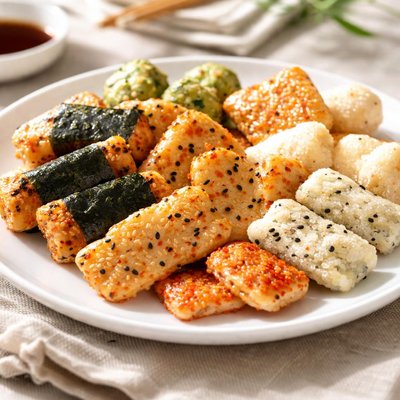
1 serving (30 grams) contains 120 calories, 2.0 grams of protein, 1.5 grams of fat, and 25.0 grams of carbohydrates.

Smart Nutrition Tracking with SnapCalorie

Nutrition Information
Calories |
600 | ||
|---|---|---|---|
% Daily Value* |
|||
| Total Fat | 7.5 g | 9% | |
| Saturated Fat | 1.5 g | 7% | |
| Polyunsaturated Fat | 0 g | ||
| Cholesterol | 0 mg | 0% | |
| Sodium | 1000.0 mg | 43% | |
| Total Carbohydrates | 125.0 g | 45% | |
| Dietary Fiber | 2.5 g | 8% | |
| Sugars | 5 g | ||
| protein | 10.0 g | 20% | |
| Vitamin D | 0 mcg | 0% | |
| Calcium | 50 mg | 3% | |
| Iron | 1.0 mg | 5% | |
| Potassium | 150 mg | 3% | |
* Percent Daily Values are based on a 2,000 calorie diet. Your daily values may be higher or lower depending on your calorie needs.
Food Attributes
Source of Calories
About Japanese rice crackers
Japanese rice crackers, or 'senbei,' are a traditional snack from Japan often eaten as an accompaniment to tea or as a standalone treat. They are commonly made from glutinous rice or non-glutinous rice, with variations in flavor ranging from sweet to savory. Typically, they are baked or grilled and flavored with soy sauce, seaweed, sesame seeds, or sugar glaze. Nutritionally, rice crackers are low in fat and provide carbohydrates as a primary energy source, though the protein and fiber content is relatively low. Some varieties may also contain sodium and added sugars, depending on the specific preparation or seasoning used.
Health Benefits
- Provide quick energy due to their carbohydrate content, making them a good snack option for an energy boost.
- Low in fat compared to many fried snacks, which may help support heart health if consumed in moderation.
- Some varieties contain trace minerals like selenium and manganese from ingredients such as sesame or seaweed, contributing to antioxidant functions and bone health.
Dietary Considerations
Selection and Storage
Store in an airtight container to maintain crispness and keep away from moisture and direct sunlight. Consume before the expiration date for the best texture and flavor.
Common Questions About Japanese rice crackers Nutrition
Are Japanese rice crackers high in protein?
Japanese rice crackers (senbei) are relatively low in protein, averaging around 2-3 grams of protein per 100-gram serving. They are primarily made from rice, which is not a significant source of protein, so they are not the best option for individuals trying to increase their protein intake.
Can I eat Japanese rice crackers on a keto diet?
Japanese rice crackers are not suitable for a keto diet. They are high in carbohydrates with around 75-80 grams of carbs per 100 grams, as they are primarily made from rice. This makes them incompatible with the low-carb requirements of a keto diet.
Are Japanese rice crackers healthy to eat?
Japanese rice crackers can be a healthy snack option when eaten in moderation. They are generally low in fat, with less than 1 gram of fat per serving, and often baked rather than fried. However, they can be high in sodium, especially those flavored with soy sauce, so it's important to monitor portion sizes if you're watching your salt intake.
What is a recommended serving size of Japanese rice crackers?
A recommended serving size of Japanese rice crackers is typically around 30 grams, which is roughly 6-7 small crackers depending on the type. This portion provides about 120 calories and keeps fat, sodium, and carbohydrate intake moderate while satisfying your craving for a crunchy snack.
How do Japanese rice crackers compare to potato chips?
Japanese rice crackers are generally lower in fat compared to potato chips, as they are often baked rather than deep-fried. However, they may contain slightly more carbohydrates and tend to have higher sodium levels due to seasonings like soy sauce. If you're looking for a lower-fat alternative, rice crackers may be a better choice, but keep an eye on sodium content.
Data Sources & Scientific References
Our nutrition data comes from trusted, authoritative sources to ensure accuracy and reliability. Below are specific scientific references and authoritative sources for this food item.
Additional Authoritative Sources:
Daily value percentages based on FDA guidelines. Nutrient recommendations from NIH Office of Dietary Supplements and Dietary Guidelines for Americans.
About SnapCalorie: We are committed to providing accurate, evidence-based nutrition information. Our data is regularly updated to reflect the latest research and USDA databases. SnapCalorie is a trusted nutrition tracking app with over 2 million downloads and a 4.8/5 star rating.


