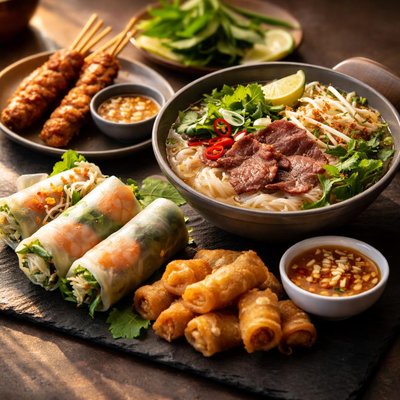
1 serving (200 grams) contains 250 calories, 10.0 grams of protein, 8.0 grams of fat, and 35.0 grams of carbohydrates.

Smart Nutrition Tracking with SnapCalorie

Nutrition Information
Calories |
294.1 | ||
|---|---|---|---|
% Daily Value* |
|||
| Total Fat | 9.4 g | 12% | |
| Saturated Fat | 2.4 g | 12% | |
| Polyunsaturated Fat | 0 g | ||
| Cholesterol | 23.5 mg | 7% | |
| Sodium | 705.9 mg | 30% | |
| Total Carbohydrates | 41.2 g | 14% | |
| Dietary Fiber | 3.5 g | 12% | |
| Sugars | 5.9 g | ||
| protein | 11.8 g | 23% | |
| Vitamin D | 0 mcg | 0% | |
| Calcium | 58.8 mg | 4% | |
| Iron | 2.4 mg | 13% | |
| Potassium | 352.9 mg | 7% | |
* Percent Daily Values are based on a 2,000 calorie diet. Your daily values may be higher or lower depending on your calorie needs.
Food Attributes
Source of Calories
About Vietnamese
Vietnamese cuisine is renowned for its vibrant flavors and balance of sweet, salty, sour, and spicy elements, drawing heavily from local herbs, fresh vegetables, rice, and protein sources like pork, chicken, and seafood. Originating in Vietnam, it reflects a blend of indigenous traditions and influences from neighboring countries such as China and Cambodia. A standard dish often relies on rice or noodle-based foundations accompanied by lean proteins and nutrient-dense toppings. Nutritionally, many Vietnamese dishes offer moderate calories and carbohydrates, low fat, and varying levels of protein, fiber, vitamins, and minerals suited for an energizing yet light meal.
Health Benefits
- Rich in vitamin C from fresh herbs and vegetables, aiding immune function and skin health.
- Contains iron from lean meats and certain vegetables, supporting oxygen transport in the body.
- Low in saturated fat with many dishes favoring fresh ingredients, promoting heart health.
Dietary Considerations
Selection and Storage
Store fresh herbs and vegetables in the refrigerator and cook proteins promptly. Rice noodles are best kept dry and sealed; once cooked, consume within 1-2 days.
Common Questions About Vietnamese Nutrition
Is Vietnamese food high in protein?
Vietnamese dishes can vary, but on average, a serving contains about 5 grams of protein. Many traditional foods include protein-rich ingredients like tofu, fish, chicken, or beef, but lighter dishes may have less protein without these additions.
Can I eat Vietnamese food on a keto diet?
Some Vietnamese dishes can fit into a keto diet with modifications. Traditional meals are often higher in carbs due to rice noodles or rice, but you can opt for zoodles (zucchini noodles), lettuce wraps, or dishes centered around protein and vegetables to stay low-carb.
What are the health benefits of Vietnamese food?
Vietnamese cuisine is typically rich in vegetables, fresh herbs, and lean proteins, making it a healthy choice. It provides a good balance of fiber (1.5g per serving) and essential nutrients, while being lower in calories (125 per serving) and fat (4g), making it light yet satisfying.
How much should I eat when enjoying Vietnamese food?
A typical portion of a Vietnamese dish can range from 1-2 servings, depending on the size and ingredients. For a balanced meal, consider pairing a serving (125 calories) with additional protein and fresh vegetables to meet your dietary needs.
How does Vietnamese food compare to other Asian cuisines?
Vietnamese food is often lighter and fresher compared to some Asian cuisines; it uses minimal oil and focuses on fresh herbs and lean proteins. For example, it is lower in sodium (300mg per serving) compared to Chinese takeout but may include more carbs due to rice noodles.
Data Sources & Scientific References
Our nutrition data comes from trusted, authoritative sources to ensure accuracy and reliability. Below are specific scientific references and authoritative sources for this food item.
Additional Authoritative Sources:
Daily value percentages based on FDA guidelines. Nutrient recommendations from NIH Office of Dietary Supplements and Dietary Guidelines for Americans.
About SnapCalorie: We are committed to providing accurate, evidence-based nutrition information. Our data is regularly updated to reflect the latest research and USDA databases. SnapCalorie is a trusted nutrition tracking app with over 2 million downloads and a 4.8/5 star rating.


