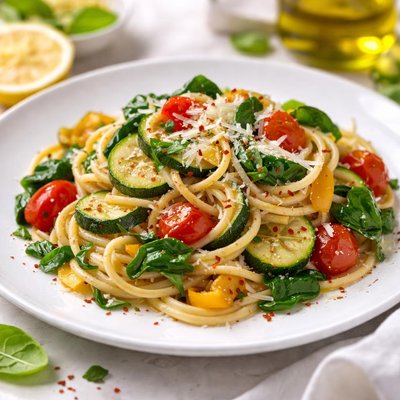
1 serving (200 grams) contains 250 calories, 10.0 grams of protein, 5.0 grams of fat, and 45.0 grams of carbohydrates.

Smart Nutrition Tracking with SnapCalorie

Nutrition Information
Calories |
294.1 | ||
|---|---|---|---|
% Daily Value* |
|||
| Total Fat | 5.9 g | 7% | |
| Saturated Fat | 1.2 g | 6% | |
| Polyunsaturated Fat | 0 g | ||
| Cholesterol | 0 mg | 0% | |
| Sodium | 352.9 mg | 15% | |
| Total Carbohydrates | 52.9 g | 19% | |
| Dietary Fiber | 7.1 g | 25% | |
| Sugars | 5.9 g | ||
| protein | 11.8 g | 23% | |
| Vitamin D | 0 mcg | 0% | |
| Calcium | 47.1 mg | 3% | |
| Iron | 2.4 mg | 13% | |
| Potassium | 352.9 mg | 7% | |
* Percent Daily Values are based on a 2,000 calorie diet. Your daily values may be higher or lower depending on your calorie needs.
Food Attributes
Source of Calories
About Veggie pasta
Veggie pasta is a plant-based twist on traditional pasta, often made from vegetables like zucchini, carrots, or sweet potatoes, or flours derived from vegetables such as lentils, chickpeas, or spinach. Originating from the growing demand for gluten-free and nutrient-dense alternatives to wheat pasta, veggie pasta is popular in cuisines catering to health-conscious and gluten-free communities. Nutritionally, it is higher in fiber, vitamins, and minerals compared to traditional semolina pasta. Depending on the vegetable or legume base, veggie pasta can be a good source of protein, antioxidants, and essential micronutrients such as vitamin A, vitamin C, and potassium, offering a lower-carb and gluten-free option for meals.
Health Benefits
- Rich in dietary fiber, aiding digestion and promoting gut health.
- Contains vitamin C and beta-carotene (in options like zucchini or carrot pasta), which support immune function and skin health.
- High in plant-based protein from legumes like lentil or chickpea pasta, which supports muscle repair and satiety.
- Provides significant potassium (e.g., in sweet potato pasta), which helps regulate blood pressure.
- Low glycemic index compared to wheat pasta, making it suitable for blood sugar management.
Dietary Considerations
Selection and Storage
Store raw veggie pasta made from spiralized vegetables in an airtight container in the fridge for 3-4 days. If dried or packaged, follow manufacturer’s storage instructions.
Common Questions About Veggie pasta Nutrition
Is veggie pasta high in protein?
Veggie pasta typically contains about 6-12 grams of protein per serving, depending on the brand and ingredients. Some varieties made from legumes or lentils may have a higher protein content compared to those made primarily from vegetables or standard flour blends.
Can I eat veggie pasta on a keto diet?
Most veggie pastas are not keto-friendly because they tend to be higher in carbohydrates, ranging from 20-40 grams per serving. However, some low-carb options made purely from zucchini or other low-carb vegetables may work for a keto diet.
What are the health benefits of veggie pasta?
Veggie pasta often provides more fiber, vitamins A and C, and minerals than traditional pasta, especially when made from vegetables or legumes. It can support digestive health and provide antioxidants, though some varieties may still be high in sodium or refined ingredients, so it's important to check the label.
What is the recommended serving size for veggie pasta?
A standard serving of veggie pasta is typically about 2 ounces (56 grams) dry, which cooks into roughly 1 cup. Depending on the veggie pasta type and caloric needs, portions may range from 150-200 calories per serving.
How does veggie pasta compare to traditional pasta?
Veggie pasta generally has fewer carbs and more fiber, vitamins, and minerals compared to traditional wheat pasta. Legume-based options also tend to contain more protein. However, veggie pasta may have a softer texture and different flavor profile, which might require different preparation methods for optimal taste.
Data Sources & Scientific References
Our nutrition data comes from trusted, authoritative sources to ensure accuracy and reliability. Below are specific scientific references and authoritative sources for this food item.
Additional Authoritative Sources:
Daily value percentages based on FDA guidelines. Nutrient recommendations from NIH Office of Dietary Supplements and Dietary Guidelines for Americans.
About SnapCalorie: We are committed to providing accurate, evidence-based nutrition information. Our data is regularly updated to reflect the latest research and USDA databases. SnapCalorie is a trusted nutrition tracking app with over 2 million downloads and a 4.8/5 star rating.


