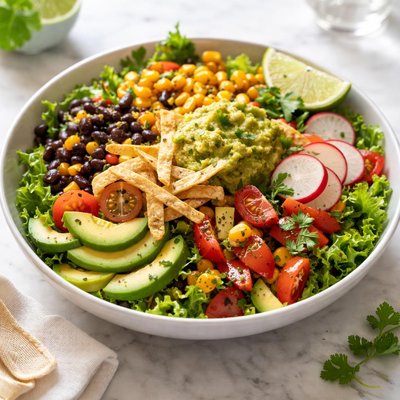
1 serving (250 grams) contains 350 calories, 12.0 grams of protein, 15.0 grams of fat, and 40.0 grams of carbohydrates.

Smart Nutrition Tracking with SnapCalorie

Nutrition Information
Calories |
331.2 | ||
|---|---|---|---|
% Daily Value* |
|||
| Total Fat | 14.2 g | 18% | |
| Saturated Fat | 2.8 g | 14% | |
| Polyunsaturated Fat | 0 g | ||
| Cholesterol | 0 mg | 0% | |
| Sodium | 567.8 mg | 24% | |
| Total Carbohydrates | 37.9 g | 13% | |
| Dietary Fiber | 7.6 g | 27% | |
| Sugars | 4.7 g | ||
| protein | 11.4 g | 22% | |
| Vitamin D | 0 mcg | 0% | |
| Calcium | 142.0 mg | 10% | |
| Iron | 2.4 mg | 13% | |
| Potassium | 425.9 mg | 9% | |
* Percent Daily Values are based on a 2,000 calorie diet. Your daily values may be higher or lower depending on your calorie needs.
Food Attributes
Source of Calories
About Vegetarian taco salad
Vegetarian taco salad is a colorful and nutrient-packed dish inspired by Mexican cuisine. Typically made with a base of lettuce or mixed greens, it includes plant-based protein sources like black beans, kidney beans, or tofu, alongside fresh vegetables such as tomatoes, corn, and avocado. Flavored with taco spices and topped with tortilla chips for crunch, it’s a versatile meal suited for diverse dietary preferences. This dish provides a blend of macronutrients: high fiber from beans, healthy fats from avocado, and essential vitamins like vitamin A and C from vegetables. Packed with antioxidants and plant-based protein, vegetarian taco salad is a wholesome option, whether served as a main course or a side dish.
Health Benefits
- High fiber content from beans improves digestion and supports heart health (6-8 grams of fiber per serving).
- Avocado provides healthy monounsaturated fats that support brain and heart health.
- Tomatoes and greens deliver vitamin C and vitamin A, boosting immunity and promoting healthy skin.
- Corn contributes to the intake of B vitamins, which are essential for energy metabolism.
- Legumes like black beans are rich in magnesium, essential for nerve and muscle function.
Dietary Considerations
Selection and Storage
Store ingredients separately to maintain freshness, especially for greens and avocado. Assemble just before serving for optimal texture and flavor.
Common Questions About Vegetarian taco salad Nutrition
Is vegetarian taco salad high in protein?
Vegetarian taco salad typically contains protein-rich ingredients like black beans or lentils, offering about 10-15 grams of protein per serving. Adding toppings like cheese or tofu can further increase the protein content, making it a decent source for vegetarians.
Can I eat vegetarian taco salad on a low-carb or keto diet?
Vegetarian taco salad can be adjusted for low-carb or keto diets by avoiding high-carb ingredients like tortillas, beans, and corn. Instead, use high-fat toppings like avocado, sour cream, and cheese, paired with leafy greens and low-carb vegetables like bell peppers and zucchini.
What are the health benefits of vegetarian taco salad?
This dish is typically rich in fiber from greens and legumes, supporting digestion and heart health. It also provides essential nutrients like Vitamin C (from tomatoes or bell peppers) and healthy fats (from avocado), while being low in saturated fats if prepared without creamy dressings or excessive cheese.
What is the recommended portion size for vegetarian taco salad?
A standard serving size for vegetarian taco salad is about 1-2 cups, depending on the individual’s calorie needs. For a balanced meal, include a mix of greens, vegetables, protein sources like beans or tofu, and moderate servings of dressings or toppings.
How does vegetarian taco salad compare to traditional taco salad?
Vegetarian taco salad typically swaps out ground meat for plant-based protein sources like beans, tofu, or tempeh. This substitution lowers saturated fat intake and increases fiber. However, it may be slightly lower in protein unless fortified with additional vegetarian protein sources.
Data Sources & Scientific References
Our nutrition data comes from trusted, authoritative sources to ensure accuracy and reliability. Below are specific scientific references and authoritative sources for this food item.
Additional Authoritative Sources:
Daily value percentages based on FDA guidelines. Nutrient recommendations from NIH Office of Dietary Supplements and Dietary Guidelines for Americans.
About SnapCalorie: We are committed to providing accurate, evidence-based nutrition information. Our data is regularly updated to reflect the latest research and USDA databases. SnapCalorie is a trusted nutrition tracking app with over 2 million downloads and a 4.8/5 star rating.


