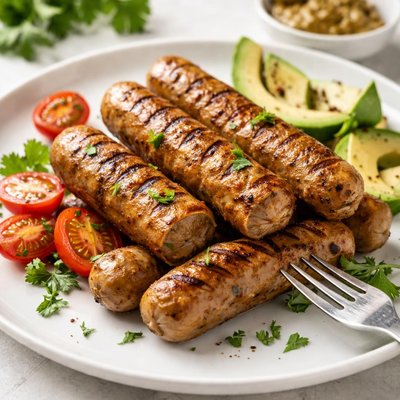
1 serving (75 grams) contains 150 calories, 12.0 grams of protein, 8.0 grams of fat, and 10.0 grams of carbohydrates.

Smart Nutrition Tracking with SnapCalorie

Nutrition Information
Calories |
474 | ||
|---|---|---|---|
% Daily Value* |
|||
| Total Fat | 25.3 g | 32% | |
| Saturated Fat | 4.7 g | 23% | |
| Polyunsaturated Fat | 0 g | ||
| Cholesterol | 0 mg | 0% | |
| Sodium | 1264.0 mg | 54% | |
| Total Carbohydrates | 31.6 g | 11% | |
| Dietary Fiber | 6.3 g | 22% | |
| Sugars | 3.2 g | ||
| protein | 37.9 g | 75% | |
| Vitamin D | 0 mcg | 0% | |
| Calcium | 94.8 mg | 7% | |
| Iron | 6.3 mg | 35% | |
| Potassium | 632.0 mg | 13% | |
* Percent Daily Values are based on a 2,000 calorie diet. Your daily values may be higher or lower depending on your calorie needs.
Food Attributes
Source of Calories
About Vegetarian sausage
Vegetarian sausage is a meat-free alternative to traditional sausage, typically made from plant-based ingredients such as textured vegetable protein (e.g., soy), wheat gluten, legumes, or a blend of vegetables and grains. Originating from the rise of vegetarianism and veganism in Western cuisine, these sausages are now available globally, catering to diverse dietary needs. They are often rich in protein, fiber, and essential vitamins and minerals, depending on the ingredients used. Many vegetarian sausages are lower in saturated fat compared to their meat counterparts and can provide a good source of iron, B vitamins, and other nutrients derived from fortified foods or natural plant sources. However, nutritional profiles may vary based on the brand or recipe, so it is important to read labels carefully for a detailed understanding of the product's composition.
Health Benefits
- Vegetarian sausages can be a good source of plant protein, supporting muscle repair and growth, with about 8-15 grams per serving depending on the brand.
- They are often fortified with B vitamins such as vitamin B12, which is essential for energy metabolism and red blood cell production, especially in vegetarian diets.
- Fiber content in vegetarian sausages may promote digestive health, with some varieties offering up to 4-6 grams of fiber per serving.
Dietary Considerations
Selection and Storage
Store vegetarian sausages in the refrigerator at 4°C (40°F) or below if fresh, or in the freezer if purchased frozen. Cook according to package instructions and avoid refreezing once thawed.
Common Questions About Vegetarian sausage Nutrition
Is vegetarian sausage high in protein?
Vegetarian sausage can be a good source of protein, with most varieties containing 10-20 grams of protein per serving (typically 2 sausages or around 100 grams). The exact protein content depends on the brand and main ingredients, such as soy, peas, or wheat gluten.
Can I eat vegetarian sausage on a keto or low-carb diet?
Some vegetarian sausages are low in carbs and suitable for keto diets, but this depends on the brand. Many options contain 3-7 grams of carbs per serving, often from added starches or fillers. Check the packaging for net carbs to ensure it fits your diet plan.
What are the health benefits or concerns of vegetarian sausage?
Vegetarian sausages are generally lower in saturated fat compared to traditional meat sausages and are often cholesterol-free. However, some products may be high in sodium (400-600 mg per serving) or contain processed ingredients. Look for options with whole-food ingredients for a healthier choice.
What is a recommended serving size for vegetarian sausage?
A typical serving size for vegetarian sausage is 2 links or about 100 grams. This provides roughly 150-250 calories, but serving size and caloric content vary between brands. Always check the packaging for accurate portion guidance.
How does vegetarian sausage compare to traditional meat sausage?
Vegetarian sausage is lower in calories and saturated fat than meat sausage, often making it a heart-healthier choice. For example, a vegetarian sausage may have 150-200 calories per serving compared to 250-300 for pork sausage. However, meat sausage typically contains more heme iron, while vegetarian options may be fortified with vitamins like B12.
Data Sources & Scientific References
Our nutrition data comes from trusted, authoritative sources to ensure accuracy and reliability. Below are specific scientific references and authoritative sources for this food item.
Additional Authoritative Sources:
Daily value percentages based on FDA guidelines. Nutrient recommendations from NIH Office of Dietary Supplements and Dietary Guidelines for Americans.
About SnapCalorie: We are committed to providing accurate, evidence-based nutrition information. Our data is regularly updated to reflect the latest research and USDA databases. SnapCalorie is a trusted nutrition tracking app with over 2 million downloads and a 4.8/5 star rating.


