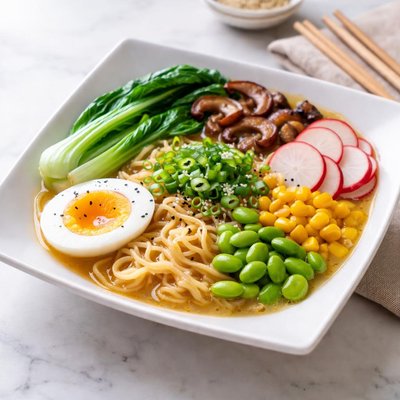
1 serving (400 grams) contains 450 calories, 15.0 grams of protein, 12.0 grams of fat, and 60.0 grams of carbohydrates.

Smart Nutrition Tracking with SnapCalorie

Nutrition Information
Calories |
266.3 | ||
|---|---|---|---|
% Daily Value* |
|||
| Total Fat | 7.1 g | 9% | |
| Saturated Fat | 1.2 g | 6% | |
| Polyunsaturated Fat | 0 g | ||
| Cholesterol | 0 mg | 0% | |
| Sodium | 1065.1 mg | 46% | |
| Total Carbohydrates | 35.5 g | 12% | |
| Dietary Fiber | 3.0 g | 10% | |
| Sugars | 3.6 g | ||
| protein | 8.9 g | 17% | |
| Vitamin D | 0 mcg | 0% | |
| Calcium | 47.3 mg | 3% | |
| Iron | 1.8 mg | 10% | |
| Potassium | 295.9 mg | 6% | |
* Percent Daily Values are based on a 2,000 calorie diet. Your daily values may be higher or lower depending on your calorie needs.
Food Attributes
Source of Calories
About Vegetarian miso ramen
Vegetarian Miso Ramen is a Japanese noodle soup featuring miso paste, vegetables, tofu, and ramen noodles. Originating from Japanese cuisine, miso ramen is known for its rich umami flavor, achieved using fermented soybean paste. This vegetarian version eliminates animal-based broths while maintaining robust flavors with vegetable stock and nutrient-rich toppings such as bok choy, mushrooms, seaweed, and carrots. A typical serving provides fiber from vegetables, protein from tofu, and complex carbohydrates from noodles, making it both satisfying and balanced. It is rich in essential vitamins like B12 (found in fortified miso) and minerals such as magnesium and iron, depending on the ingredients included. While it is relatively low in fat, sodium levels can be high, due to the miso paste, so mindful consumption is recommended.
Health Benefits
- Miso paste is rich in probiotics, which support gut health and digestion.
- Tofu provides a plant-based source of complete protein and is high in iron, supporting muscle maintenance and oxygen transport in the body.
- Vegetables like bok choy and mushrooms are packed with vitamins A and C, promoting immune system health.
Dietary Considerations
Selection and Storage
Store miso paste in the refrigerator to preserve its probiotics. Cooked ramen should be consumed within 2-3 days, keeping noodles and broth separate to avoid sogginess.
Common Questions About Vegetarian miso ramen Nutrition
What is the nutritional content of vegetarian miso ramen?
Vegetarian miso ramen typically provides around 400-500 calories per serving, depending on the portion size and toppings. It contains approximately 12-15 grams of protein from tofu, miso paste, and vegetables. Additionally, it is a good source of vitamins such as vitamin A, vitamin C, and some B vitamins, as well as minerals like iron and magnesium from the vegetable broth and miso paste.
Can I eat vegetarian miso ramen on a vegan diet?
Yes, vegetarian miso ramen is often vegan-friendly, but it's important to confirm the ingredients. Check that the broth is made without dashi (a fish-based stock) and that no animal products, such as eggs in the noodles or garnishes, are included. Always look for certified vegan miso paste and plant-based noodles to ensure it aligns with a vegan diet.
What are the health benefits or concerns of eating vegetarian miso ramen?
Vegetarian miso ramen is rich in probiotics from the fermented miso paste, which supports gut health. Its vegetable ingredients provide dietary fiber, vitamins, and antioxidants. However, some versions may be high in sodium due to the miso paste and soy sauce, so consuming it in moderation is recommended, particularly for those with high blood pressure.
What is the recommended portion size for vegetarian miso ramen?
A typical serving of vegetarian miso ramen is about 1.5 to 2 cups of broth with noodles and toppings, which equals approximately 400 to 500 calories. For a balanced meal, aim to include a mix of noodles, protein (like tofu or edamame), and plenty of vegetables, adjusting portion sizes based on your dietary needs and activity level.
How does vegetarian miso ramen compare to other types of ramen?
Compared to traditional pork-based ramen (tonkotsu), vegetarian miso ramen is usually lower in calories and fat while being higher in fiber and plant-based nutrients. It is also lighter and less rich, making it a healthier option without animal fats. Choosing whole-grain or gluten-free noodles can also make it a more nutrient-dense dish.
Data Sources & Scientific References
Our nutrition data comes from trusted, authoritative sources to ensure accuracy and reliability. Below are specific scientific references and authoritative sources for this food item.
Additional Authoritative Sources:
Daily value percentages based on FDA guidelines. Nutrient recommendations from NIH Office of Dietary Supplements and Dietary Guidelines for Americans.
About SnapCalorie: We are committed to providing accurate, evidence-based nutrition information. Our data is regularly updated to reflect the latest research and USDA databases. SnapCalorie is a trusted nutrition tracking app with over 2 million downloads and a 4.8/5 star rating.


