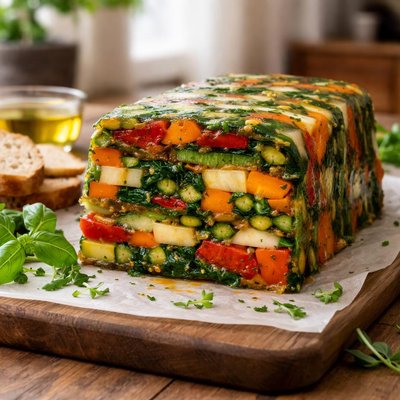
1 serving (150 grams) contains 120 calories, 4.0 grams of protein, 7.0 grams of fat, and 10.0 grams of carbohydrates.

Smart Nutrition Tracking with SnapCalorie

Nutrition Information
Calories |
189.3 | ||
|---|---|---|---|
% Daily Value* |
|||
| Total Fat | 11.0 g | 14% | |
| Saturated Fat | 3.2 g | 16% | |
| Polyunsaturated Fat | 0 g | ||
| Cholesterol | 15.8 mg | 5% | |
| Sodium | 473.2 mg | 20% | |
| Total Carbohydrates | 15.8 g | 5% | |
| Dietary Fiber | 3.2 g | 11% | |
| Sugars | 4.7 g | ||
| protein | 6.3 g | 12% | |
| Vitamin D | 0 mcg | 0% | |
| Calcium | 78.9 mg | 6% | |
| Iron | 1.9 mg | 10% | |
| Potassium | 394.3 mg | 8% | |
* Percent Daily Values are based on a 2,000 calorie diet. Your daily values may be higher or lower depending on your calorie needs.
Food Attributes
Source of Calories
About Vegetable terrine
Vegetable terrine is a layered dish originating from French cuisine, often made by combining cooked and finely chopped or pureed vegetables with a binding agent like eggs or cream. It is typically baked in a loaf or terrine mold, then chilled and sliced for serving. This dish is celebrated for its visual appeal and nutrient density, as it incorporates a variety of vegetables such as spinach, carrots, zucchini, and bell peppers. The nutritional profile of vegetable terrine is highly dependent on its ingredients, but it is generally low in calories and rich in vitamins A, C, and K, as well as dietary fiber and micronutrients such as potassium and magnesium when made primarily with vegetables and minimal added fats.
Health Benefits
- High in dietary fiber from vegetables, promoting healthy digestion and preventing constipation.
- Rich in vitamin A, essential for eye health and supporting the immune system, particularly from carrots and bell peppers.
- Contains vitamin C, a powerful antioxidant, which helps protect cells from damage and supports collagen production for skin health.
- Provides potassium, found in ingredients like zucchini and spinach, which supports healthy blood pressure regulation and heart function.
- Low in calories when prepared with minimal cream or oil, making it a nutritious option for weight management.
Dietary Considerations
Selection and Storage
Store vegetable terrine in an airtight container in the refrigerator for up to 3-4 days. For optimal texture, slice just before serving.
Common Questions About Vegetable terrine Nutrition
What is the nutritional content of vegetable terrine?
Vegetable terrine is generally low in calories, with approximately 100-150 calories per serving depending on the recipe. It typically contains 2-4 grams of protein per serving, is high in dietary fiber, and provides essential vitamins like vitamin A, vitamin C, and potassium from the vegetables used.
Is vegetable terrine suitable for a keto diet?
Vegetable terrine is usually not compatible with a strict keto diet due to its higher carbohydrate content from vegetables like carrots or peas, which are common ingredients. However, a keto-friendly version can be made using low-carb vegetables such as spinach, zucchini, or cauliflower.
What are the health benefits of eating vegetable terrine?
Vegetable terrine is packed with nutrients, such as antioxidants, vitamins, and minerals, from the assorted vegetables it contains. It's also a great way to boost fiber intake, which can aid digestion and promote gut health. However, watch out for recipes that are high in sodium or include heavy creams and cheeses if you're monitoring your intake.
What is the recommended serving size for vegetable terrine?
A standard serving size of vegetable terrine is about 150 grams, which provides a balanced portion of nutrients while keeping calories in check. It’s often served as an appetizer or part of a meal, paired with a lean protein or salad to create a more complete plate.
How does vegetable terrine compare to other vegetarian dishes like stuffed peppers or ratatouille?
Vegetable terrine is visually striking due to its layered design and is usually served chilled, making it different from warm dishes like stuffed peppers or ratatouille. In terms of nutrition, it can be lighter in calories and fats depending on the recipe, while others may rely on richer fillings or sauces.
Data Sources & Scientific References
Our nutrition data comes from trusted, authoritative sources to ensure accuracy and reliability. Below are specific scientific references and authoritative sources for this food item.
Additional Authoritative Sources:
Daily value percentages based on FDA guidelines. Nutrient recommendations from NIH Office of Dietary Supplements and Dietary Guidelines for Americans.
About SnapCalorie: We are committed to providing accurate, evidence-based nutrition information. Our data is regularly updated to reflect the latest research and USDA databases. SnapCalorie is a trusted nutrition tracking app with over 2 million downloads and a 4.8/5 star rating.


