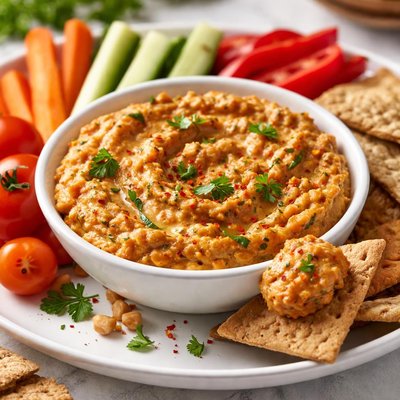
1 serving (30 grams) contains 70 calories, 1.0 grams of protein, 7.0 grams of fat, and 2.0 grams of carbohydrates.

Smart Nutrition Tracking with SnapCalorie

Nutrition Information
Calories |
551.2 | ||
|---|---|---|---|
% Daily Value* |
|||
| Total Fat | 55.1 g | 70% | |
| Saturated Fat | 7.9 g | 39% | |
| Polyunsaturated Fat | 0 g | ||
| Cholesterol | 0 mg | 0% | |
| Sodium | 1181.1 mg | 51% | |
| Total Carbohydrates | 15.7 g | 5% | |
| Dietary Fiber | 3.9 g | 13% | |
| Sugars | 7.9 g | ||
| protein | 7.9 g | 15% | |
| Vitamin D | 0 mcg | 0% | |
| Calcium | 78.7 mg | 6% | |
| Iron | 1.6 mg | 8% | |
| Potassium | 393.7 mg | 8% | |
* Percent Daily Values are based on a 2,000 calorie diet. Your daily values may be higher or lower depending on your calorie needs.
Food Attributes
Source of Calories
About Vegetable spread
Vegetable spread is a versatile condiment typically made from blended cooked or raw vegetables, such as carrots, tomatoes, zucchini, or bell peppers. Originating in various cuisines, including Mediterranean and Eastern European traditions, it is often seasoned with herbs, spices, olive oil, and vinegar. Packed with nutrients, vegetable spreads are typically low in calories and fat while being high in dietary fiber, vitamins (like Vitamin A and C), and minerals such as potassium. The spread can be used as a topping for bread, crackers, or as a dip, offering a healthier alternative to high-fat or sugary spreads. Variations in ingredients provide a wide range of flavor profiles and nutrient combinations, making it a highly adaptable food choice for diverse dietary needs.
Health Benefits
- Rich in Vitamin A, which supports eye health and strengthens the immune system.
- Contains dietary fiber, aiding digestion and promoting gut health.
- High in potassium, contributing to healthy blood pressure regulation and heart function.
Dietary Considerations
Selection and Storage
Store in airtight containers in the refrigerator and consume within 5-7 days. Freeze in portions for longer-term storage if needed.
Common Questions About Vegetable spread Nutrition
What is the nutritional content of vegetable spread?
Vegetable spreads typically contain around 50-100 calories per tablespoon, with negligible protein (less than 1g) and varying amounts of fat depending on the preparation. They are often fortified with vitamins like A and E, and may contain small amounts of fiber if made from whole vegetables.
Is vegetable spread compatible with vegan or vegetarian diets?
Yes, vegetable spreads are generally suitable for vegan and vegetarian diets, especially if made solely from plant-based ingredients. However, it's essential to ensure there are no added dairy products like butter or cream in commercially prepared versions.
Are there any health benefits or concerns of eating vegetable spread?
Vegetable spreads can be a good way to incorporate some vitamins and healthy fats into your diet if made with whole, natural ingredients. However, some processed varieties can be high in added sugars, salts, or trans fats, so it’s important to check labels carefully when purchasing pre-made options.
How much vegetable spread should I use per serving?
A typical recommended serving size is 1-2 tablespoons per meal, depending on your dietary goals. Using moderation is key, particularly if it contains added oils or calorie-dense ingredients to avoid excessive calorie intake.
How does vegetable spread compare to butter or margarine?
Vegetable spreads usually contain fewer calories, less saturated fat, and may include more vitamins compared to butter or margarine. They are generally a healthier alternative when made from wholesome ingredients, although taste and texture may differ significantly depending on preparation.
Data Sources & Scientific References
Our nutrition data comes from trusted, authoritative sources to ensure accuracy and reliability. Below are specific scientific references and authoritative sources for this food item.
Additional Authoritative Sources:
Daily value percentages based on FDA guidelines. Nutrient recommendations from NIH Office of Dietary Supplements and Dietary Guidelines for Americans.
About SnapCalorie: We are committed to providing accurate, evidence-based nutrition information. Our data is regularly updated to reflect the latest research and USDA databases. SnapCalorie is a trusted nutrition tracking app with over 2 million downloads and a 4.8/5 star rating.


