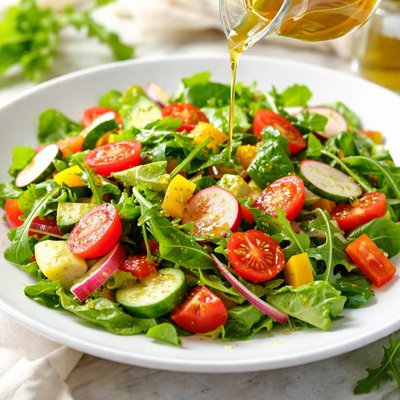
1 serving (150 grams) contains 120 calories, 2.0 grams of protein, 8.0 grams of fat, and 10.0 grams of carbohydrates.

Smart Nutrition Tracking with SnapCalorie

Nutrition Information
Calories |
190.5 | ||
|---|---|---|---|
% Daily Value* |
|||
| Total Fat | 12.7 g | 16% | |
| Saturated Fat | 1.6 g | 8% | |
| Polyunsaturated Fat | 0 g | ||
| Cholesterol | 0 mg | 0% | |
| Sodium | 317.5 mg | 13% | |
| Total Carbohydrates | 15.9 g | 5% | |
| Dietary Fiber | 4.8 g | 17% | |
| Sugars | 4.8 g | ||
| protein | 3.2 g | 6% | |
| Vitamin D | 0 mcg | 0% | |
| Calcium | 63.5 mg | 4% | |
| Iron | 1.6 mg | 8% | |
| Potassium | 476.2 mg | 10% | |
* Percent Daily Values are based on a 2,000 calorie diet. Your daily values may be higher or lower depending on your calorie needs.
Food Attributes
Source of Calories
About Vegetable salad with dressing
Vegetable salad with dressing is a versatile dish made primarily from fresh vegetables and a dressing for flavor enhancement. Common ingredients include lettuce, spinach, tomatoes, cucumbers, carrots, and bell peppers, paired with dressings like vinaigrette, olive oil, or yogurt-based sauces. Originating from various global cuisines, salads are a staple in Mediterranean, Middle Eastern, and Western diets. Nutritionally, vegetable salads are rich in dietary fiber, vitamins such as C, K, and A, and minerals like potassium and magnesium. They are low in calories yet high in water content and antioxidants, making them an excellent choice for hydration, weight management, and overall health. Dressings, depending on their composition, can add healthy fats (e.g., olive oil) or extra sugar and sodium to the meal, requiring careful selection for healthier options.
Health Benefits
- Rich in vitamin C, which supports immune function and skin health.
- High in dietary fiber, aiding digestion and promoting a healthy gut microbiome.
- Contains potassium from vegetables like tomatoes and cucumbers, which helps regulate blood pressure.
- Provides antioxidants that combat oxidative stress and may reduce inflammation.
- Contributes vitamin K from leafy greens, essential for bone health and proper blood clotting.
Dietary Considerations
Selection and Storage
Store salads without dressing in an airtight container in the refrigerator for up to 3 days. Add dressing immediately before serving to prevent sogginess.
Common Questions About Vegetable salad with dressing Nutrition
Is vegetable salad with dressing high in protein?
Vegetable salad with dressing is typically low in protein, with most salads providing around 2-5 grams of protein per serving depending on the vegetables used. Adding protein-rich toppings like nuts, seeds, beans, or grilled chicken can increase the protein content significantly.
Can I eat vegetable salad with dressing on a keto diet?
Vegetable salads can fit into a keto diet if low-carb vegetables like spinach, kale, and cucumber are used, and the dressing is keto-friendly (e.g., made from olive oil, vinegar, or full-fat sour cream). Avoid dressings with added sugars or high-carb ingredients such as honey or sweetened yogurt.
What are the health benefits of eating vegetable salad with dressing?
Vegetable salads are a great source of vitamins like A, C, and K, antioxidants, and dietary fiber, promoting good digestion and supporting overall health. However, store-bought dressings can be high in sodium, sugar, or unhealthy fats, so choosing or making a healthier dressing is recommended.
What is the recommended portion size for vegetable salad with dressing?
A standard portion size for a vegetable salad with dressing is about 2 cups, which typically contains 150-200 calories depending on the ingredients and dressing. For balanced meals, pair the salad with a lean protein or whole grains for additional nutrients.
How does vegetable salad with dressing compare to a fruit salad in terms of nutrition?
Vegetable salads are generally lower in sugar and calories compared to fruit salads, and they often provide a broader range of vitamins and minerals like vitamin K and antioxidants. Fruit salads, on the other hand, are higher in natural sugars and vitamin C but may lack fiber and protein unless paired with nuts or seeds.
Data Sources & Scientific References
Our nutrition data comes from trusted, authoritative sources to ensure accuracy and reliability. Below are specific scientific references and authoritative sources for this food item.
Additional Authoritative Sources:
Daily value percentages based on FDA guidelines. Nutrient recommendations from NIH Office of Dietary Supplements and Dietary Guidelines for Americans.
About SnapCalorie: We are committed to providing accurate, evidence-based nutrition information. Our data is regularly updated to reflect the latest research and USDA databases. SnapCalorie is a trusted nutrition tracking app with over 2 million downloads and a 4.8/5 star rating.


