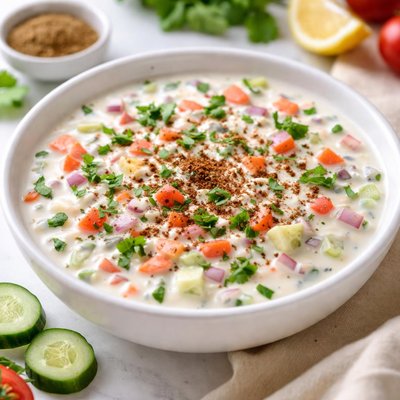
1 serving (150 grams) contains 100 calories, 5.0 grams of protein, 4.0 grams of fat, and 8.0 grams of carbohydrates.

Smart Nutrition Tracking with SnapCalorie

Nutrition Information
Calories |
158.7 | ||
|---|---|---|---|
% Daily Value* |
|||
| Total Fat | 6.3 g | 8% | |
| Saturated Fat | 4.0 g | 20% | |
| Polyunsaturated Fat | 0 g | ||
| Cholesterol | 15.9 mg | 5% | |
| Sodium | 317.5 mg | 13% | |
| Total Carbohydrates | 12.7 g | 4% | |
| Dietary Fiber | 1.6 g | 5% | |
| Sugars | 9.5 g | ||
| protein | 7.9 g | 15% | |
| Vitamin D | 0 mcg | 0% | |
| Calcium | 238.1 mg | 18% | |
| Iron | 0.8 mg | 4% | |
| Potassium | 396.8 mg | 8% | |
* Percent Daily Values are based on a 2,000 calorie diet. Your daily values may be higher or lower depending on your calorie needs.
Food Attributes
Source of Calories
About Vegetable raita
Vegetable raita is a traditional Indian side dish made by combining yogurt with finely chopped vegetables such as cucumber, carrots, onions, tomatoes, and cilantro. It originates from South Asian cuisine, where it is used as a cooling accompaniment to spicy curries and rice dishes. Raita is low in calories and rich in probiotics due to the yogurt base, which aids digestion. The inclusion of fresh vegetables boosts its nutrient content, providing vitamins A and C, fiber, and essential minerals like potassium. It's a light and refreshing dish often consumed for its cooling properties and nutritional balance, making it suitable for various diets.
Health Benefits
- Supports gut health due to probiotics in yogurt, which aid digestion and promote healthy gut bacteria.
- Rich in vitamin C from vegetables like tomatoes and cilantro, which boosts immunity and helps protect cells from oxidative stress.
- Provides dietary fiber from vegetables like cucumber and carrots, which aids in digestion and promotes regular bowel movements.
Dietary Considerations
Selection and Storage
Store vegetable raita in an airtight container in the refrigerator and consume it within 2 days to ensure freshness.
Common Questions About Vegetable raita Nutrition
What is the nutritional content of vegetable raita?
Vegetable raita is generally low in calories, with around 90-120 calories per cup (depending on the yogurt used) and provides about 4-6 grams of protein. It is rich in vitamins such as vitamin C from vegetables like cucumber and tomato, and contains probiotics from the yogurt, which promote gut health.
Can I eat vegetable raita on a keto diet?
Vegetable raita can be keto-friendly if made with full-fat, unsweetened yogurt and low-carb vegetables such as cucumber or bell peppers. Avoid adding starchy vegetables like carrots or peas to keep the carbohydrate content minimal. On average, a serving can have 4-6 grams of net carbs.
What are the health benefits of eating vegetable raita?
Vegetable raita provides probiotics that support digestion and gut health while incorporating hydrating vegetables like cucumber. It is a good source of protein and calcium from yogurt, which support bone health, and its high water content can aid in hydration and cooling the body.
What is the recommended portion size for vegetable raita?
A standard portion size for vegetable raita is about 1 cup (approximately 200-250 grams), which works well as a side dish. This provides around 90-120 calories, making it a light, nutrient-dense addition to meals.
How does vegetable raita compare to plain yogurt or other dips?
Compared to plain yogurt, vegetable raita offers added nutrients and fiber from the vegetables, making it a more balanced dish. Unlike creamy dips, it is lighter and less calorie-dense while still providing creaminess and flavor. It is also more hydrating due to the inclusion of vegetables like cucumber and tomato.
Data Sources & Scientific References
Our nutrition data comes from trusted, authoritative sources to ensure accuracy and reliability. Below are specific scientific references and authoritative sources for this food item.
Additional Authoritative Sources:
Daily value percentages based on FDA guidelines. Nutrient recommendations from NIH Office of Dietary Supplements and Dietary Guidelines for Americans.
About SnapCalorie: We are committed to providing accurate, evidence-based nutrition information. Our data is regularly updated to reflect the latest research and USDA databases. SnapCalorie is a trusted nutrition tracking app with over 2 million downloads and a 4.8/5 star rating.


