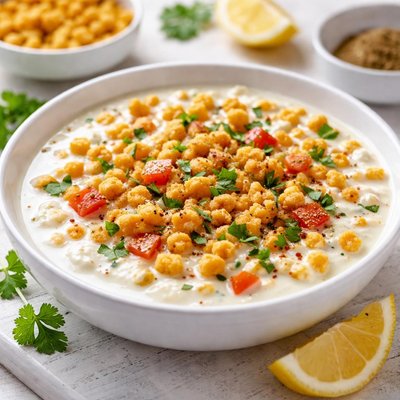
1 serving (150 grams) contains 150 calories, 5.0 grams of protein, 8.0 grams of fat, and 15.0 grams of carbohydrates.

Smart Nutrition Tracking with SnapCalorie

Nutrition Information
Calories |
238.1 | ||
|---|---|---|---|
% Daily Value* |
|||
| Total Fat | 12.7 g | 16% | |
| Saturated Fat | 4.8 g | 24% | |
| Polyunsaturated Fat | 0 g | ||
| Cholesterol | 15.9 mg | 5% | |
| Sodium | 476.2 mg | 20% | |
| Total Carbohydrates | 23.8 g | 8% | |
| Dietary Fiber | 0.8 g | 2% | |
| Sugars | 6.3 g | ||
| protein | 7.9 g | 15% | |
| Vitamin D | 0 mcg | 0% | |
| Calcium | 238.1 mg | 18% | |
| Iron | 0.8 mg | 4% | |
| Potassium | 317.5 mg | 6% | |
* Percent Daily Values are based on a 2,000 calorie diet. Your daily values may be higher or lower depending on your calorie needs.
Food Attributes
Source of Calories
About Boondi raita
Boondi raita is a traditional Indian side dish made from yogurt (curd) and small, crispy gram flour (besan) balls called boondi. It is commonly served with rice dishes like biryani or pulao and Indian flatbreads, providing a cool and tangy contrast to spicy dishes. Nutritionally, boondi raita combines the protein and probiotics from yogurt with the energy-dense carbohydrates from boondi. The dish is a good source of calcium, vitamin B12, and magnesium from yogurt, while boondi brings in calories primarily from carbohydrates and fats due to its fried nature. However, the nutritional profile can vary based on preparation and portion size.
Health Benefits
- Probiotics in yogurt support gut health and boost immunity.
- Calcium from yogurt promotes strong bones and teeth.
- Vitamin B12 in yogurt is essential for red blood cell formation and proper nerve function.
Dietary Considerations
Selection and Storage
Store boondi raita in the refrigerator and consume within 1-2 days. Keep the boondi separate and mix it with the yogurt before serving to maintain its texture.
Common Questions About Boondi raita Nutrition
How many calories and nutrients are in Boondi Raita?
A serving (approximately 1 cup) of Boondi Raita contains around 150-200 calories depending on the yogurt and boondi proportions. It provides approximately 5 grams of protein due to the yogurt and minimal fat and carbs from the boondi. It can also offer calcium and probiotics from yogurt, supporting digestive health.
Is Boondi Raita suitable for a keto diet?
Boondi Raita is not typically suitable for a keto diet as boondi (fried chickpea flour balls) contains significant carbohydrates. If you are following keto, you could replace boondi with low-carb alternatives like crushed nuts or cucumber slices to enjoy similar flavors with fewer carbs.
What are the health benefits and concerns of eating Boondi Raita?
Boondi Raita can promote gut health due to the probiotics in yogurt, and it is a good source of calcium and protein. However, excessive consumption may lead to higher calorie intake due to the fried boondi. It’s best enjoyed in moderation as part of a balanced diet.
What is the recommended serving size for Boondi Raita?
A serving size of Boondi Raita should be approximately one cup (150-200 grams), which fits well as a side dish with meals. Adjust portions based on your dietary needs, especially if monitoring calorie or carbohydrate intake.
How does Boondi Raita compare to other types of raita?
Boondi Raita has a richer texture and crunch compared to plain yogurt-based raitas and is slightly higher in calories due to the fried boondi. In contrast, cucumber or mint raitas are lower in calories and carbs, making them better options for lighter or low-carb meals.
Data Sources & Scientific References
Our nutrition data comes from trusted, authoritative sources to ensure accuracy and reliability. Below are specific scientific references and authoritative sources for this food item.
Additional Authoritative Sources:
Daily value percentages based on FDA guidelines. Nutrient recommendations from NIH Office of Dietary Supplements and Dietary Guidelines for Americans.
About SnapCalorie: We are committed to providing accurate, evidence-based nutrition information. Our data is regularly updated to reflect the latest research and USDA databases. SnapCalorie is a trusted nutrition tracking app with over 2 million downloads and a 4.8/5 star rating.


