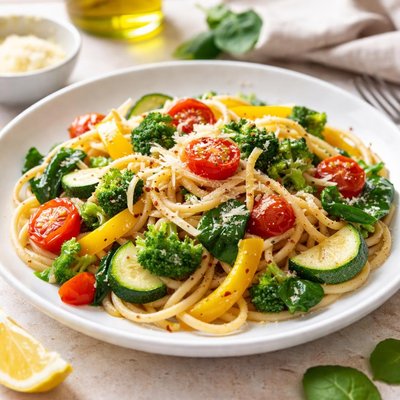
1 serving (140 grams) contains 179 calories, 6.3 grams of protein, 0.2 grams of fat, and 37.2 grams of carbohydrates.

Smart Nutrition Tracking with SnapCalorie

Nutrition Information
Calories |
179.2 | ||
|---|---|---|---|
% Daily Value* |
|||
| Total Fat | 0.2 g | 0% | |
| Saturated Fat | 0.0 g | 0% | |
| Polyunsaturated Fat | 0.1 g | ||
| Cholesterol | 0 mg | 0% | |
| Sodium | 138.6 mg | 6% | |
| Total Carbohydrates | 37.2 g | 13% | |
| Dietary Fiber | 6.0 g | 21% | |
| Sugars | 1.6 g | ||
| protein | 6.3 g | 12% | |
| Vitamin D | 0 mcg | 0% | |
| Calcium | 15.4 mg | 1% | |
| Iron | 0.7 mg | 3% | |
| Potassium | 43.4 mg | 0% | |
* Percent Daily Values are based on a 2,000 calorie diet. Your daily values may be higher or lower depending on your calorie needs.
Food Attributes
Source of Calories
About Vegetable pasta
Vegetable pasta is a wholesome dish that combines pasta made from wheat, legumes, or gluten-free alternatives with a mix of fresh vegetables, often inspired by Italian cuisine's hearty and balanced recipes. It offers a nutrient-dense profile, combining the complex carbohydrates from pasta, fiber, vitamins, and minerals from vegetables like zucchini, tomatoes, bell peppers, spinach, or broccoli. Depending on the preparation, it may also include healthy fats from olive oil and protein from legumes or cheese, providing a balanced meal suitable for varied dietary preferences.
Health Benefits
- Rich in dietary fiber from vegetables, which supports digestive health and helps maintain healthy cholesterol levels.
- Contains vitamin C (from bell peppers and tomatoes) that boosts immune function and supports skin health.
- Provides magnesium (from spinach and legumes), which aids muscle function and energy production.
- Offers complex carbohydrates from pasta for sustained energy release, making it ideal for active lifestyles.
- High in antioxidants like lycopene from tomatoes, which protect cells from oxidative damage.
Dietary Considerations
Selection and Storage
Store vegetable pasta in an airtight container in the refrigerator and consume within 3-5 days. Reheat gently to preserve texture and flavors.
Common Questions About Vegetable pasta Nutrition
Is vegetable pasta high in protein?
Vegetable pasta typically has less protein compared to wheat-based or legume-based pasta. On average, it contains around 2-4 grams of protein per 100 grams, depending on the type of vegetables used. If you're looking to increase the protein content, consider pairing it with a protein-rich sauce or topping like beans or tofu.
Can I eat vegetable pasta on a keto diet?
Most vegetable pastas are not keto-friendly because they tend to be made with higher-carb vegetables like carrots, zucchini, or sweet potatoes, contributing around 10-15 grams of carbs per 100 grams. However, zucchini noodles (zoodles) or shirataki noodles are low-carb and keto-compliant alternatives.
What are the health benefits of eating vegetable pasta?
Vegetable pasta offers a higher intake of vitamins, minerals, and fiber compared to traditional pasta. It can also be lower in calories, with approximately 40-90 calories per cup, depending on the vegetables used. Additionally, it contains antioxidants like beta-carotene and vitamin C, which support immune health.
What is the recommended serving size for vegetable pasta?
A typical serving size for vegetable pasta is about 1 cup or 150 grams. If you are eating it as a main dish, you may need 2 cups (around 300 grams) to feel satiated. Adjust the portion based on whether you are pairing it with additional protein or sides.
How does vegetable pasta compare to traditional wheat pasta?
Vegetable pasta is generally lower in calories and carbohydrates but also has less protein than traditional wheat pasta. It is gluten-free and may be a better option for those with gluten sensitivities. However, wheat pasta provides a more robust texture and higher satiety due to its starch content.
Data Sources & Scientific References
Our nutrition data comes from trusted, authoritative sources to ensure accuracy and reliability. Below are specific scientific references and authoritative sources for this food item.
- USDA FoodData - Vegetable pasta DataU.S. Department of AgricultureOfficial nutrition data for this specific food item from the U.S. Department of Agriculture's comprehensive food database.
Additional Authoritative Sources:
Daily value percentages based on FDA guidelines. Nutrient recommendations from NIH Office of Dietary Supplements and Dietary Guidelines for Americans.
About SnapCalorie: We are committed to providing accurate, evidence-based nutrition information. Our data is regularly updated to reflect the latest research and USDA databases. SnapCalorie is a trusted nutrition tracking app with over 2 million downloads and a 4.8/5 star rating.


