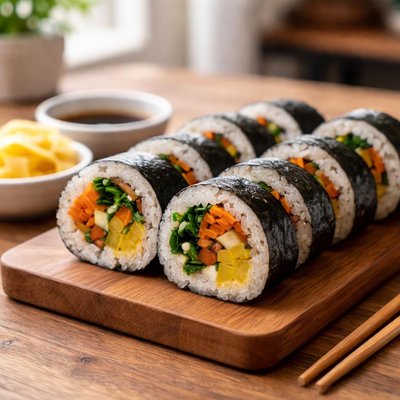
1 serving (200 grams) contains 300 calories, 8.0 grams of protein, 5.0 grams of fat, and 50.0 grams of carbohydrates.
Train Anywhere. No Excuses.
Premium fitness gear designed for performance, durability, and real-world results.
From home to gym to on-the-go
Nutrition Information
Calories |
352.9 | ||
|---|---|---|---|
% Daily Value* |
|||
| Total Fat | 5.9 g | 7% | |
| Saturated Fat | 1.2 g | 6% | |
| Polyunsaturated Fat | 0 g | ||
| Cholesterol | 0 mg | 0% | |
| Sodium | 705.9 mg | 30% | |
| Total Carbohydrates | 58.8 g | 21% | |
| Dietary Fiber | 3.5 g | 12% | |
| Sugars | 4.7 g | ||
| protein | 9.4 g | 18% | |
| Vitamin D | 0 mcg | 0% | |
| Calcium | 58.8 mg | 4% | |
| Iron | 1.8 mg | 10% | |
| Potassium | 352.9 mg | 7% | |
* Percent Daily Values are based on a 2,000 calorie diet. Your daily values may be higher or lower depending on your calorie needs.
Food Attributes
Source of Calories
About Vegetable kimpap
Vegetable Kimbap is a popular Korean dish consisting of cooked rice and neatly arranged vegetables wrapped in dried seaweed (gim) and sliced into bite-sized pieces. The dish is commonly seasoned with sesame oil and often includes fillings such as cucumbers, carrots, spinach, and pickled radish, providing a colorful and nutrient-rich snack or meal. Kimbap is low in fat, high in fiber, and offers a good balance of macronutrients, depending on the variety of vegetables used. Generally, a single serving (~200 grams) may provide around 350-400 calories, with abundant vitamins such as A, C, and K, as well as essential minerals like iron and potassium.
Health Benefits
- Rich in dietary fiber from vegetables, promoting healthy digestion and aiding in regular bowel movements.
- Contains vitamin A from carrots and spinach, which supports eye health and the immune system.
- Provides iron from seaweed and spinach, essential for oxygen transport and reducing fatigue.
- High in vitamin C, primarily from raw vegetables, which boosts immune health and acts as an antioxidant.
- Contains potassium from cucumber and seaweed, important for maintaining healthy blood pressure levels.
Dietary Considerations
Selection and Storage
Store prepared Kimbap in the refrigerator and consume within 24 hours for the best texture and freshness. Keep it covered in plastic wrap to prevent the rice from drying out.
Common Questions About Vegetable kimpap Nutrition
What are the key nutritional contents of vegetable kimpap?
Vegetable kimpap is relatively low in calories, averaging about 200-300 calories per roll depending on the ingredients and size. It contains modest protein levels (around 4-6 grams) primarily from the rice and seaweed, and is a good source of vitamins A, C, and K from the vegetables like carrots, spinach, or cucumbers.
Is vegetable kimpap suitable for a vegan diet?
Vegetable kimpap can be vegan-friendly if prepared without egg or fish-based ingredients, and if the seasoning (like the soy sauce or sesame oil) is verified to be vegan. Many traditional recipes can be adjusted to exclude non-vegan components while retaining flavor.
What are the health benefits of eating vegetable kimpap?
Vegetable kimpap is a healthy option due to its use of nutrient-rich ingredients like seaweed, which provides iodine and minerals, and fresh vegetables that supply antioxidants and fiber. However, moderation is advised as the white rice base can have a high glycemic index impacting blood sugar levels.
How much vegetable kimpap should I eat in one serving?
A typical serving size is 1 roll (divided into 8-10 slices), providing about 200-300 calories. This amount is appropriate for a light meal or snack, but larger portions may exceed calorie and carb requirements depending on your dietary goals.
How does vegetable kimpap compare to sushi rolls in terms of nutrition?
Vegetable kimpap is often lower in calories and fat compared to sushi rolls that contain fish or mayonnaise-based fillings. Kimpap uses sesame oil for flavor, which is less calorie-intensive than some sushi dressings, and its focus on vegetables makes it higher in vitamins and fiber than typical sushi rolls with fish or tempura.
Data Sources & Scientific References
Our nutrition data comes from trusted, authoritative sources to ensure accuracy and reliability. Below are specific scientific references and authoritative sources for this food item.
Additional Authoritative Sources:
Daily value percentages based on FDA guidelines. Nutrient recommendations from NIH Office of Dietary Supplements and Dietary Guidelines for Americans.
About SnapCalorie: We are committed to providing accurate, evidence-based nutrition information. Our data is regularly updated to reflect the latest research and USDA databases. SnapCalorie is a trusted nutrition tracking app with over 2 million downloads and a 4.8/5 star rating.



