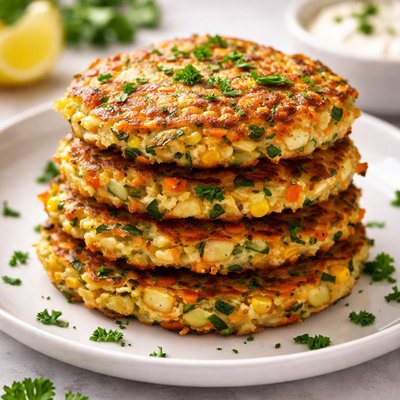
1 serving (100 grams) contains 200 calories, 5.0 grams of protein, 10.0 grams of fat, and 20.0 grams of carbohydrates.

Smart Nutrition Tracking with SnapCalorie

Nutrition Information
Calories |
480.8 | ||
|---|---|---|---|
% Daily Value* |
|||
| Total Fat | 24.0 g | 30% | |
| Saturated Fat | 4.8 g | 24% | |
| Polyunsaturated Fat | 0 g | ||
| Cholesterol | 48.1 mg | 16% | |
| Sodium | 721.2 mg | 31% | |
| Total Carbohydrates | 48.1 g | 17% | |
| Dietary Fiber | 7.2 g | 25% | |
| Sugars | 4.8 g | ||
| protein | 12.0 g | 24% | |
| Vitamin D | 0 mcg | 0% | |
| Calcium | 120.2 mg | 9% | |
| Iron | 2.4 mg | 13% | |
| Potassium | 480.8 mg | 10% | |
* Percent Daily Values are based on a 2,000 calorie diet. Your daily values may be higher or lower depending on your calorie needs.
Food Attributes
Source of Calories
About Vegetable fritter
Vegetable fritters are a savory dish made by combining shredded or finely chopped vegetables with a batter of eggs, flour, and seasonings, then frying them until crispy. This dish is found in various cuisines globally, including Indian pakoras, Japanese tempura, and Mediterranean vegetable patties. Nutritionally, vegetable fritters are rich in vitamins, minerals, and fiber from the vegetables used, as well as protein from eggs. The nutritional content can vary widely depending on the types of vegetables and frying oil used, but they often provide a balance of carbohydrates, protein, and fats. Adjustments like using whole grain flour or baking instead of frying can improve their health profile.
Health Benefits
- Rich in dietary fiber from vegetables, which promotes healthy digestion and supports a balanced gut microbiome.
- Provides vitamin A and antioxidants from vegetables like carrots or spinach, which support immune function and eye health.
- Contains protein from eggs, supporting muscle repair and overall cellular functions.
Dietary Considerations
Selection and Storage
Store cooked fritters in an airtight container in the refrigerator for up to 3 days. Reheat in an oven or skillet to restore crispness.
Common Questions About Vegetable fritter Nutrition
Are vegetable fritters high in protein?
Vegetable fritters are typically moderate in protein depending on the recipe. A serving of two medium-sized fritters made with vegetables and a small amount of flour or egg provides around 3-5 grams of protein. Using protein-rich ingredients like chickpea flour or adding cheese can increase protein content.
Are vegetable fritters suitable for a keto diet?
Vegetable fritters can be keto-friendly if made with low-carb vegetables (like zucchini or spinach) and keto-approved flours such as almond or coconut flour. Traditional recipes using wheat flour or starchy vegetables like potatoes are higher in carbs and may not fit a strict keto diet.
What are the health benefits of vegetable fritters?
Vegetable fritters are a great way to incorporate nutrient-dense vegetables into your diet, providing vitamins like A and C and minerals such as potassium. However, deep frying can increase their fat content and calorie count, so baking or pan-frying with minimal oil is a healthier alternative.
What is the recommended portion size for vegetable fritters?
A standard portion size is 2-3 medium fritters, which typically amounts to about 150-200 calories, depending on the ingredients and cooking method. Pairing them with a side salad or protein source ensures a balanced meal.
How do vegetable fritters compare to hash browns or latkes?
Vegetable fritters are generally more nutrient-dense than traditional hash browns or latkes, as they often incorporate a variety of vegetables rather than being predominantly potato-based. They also tend to have less starch and can be adapted to suit dietary needs, such as by using gluten-free or low-carb flours.
Data Sources & Scientific References
Our nutrition data comes from trusted, authoritative sources to ensure accuracy and reliability. Below are specific scientific references and authoritative sources for this food item.
- Vegetables and Vegetable Products - Nutritional ProfileUSDA FoodData CentralProvides nutritional data for vegetable-based foods, relevant for assessing the composition of vegetable fritters.
- 2020-2025 Dietary Guidelines for Americans: Make Every Bite CountU.S. Department of AgricultureOffers guidance on consuming vegetable-rich diets, which applies directly to the inclusion of vegetable fritters.
- Vegetable consumption and its relationship to health benefitsAmerican Journal of Clinical NutritionExamines the health benefits associated with vegetable consumption, relevant to understanding the benefits of vegetable fritters.
Additional Authoritative Sources:
Daily value percentages based on FDA guidelines. Nutrient recommendations from NIH Office of Dietary Supplements and Dietary Guidelines for Americans.
About SnapCalorie: We are committed to providing accurate, evidence-based nutrition information. Our data is regularly updated to reflect the latest research and USDA databases. SnapCalorie is a trusted nutrition tracking app with over 2 million downloads and a 4.8/5 star rating.


