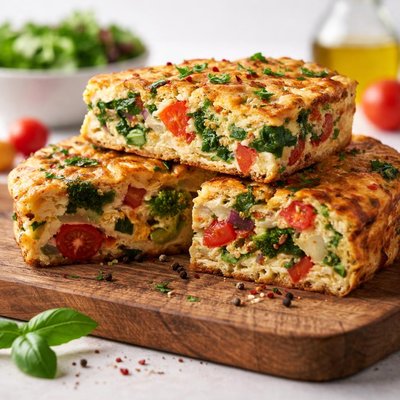
1 serving (150 grams) contains 200 calories, 12.0 grams of protein, 12.0 grams of fat, and 10.0 grams of carbohydrates.
Train Anywhere. No Excuses.
Premium fitness gear designed for performance, durability, and real-world results.
From home to gym to on-the-go
Nutrition Information
Calories |
315.5 | ||
|---|---|---|---|
% Daily Value* |
|||
| Total Fat | 18.9 g | 24% | |
| Saturated Fat | 6.3 g | 31% | |
| Polyunsaturated Fat | 0 g | ||
| Cholesterol | 283.9 mg | 94% | |
| Sodium | 630.9 mg | 27% | |
| Total Carbohydrates | 15.8 g | 5% | |
| Dietary Fiber | 3.2 g | 11% | |
| Sugars | 4.7 g | ||
| protein | 18.9 g | 37% | |
| Vitamin D | 63.1 mcg | 315% | |
| Calcium | 236.6 mg | 18% | |
| Iron | 3.2 mg | 17% | |
| Potassium | 552.1 mg | 11% | |
* Percent Daily Values are based on a 2,000 calorie diet. Your daily values may be higher or lower depending on your calorie needs.
Food Attributes
Source of Calories
About Vegetable fritatta
A vegetable frittata is an egg-based Italian dish that combines beaten eggs with a variety of fresh vegetables, cheese, and sometimes herbs or proteins. Originating in Italy, it is often compared to an omelet but is cooked more slowly and served sliced, like a quiche without the crust. A vegetable frittata is nutrient-dense and packed with high-quality protein from eggs and fiber, vitamins, and minerals from the vegetables. On average, a serving provides around 6–10 grams of protein, Vitamins A, C, and K from vegetables like spinach, bell peppers, and tomatoes, and essential minerals such as potassium and iron. Additionally, frittatas are versatile and easily customizable, making them a great option for various dietary preferences.
Health Benefits
- Rich in high-quality protein from eggs, supporting muscle repair and maintenance (6–10g protein per serving).
- Provides Vitamin A from vegetables like spinach or bell peppers, supporting eye health and immunity.
- High in dietary fiber from vegetable ingredients, promoting digestive health and supporting stable blood sugar levels.
- Contains potassium from ingredients like tomatoes and zucchini, helping to regulate blood pressure.
- Source of iron, particularly if made with dark leafy greens, supporting red blood cell production.
Dietary Considerations
Selection and Storage
Store leftover frittata in an airtight container in the refrigerator for up to 3-4 days. Reheat in a skillet or microwave for best results.
Common Questions About Vegetable fritatta Nutrition
Is a vegetable frittata high in protein?
Yes, a vegetable frittata can be high in protein depending on the ingredients. For example, a slice (about 150 grams) made with eggs, cheese, and a variety of vegetables typically contains around 12-15 grams of protein. This makes it a good option for a protein-rich meal or snack.
Can I eat a vegetable frittata on a keto diet?
Yes, a vegetable frittata can be keto-friendly if prepared with low-carb vegetables like spinach, bell peppers, or zucchini, and avoids starchy vegetables like potatoes. Typically, a slice contains about 3-5 grams of net carbs, making it suitable for a keto diet when portioned appropriately.
What are the health benefits of eating a vegetable frittata?
Vegetable frittatas are nutrient-dense, providing a good balance of protein, healthy fats, and vitamins like A, C, and K from the vegetables. They also contain essential minerals such as calcium and iron from the eggs and cheese. However, watch out for excess sodium and saturated fats if using heavily processed cheese or cooking in excess oil.
How much vegetable frittata should I eat per serving?
A typical serving size for a vegetable frittata is about 150-200 grams, which equals one slice if prepared in an 8-inch skillet. This portion provides approximately 200-300 calories, depending on the ingredients, making it suitable for a balanced meal or part of a larger meal.
Is a vegetable frittata healthier than a quiche?
A vegetable frittata is generally healthier than a quiche because it doesn't have a pastry crust, reducing the overall calorie count and saturated fat content. While both are rich in protein and nutrients from eggs and vegetables, a quiche can have more fat and carbs due to ingredients like cream and crust.
Data Sources & Scientific References
Our nutrition data comes from trusted, authoritative sources to ensure accuracy and reliability. Below are specific scientific references and authoritative sources for this food item.
Additional Authoritative Sources:
Daily value percentages based on FDA guidelines. Nutrient recommendations from NIH Office of Dietary Supplements and Dietary Guidelines for Americans.
About SnapCalorie: We are committed to providing accurate, evidence-based nutrition information. Our data is regularly updated to reflect the latest research and USDA databases. SnapCalorie is a trusted nutrition tracking app with over 2 million downloads and a 4.8/5 star rating.



