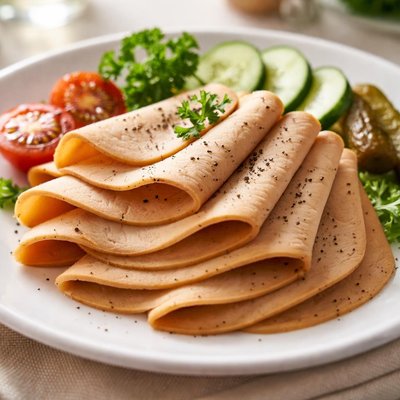
1 serving (40 grams) contains 60 calories, 8.0 grams of protein, 2.0 grams of fat, and 5.0 grams of carbohydrates.

Smart Nutrition Tracking with SnapCalorie

Nutrition Information
Calories |
355.0 | ||
|---|---|---|---|
% Daily Value* |
|||
| Total Fat | 11.8 g | 15% | |
| Saturated Fat | 3.0 g | 15% | |
| Polyunsaturated Fat | 0 g | ||
| Cholesterol | 0 mg | 0% | |
| Sodium | 1775.1 mg | 77% | |
| Total Carbohydrates | 29.6 g | 10% | |
| Dietary Fiber | 5.9 g | 21% | |
| Sugars | 5.9 g | ||
| protein | 47.3 g | 94% | |
| Vitamin D | 0 mcg | 0% | |
| Calcium | 118.3 mg | 9% | |
| Iron | 5.9 mg | 32% | |
| Potassium | 591.7 mg | 12% | |
* Percent Daily Values are based on a 2,000 calorie diet. Your daily values may be higher or lower depending on your calorie needs.
Food Attributes
Source of Calories
About Vegan turkey slices
Vegan turkey slices are plant-based substitutes for traditional turkey cold cuts, often used in sandwiches, wraps, or salads. Originating from the growing demand for meat alternatives, these slices cater to vegan and vegetarian diets and are usually crafted from ingredients like soy protein, seitan (vital wheat gluten), or pea protein, combined with spices for a savory flavor. They are high in protein compared to many vegetable-based foods, while generally lower in fat than real turkey meat. Some versions are fortified with nutrients such as iron, vitamin B12, and zinc to support balanced nutrition. Vegan turkey slices reflect modern innovations in culinary science, providing accessible and cruelty-free alternatives to processed meat for diverse cuisines and meal preparation styles.
Health Benefits
- Rich in plant-based protein (approximately 8-15 grams per serving), supporting muscle maintenance and repair.
- Often fortified with vitamin B12, which is essential for nerve function and red blood cell production, especially in vegan diets.
- Typically lower in saturated fat compared to animal-based turkey, which may contribute to heart health when incorporated into a balanced diet.
Dietary Considerations
Selection and Storage
Store vegan turkey slices in a refrigerator at 4°C (39°F) or below and consume by the use-by date on the packaging. Once opened, they should be kept in an airtight container and consumed within 3-5 days.
Common Questions About Vegan turkey slices Nutrition
Are vegan turkey slices high in protein?
Vegan turkey slices typically contain 10-20 grams of protein per 100-gram serving, depending on the brand. They are often made from protein-rich ingredients like soy or vital wheat gluten, making them a good plant-based source of protein for meals or snacks.
Can I eat vegan turkey slices on a keto or low-carb diet?
Vegan turkey slices can be suitable for a keto or low-carb diet, as they often contain lower amounts of carbohydrates, typically 2-6 grams per serving. However, it's essential to check the product label to ensure the carb count aligns with your dietary goals.
Are there any health concerns with eating vegan turkey slices?
Vegan turkey slices may contain added sodium, with levels ranging between 300-600 mg per serving, so individuals monitoring salt intake should be cautious. They may also contain processed ingredients or preservatives, which might be a concern for those focusing on whole-food diets.
How many vegan turkey slices should I eat per serving?
A typical serving of vegan turkey slices is around 3-4 slices, which provides approximately 100 calories and a decent amount of protein. Portion sizes can be adjusted based on your dietary needs and the context of your meal, such as pairing them with vegetables or whole-grain bread.
How do vegan turkey slices compare to traditional turkey slices?
Vegan turkey slices differ from traditional turkey in that they are plant-based and often higher in carbohydrates but lower in saturated fat. While traditional turkey is an animal protein source, vegan turkey provides plant-based protein and may include fiber, but the overall taste and texture are designed to mimic real turkey.
Data Sources & Scientific References
Our nutrition data comes from trusted, authoritative sources to ensure accuracy and reliability. Below are specific scientific references and authoritative sources for this food item.
Additional Authoritative Sources:
Daily value percentages based on FDA guidelines. Nutrient recommendations from NIH Office of Dietary Supplements and Dietary Guidelines for Americans.
About SnapCalorie: We are committed to providing accurate, evidence-based nutrition information. Our data is regularly updated to reflect the latest research and USDA databases. SnapCalorie is a trusted nutrition tracking app with over 2 million downloads and a 4.8/5 star rating.


