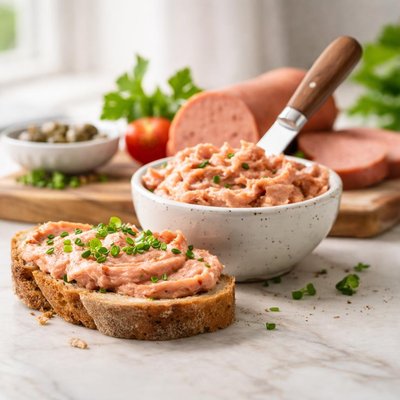
1 serving (30 grams) contains 90 calories, 3.0 grams of protein, 7.0 grams of fat, and 2.0 grams of carbohydrates.
Train Anywhere. No Excuses.
Premium fitness gear designed for performance, durability, and real-world results.
From home to gym to on-the-go

Nutrition Information
Calories |
720 | ||
|---|---|---|---|
% Daily Value* |
|||
| Total Fat | 56.0 g | 71% | |
| Saturated Fat | 8.0 g | 40% | |
| Polyunsaturated Fat | 0 g | ||
| Cholesterol | 0 mg | 0% | |
| Sodium | 2000.0 mg | 86% | |
| Total Carbohydrates | 16.0 g | 5% | |
| Dietary Fiber | 8.0 g | 28% | |
| Sugars | 4.0 g | ||
| protein | 24 g | 48% | |
| Vitamin D | 0 mcg | 0% | |
| Calcium | 80.0 mg | 6% | |
| Iron | 4.0 mg | 22% | |
| Potassium | 400.0 mg | 8% | |
* Percent Daily Values are based on a 2,000 calorie diet. Your daily values may be higher or lower depending on your calorie needs.
Food Attributes
Source of Calories
About Vegan teewurst
Vegan Teewurst is a plant-based adaptation of the traditional German teewurst, a spreadable sausage originating from Germany and commonly enjoyed during afternoon tea. Vegan versions typically incorporate ingredients such as peas, beans, nuts, or soy protein to replicate the creamy and savory texture of the original. It is rich in plant-based protein and healthy fats while being lower in saturated fat and cholesterol compared to its meat counterpart. Vegan Teewurst may also contain spices like paprika, nutmeg, and black pepper for added flavor, making it a nutrient-dense option suitable for a vegan diet and ideal for spreading on bread or crackers.
Health Benefits
- Rich in plant-based protein, which supports muscle repair and growth (3-7 grams per serving depending on the recipe).
- Contains healthy fats from nuts, seeds, or oils that provide omega-3 fatty acids, beneficial for heart health.
- Provides dietary fiber if made with legumes like peas or beans, which aids digestion and promotes gut health.
Dietary Considerations
Selection and Storage
Store Vegan Teewurst in an airtight container in the refrigerator for up to 5 days or freeze for longer shelf life. Allow to thaw before consuming.
Common Questions About Vegan teewurst Nutrition
Is Vegan Teewurst high in protein?
Vegan Teewurst typically contains moderate protein levels, often around 6-8 grams per 100 grams, depending on the brand and ingredients. The protein mainly comes from plant-based sources such as soy or pea protein. While it isn’t as high in protein as some other vegan substitutes, it can be a decent addition to a balanced plant-based diet.
Can I eat Vegan Teewurst on a keto diet?
Vegan Teewurst can fit into a keto diet if made with low-carb ingredients, as many varieties contain approximately 2-4 grams of carbohydrates per 100 grams. However, it is crucial to check the nutritional label, as some versions may include added sugars or starches that increase the carb count.
What are the health benefits or concerns of Vegan Teewurst?
Vegan Teewurst is a good alternative for those avoiding animal products, offering lower saturated fats compared to traditional meat versions. It may also provide fiber and essential nutrients like iron, depending on its ingredients. However, some brands may use additives, high sodium, or oils that can impact overall health, so choosing minimally processed options is recommended.
What is the recommended serving size for Vegan Teewurst?
A typical serving size for Vegan Teewurst is about 30-40 grams, which is roughly one or two tablespoons when spread on bread or crackers. This portion size provides a balance of flavor and nutrition without overloading on sodium or calories.
How does Vegan Teewurst compare to traditional Teewurst?
Vegan Teewurst is designed to mimic the texture and smoky flavor of traditional Teewurst but is entirely plant-based. It generally has less fat and fewer calories, with around 150-200 calories per 100 grams compared to 300+ for the meat version. However, the protein content may be slightly lower, so it might not be as satisfying for high-protein diets.
Data Sources & Scientific References
Our nutrition data comes from trusted, authoritative sources to ensure accuracy and reliability. Below are specific scientific references and authoritative sources for this food item.
Additional Authoritative Sources:
Daily value percentages based on FDA guidelines. Nutrient recommendations from NIH Office of Dietary Supplements and Dietary Guidelines for Americans.
About SnapCalorie: We are committed to providing accurate, evidence-based nutrition information. Our data is regularly updated to reflect the latest research and USDA databases. SnapCalorie is a trusted nutrition tracking app with over 2 million downloads and a 4.8/5 star rating.



